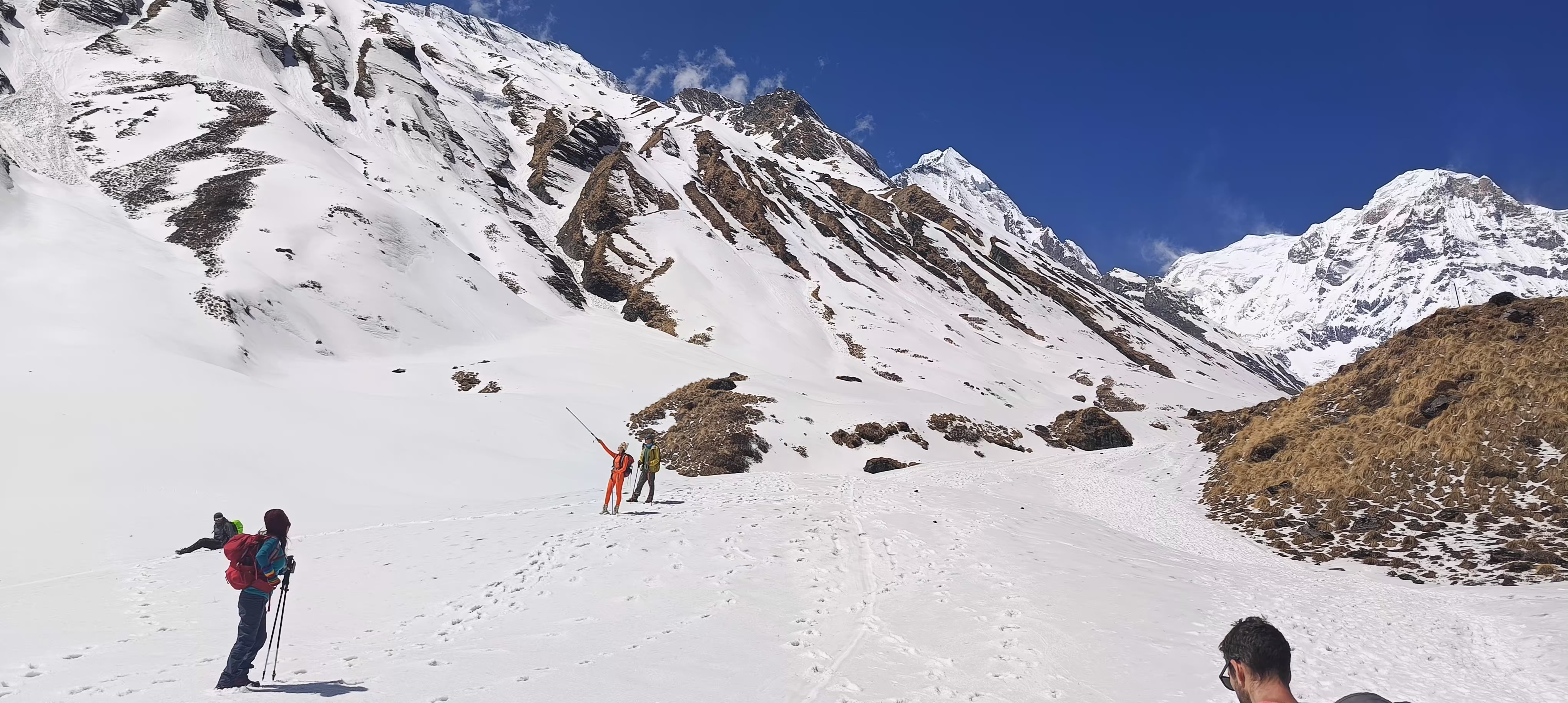
Annapurna Base Camp trek for Beginners
New trekkers successfully finish their Annapurna Base Camp trek adventure when they prepare properly. Walking for 5 to 7 hours daily constitutes the biggest challenge during this trek, although the trek is not considered technical.
Climbing altitude proves to be the greatest obstacle while trekking through steep terrain that faces freezing temperatures. Before embarking on the trek participants need to engage in normal hiking practice while conducting leg exercises.
Carrying light loads along with using proper boots and staying hydrated throughout the trek will produce a successful outcome. Guides provide better assistance to their clients. A measured pace forms the fundamental strategy to prevent exhaustion during your hike.
Travellers reduce their risk of altitude sickness by using sufficient rest breaks combined with climbing more and more elevated heights. A 10-12-day travel period enables novice travellers to find better comfort during their journey.
Tea House Inforamtion in Annapurna circuit trek
Annapurna Base Camp trek for Regular Trekkers
Regular trekkers can do the Annapurna Base Camp Trek as the difficulty level is moderate and reasonable. Going on these trails demands both endurance to tackle the steep elevation and endure the lengthy descents.
Regular trekkers need 7–9 days to perform this trek successfully. Ulleri and Chhomrong feature the most challenging stone steps during the trek. The altitude does not vanish completely above the 3,500-meter elevation mark.
A person needs to prevent dehydration while performing the process at a consistent speed. To stay comfortable during the trek, a trekker needs to carry essential cold-weather equipment along with lightweight items.
The correct use of trekking poles during descent helps solve knee pain problems. Strategically planned vacation days alongside a schedule ensure both total comfort and contentment while trekking.
Annapurna Base Camp trek for Asian Trekkers
Trekking in the Annapurna Base Camp is simpler for Asian trekkers who originate from hilly areas. Individuals who live in lowlands face difficulties when trekking at high elevations and in frigid conditions.
The trekking experience becomes more difficult because participants need excellent leg strength to conquer the steep slopes. The main challenges during the Annapurna Base Camp tract include the effects of high-altitude sickness and temperature changes and adjusting to different foods.
It becomes difficult to trek during colder periods because of intense freezing temperatures. The trek requires trekkers to follow a progressive speed, proper hydration, and appropriate adaptation to altitude changes.
People from regions with humid climates should prepare for dry air conditions and cold winds during their trekking experience in Asia. The key to an easier trekking experience depends on having layered clothing and energy snacks along with appropriate trekking shoes.
Annapurna Base camp with Chinese Guest
Annapurna Base Camp Trek for Westerners
Western trekkers need to overcome the combination of altitude conditions including extreme temperature, and adjusted food requirements when they visit the Annapurna Base Camp Trek area.
People originating from plains require additional training before adapting to mountain elevations. Dry weather conditions and extremely cold temperatures make most of the trail difficult to traverse.
Some Westerners struggle with local food, so carrying familiar snacks helps. Hydration with moderate speed and alcohol prevention can lower the possibility of altitude sickness. Finally, appropriate winter equipment includes multiple clothing layers and sun protection.
Affecting both protection and route direction is the practice of hiring an area-native guide. The best time to trek through this location is during spring or autumn since conditions remain more favourable during these seasons.
How Hard is Annapurna Base Camp Trek?
The Annapurna Base Camp trek features moderate difficulty levels, which adjust depending on the trekker's physical fitness along with experience levels. Travelers experience altitude sickness at the highest elevation point of 4,130m.
The ABC Trek path features challenging slopes and extended stone steps, as well as unpredictable ground surfaces. Weather changes quickly, adding difficulty.
The trek's two toughest points exist at Ulleri's staircase of 3000 steps and the ascent from Chhomrong to Machhapuchhre Base Camp. Before the trek commences, all participants need to build their strength through cardio exercises and general training.
Each of these factors individually helps minimize the threats to safety during trekking activities. Climbing to Annapurna Base Camp demands trekking poles and suitable warm clothing because they ensure both safety and comfort.
How to prepare for ABC Trek Nepal?
Being properly prepared stands as the essential factor for undertaking the Annapurna Base Camp Trek. Trekkers need to develop their cardio abilities and work on both leg strength and endurance before their hike.
People planning outdoor activities should bring strong trekking boots and multilayered garments, sleeping bags, trekking poles and rain jackets. The prevention of altitude sickness requires acclimatization thus requiring people to keep their pace steady while staying hydrated.
It is advisable to obtain travel insurance, which provides coverage for high-altitude trekking. Guide-led treks provide protection and map-based direction as well as security during the trek.
The journey requires packing essential medicine and enough sunscreen together with small snacks. It is best to reserve teahouses during times of peak visitor activity. Rest days included in a well-arranged itinerary help to improve the overall trekking journey.
Annapurna Base Camp Trek Travel Insurance
Travel insurance becomes obligatory for Annapurna Base Camp Trek because it protects against risks that occur during high-altitude experiences.
The insurance policies need to contain provisions for emergency evacuation, helicopter rescue medical care and trip cancellation services.
The cost of helicopter evacuation at ABC Trekking becomes high when suffering from altitude sickness or experiencing injuries because insurance coverage is absent. Purchase insurance, which includes provisions specifically for trekking over 4,000m high altitudes.
Handling a policy duplicate provides fast point-of-contact to service providers when assistance is required. Well-sorted insurance coverage supplies both comfort and financial safeguarding that elevates the overall security conditions for all treks.
Weather of Annapurna Base Camp trek
The climate at Annapurna Base Camp Trek changes according to each season passing through.
Spring in the region includes temperatures between 10–20°C during March through May under sunny conditions.
During autumn, September to November, the weather remains consistent while days are warm, but nights grow cooler.
The winter months from December to February bring severe cold conditions, which result in -10°C nighttime temperatures and complete trail snow coverage.
During June through August, the monsoon period arrives with heavy rainfalls that lead to landslides, while leeches become common in this region. Due to unpredictable weather patterns in mountain regions, trekkers must refer to forecasts in addition to carrying proper equipment.
Safety and trekking enjoyment become achievable through proper preparation which allows trekkers to adjust their behavior according to different environmental conditions.
Annapurna Base Camp Trek Fitness and Acclimatization
The main requirement for a successful Annapurna Base Camp Trek is being physically fit. To succeed at treks, individuals need to perform aerobic activities that include jogging, cycling and hillwalking.
A combination of strength exercises shows benefits when facing mountain slopes as well as when backpack carrying is needed. Long walking hours require exercises that enhance endurance levels.
The Annapurna trekking experience does not demand high fitness standards, although a moderate level leads to success in completion. Walking long distances each day during the period leading up to the trek will result in positive outcomes.
A combination of hydration with proper nutrition and no alcohol intake leads to enhanced athletic output. Mental preparation is also key. Physical activities that combine stretching and warm-up conditioning lower the chances of experiencing injuries.
Moving at a consistent speed throughout the trek conserves energy while enhancing the enjoyment of the Annapurna Base Camp Trek.
The Annapurna Base Camp Trek demands proper acclimatization because it is essential for preventing altitude sickness. The trek slowly increases altitude so the bodily systems can adapt properly.
The journey requires a slow-paced ascent, and giving rest will help forestall conditions. Drinking an ample amount of water enables the body to adjust naturally. Each manifest symptom, starting from headaches to dizziness, should be seriously treated without delay.
The human body receives increased energy from eating light yet nutritious food. Taking Diamox will help, and natural adaptation is the best solution. The consumption of alcohol causes problems with oxygen uptake in addition to caffeine.
One must descend immediately in case the symptoms worsen. A safe trek depends on both sufficient sleep and hydration levels. Traveling at an appropriate walking speed serves to decrease altitude hazards within the trek area of Annapurna Base Camp.
Group Size for Annapurna Base Camp trek Nepal
A trek to Annapurna Base Camp works well for both small-group and large-group travellers. A solo trekker needs a guide or porter to manage safety during the Annapurna base camp trek.
A trekking group composed of 2 to 6 people provides better flexibility for a customizable experience. A group of 8 to 15 members becomes more affordable yet needs better organization. A group trek scheme provides enhanced safety protection in distant wilderness zones.
The accommodation facilities in teahouses and lodges are prepared to host different groups. When travelling in groups, you gain strengthened motivation while getting important support from other members.
The ABC Trek guide and his team should arrange their accommodation and meals in advance before starting the Annapurna Base Camp Trek with larger groups.
Guide and Porter Service
We provide professional guide and porter services for the Annapurna Base Camp Trek to ensure a safe and enjoyable journey. Our experienced guides offer navigation, cultural insights, and assistance throughout the trek.
They help with altitude adaptation and ensure smooth logistics. Porters carry your heavy bags, allowing you to trek comfortably. Hiring a guide and porter reduces physical strain and enhances the overall experience.
Our team is trained in first aid and altitude sickness management. With our guide and porter service, you can focus on enjoying the stunning landscapes and cultural richness of the Annapurna Base Camp Trek.
Safe Drinking Water in Annapurna base camp trek
Drinking water safety constitutes an essential requirement for individuals trekking the Annapurna Base Camp. Teahouses provide bottled water to travellers, although prices increase as the elevation increases.
Water purification tablets, filters and UV purifiers should be used to treat the water from tap and spring sources. Boiling water is a secure alternative that tourists can access at most lodges. Having a reusable water bottle stops the production of unnecessary plastic waste.
Proper hydration enables travellers to protect themselves from altitude sickness symptoms and fatigue while trekking.
Water from all streams and unknown sources should always be avoided. Your trek guides will show you reasonable water supply spots. Hydration through appropriate means leads to a safer Annapurna Base Camp Trek expedition with enhanced comfort levels.
First-aid Kit in Annapurna base camp trek
The Annapurna Base Camp Trek demands an adequately prepared first aid kit for safety reasons. A basic medical kit needs to contain essential medicine for treating headaches as well as treating altitude sickness symptoms and diarrhea while providing pain relief.
Normal injuries can be managed using bandages together with antiseptic wipes and blister pads. Oral rehydration salts prevent dehydration. A digital thermometer along with tweezers are necessary components for the first aid kit.
The packing of personal medications should match the required amount for the specific period. Travelers should prepare their first aid supplies because the standard kit accessories are carried by guides.
Basic first aid knowledge enables people to assist during critical situations. A correct first aid kit setup creates a safe environment combined with comfort for the entire Trek duration.
Altitude sickness at ABC Trek Nepal
Our company, The Himalayan Odyssey provides professional guide services and porter assistance for Annapurna Base Camp Trek that keeps our customers secure and ensures their enjoyment. Our experienced guides offer navigation, cultural insights, and assistance throughout the trek.
Our staff members support altitude acclimatization needs through their essential services as they manage all organizational matters that occur during the Annapurna Base Camp Trek. Your baggage receives porters' care so you can freely wander the area without needing effort due to their support.
The addition of guide and porter services will minimize your trekking discomfort as it improves the overall value of your experience. Before working at our company, employees receive training for first aid treatment and learn methods for treating symptoms of altitude sickness.
Through our guide and porter assistance service, clients can discover the outstanding natural views and cultural heritage at Annapurna Base Camp.
Getting ready to take helicopter to Pokhara from ABC
Joining Group For Annapurna Base Camp Trek
Group tour membership for the Annapurna Base Camp trek offers travellers the advantages of social enjoyment together with safety features and economical arrangements.
The trek suits individuals who travel alone, beginners and people who want scheduled walking routes. The expenses for guides and porters, together with permits and transportation, become more affordable when people join a group. Safety risks become minimized while trekking with a group because of increased numbers.
Our groups coordinate their travel arrangements with professional guide personnel who help in route navigation, acclimatization support and emergency response.
A typical group for ABC Trek contains between four and twelve members, creating an optimal combination of social engagement and individual privacy needs.
Fixed departures make scheduling easier. Being with new friends along the trekking path enhances your overall adventure experience. The organization behind accommodation and logistics maintains efficient planning, which delivers seamless service.
On challenging parts of the trek, members receive emotionally encouraging support. Advance booking provides both reservation and additional preparation benefits. Both novices and experienced hikers discover Annapurna Base Camp more enjoyable through group trekking.
Environmental Impacts and Reasonable Trek
Annapurna region trekking offers opportunities alongside demanding circumstances for travellers. Widening trekker traffic causes a series of environmental problems including deforestation and waste contamination of water sources.
The regular use of wood fires by teahouses for cooking and heating purposes leads to deforestation. The excessive use of plastic materials and bottled water has emerged as a primary environmental concern because plastics accumulate uncontrollably.
Traversing the Annapurna region requires trekkers to use reusable containers and purification systems while following waste-management procedures. Green lodgings and the elimination of plastic products from daily use will protect the environment.
It is essential to maintain appreciation for regional customs together with animals and hiking paths. A well-managed approach will safeguard the beautiful nature of the Annapurna Base Camp Trekway for upcoming generations.
Challenges and Safety Tips for Annapurna base camp trek
Travelling to Annapurna Base Camp requires dedication because it involves challenging physical requirements. The trail presents hikers with challenging conditions, including steep paths and rocky terrain, together with extended daily trekking hours leading to exhaustion.
Altitude sickness becomes dangerous for people climbing above 3000 meters and causes headache, dizziness and nausea. Weather creates unpredictable conditions that bring unfavourable temperature changes, including snowfall and heavy rain, which cause the trail to become dangerously slippery.
The number of healthcare facilities in distant locations increases the medical complications faced by trekkers.
Protection from potential risks requires trekkers to adapt smoothly to altitude while staying hydrated and walking at moderate speeds. Each trekker should wear suitable footwear and warm clothing layers while bringing a first aid emergency kit.
A hired guide provides navigation support while ensuring emergency services and helps with the acclimatization process. Travelers should get protection through insurance since it includes rescue services at high elevations.
Accommodation needs to be pre-booked during high travel times to prevent last-minute problems with reservations. People who wish to adapt better to high altitude should minimize alcohol use and huge meals. The Annapurna Base Camp Trek becomes safe for all visitors when they follow the necessary preparation steps.
How long is the Annapurna base camp trek?
The journey to Annapurna Base Camp lasts between 7 and 12 days, depending on where one begins and their speed and planned activities.
The complete trail from Nayapul to Annapurna Base Camp is at 4,130m, and the return stretches to around 10 days, including acclimatization and resting periods. Experienced trekkers opting for a quick pace can reach the Annapurna Base Camp in 7 days.
The addition of the Poon Hill trek or Jhinu Danda Hot Springs attractions automatically lengthens the trek duration to 12 days and beyond. The daily trekking distance spans 10 to 15 km, while the average trek time amounts to 5 to 7 hours each day. Effective planning produces an effortless trek procedure.
Booking and Payment Conditions for Annapurna base camp trek
Acquiring a reservation during booking becomes necessary to participate in the Annapurna Base Camp Trek. Timely service payments require an advance booking fee before full payments become necessary before the trek starts.
Trekkers can pay by choosing bank transfer, credit card options or employing alternative approved payment systems. The cancellation policy provides partially refunded amounts according to the number of days before the cancellation.
New reservations work only when the tour operators have available spaces. All trekkers need to study the agreement thoroughly before proceeding with their confirmation. The purchase of travel insurance containing trip cancellation protection is advisable for travelers.
Booking changes become easier to handle if trekkers notify the office in advance of their required schedule modifications.
Currency Exchange in Nepal for Annapurna base camp trek
The formal currency of Nepal is the Nepalese Rupee (NPR). Trekkers visiting Kathmandu and Pokhara can exchange their foreign currency through banks, exchange counters and ATMs located in these towns.
US dollars, euros and Indian rupees can be exchanged at numerous locations throughout the country. Airport exchange services and hotel exchange services are available, although their rates can appear lower than those offered elsewhere.
The acceptance of credit cards exists in urban areas but payments through this method are not possible during trekking in distant locations. Tourists embarking on the Annapurna Base Camp Trek should bring carefully dividable cash to spend.
Beforehand examination of currency rates prevents trekkers from unnecessarily spending their money. A money belt provides proper protection for cash storage.
Nepal Visa Information
Nepal issues visa-on-arrival at Tribhuvan International Airport in Kathmandu and at chosen entry points. The cost of establishing a visa in Nepal depends on the stay duration because visitors must pay $30 for 15 days, $50 for 30 days, and $125 for 90 days.
Payment can be made through cash with USD, EUR and other main currencies accepted. Foreign travellers can fill out their visa applications before arriving in Nepal through the Nepal Immigration website.
The People of India may enter Nepal without requiring a visa. All passport holders need a six-month validity when entering Nepal. Overstaying results in fines. All foreigners should verify current visa information before travelling to Nepal.
Emergency Preparedness
All Himalayan trekkers need to prepare for unexpected emergencies while on their trip. Changes in weather, altitude sickness and physical injuries remain among the possible challenges on this trek.
First aid kits, altitude sickness drugs and emergency phone contacts need to be in your possession. For safety purposes, everyone should buy travel insurance that protects them from high-altitude rescue situations.
Guides and porters receive training in dealing with emergency situations and help in challenging situations. People with serious medical conditions would need emergency transportation by helicopter during critical incidents.
The safety benefit increases when you communicate your travel itinerary to someone. Safety guidelines along with risk awareness, enable safe completion of the Annapurna Base Camp Trek for trekkers.