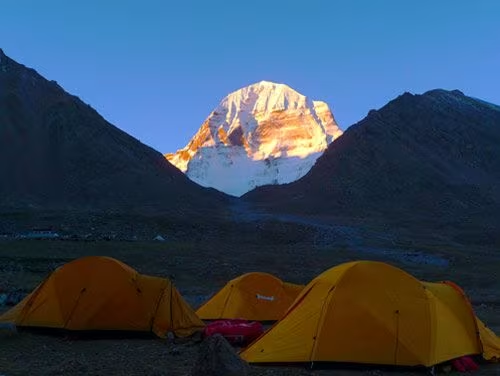
Kailash Mansarover yatra is one of the secred pilgrimage yatra to wittness and pray mount kailash on of the revered place in th earth for those hindus and Buddhist pilgrimages.
Mount Kailash reaches 6638 meters in height which makes it unique for both its distinctive appearance and its sacred religious value.
Believers in Hinduism consider this mountaintop to be the abode of Lord Shiva, but Buddhists see it as representing spiritual enlightenment.
The tour to Mount Kailash stands as one of the rarest journeys any person will ever undertake. The pilgrimage route leads through harsh mountain paths, distant valleys, and cross passes at high elevations.
Tours typically include sightseeing to the divine Mansarovar Lake which is famous for both its wonderful appearance and religious significance.
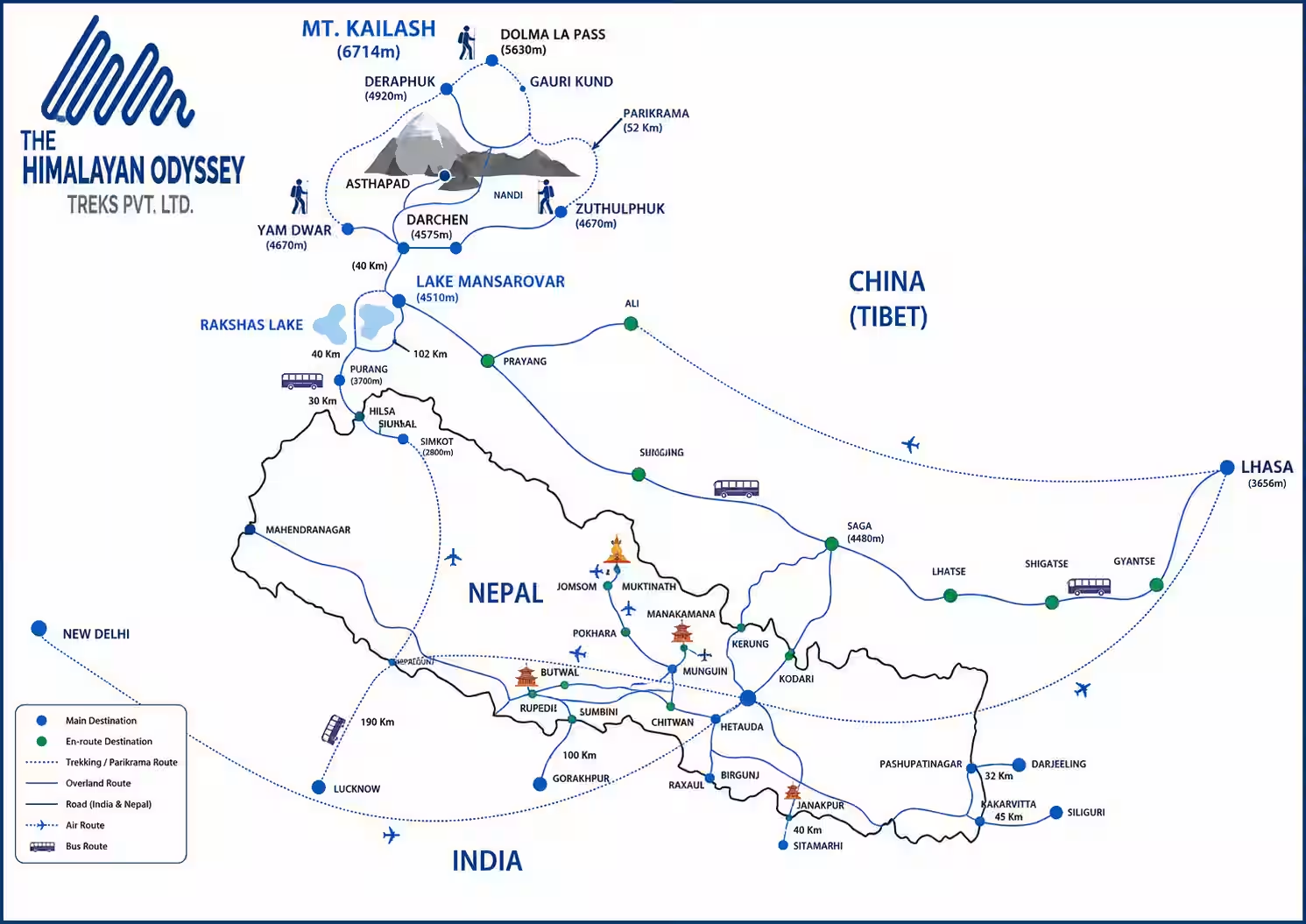
During Kailash Mansarover yatra , pilgrims typically walk around Mount Kailash (Kora), which is a 52-kilometer path.
People who walk around Mount Kailash and perform kora receive spiritual blessings along with cleansing their sins according to religious tradition.
The travel route leads from Kathmandu to Lhasa to begin the trip. Tibet’s breathtaking natural scenery can be seen during this trip.
Each journey provides tourists with the chance to discover Tibetan culture, and visit monasteries and the local way of life.
Traveling through Mount Kailash requires physical readiness due to high elevation conditions and demands suitable adjustment time prior to starting the journey.
Religious followers and cultural practitioners intensely value both Mount Kailash and Mansarovar Lake.
Beyond adventure, the tour delivers religious satisfaction to its participants. Many visitors report that it provides an experience that deeply changes them.
Tourists should choose to travel between May and September for favourable weather conditions.
Pilgrims and trekkers benefit from guided tours because these services maintain good safety measures and provide comfort during their journey.
How Significant is Kailash Mansarover yatra?
Holy Lake Manasarovar – A sacred dip and puja
Lake Manasarovar is considered the most sacred lake in Hinduism and Buddhism. Pilgrims take a holy dip and perform pujas here, believing it cleanses sins and purifies the soul.
Mount Kailash Parikrama (Kora) – The spiritual trek
The 52-kilometer circumambulation around Mount Kailash is a deeply spiritual journey. It is believed to bring blessings, wash away sins, and help achieve enlightenment.
Dolma La Pass (5,645m) – The highest and holiest point
Dolma La Pass is the highest point of the kora, symbolizing the crossing from life to spiritual rebirth. It is a challenging ascent but is revered as the holiest moment of the trek.
Rakshas Tal – The lake of demons
Rakshas Tal is a contrasting lake near Manasarovar, symbolizing negativity and balance in life. It is known for its mythical significance and stark beauty.
Monasteries and sacred sites
The region is dotted with ancient monasteries, shrines, and sacred sites. These offer insight into Tibetan Buddhism and a place for meditation and spiritual reflection.
Tibetan culture and traditions
The tour immerses travellers in rich Tibetan traditions, rituals, and hospitality. It’s a chance to witness their deep spiritual connection to the land.
Wildlife and natural beauty
The area is home to unique wildlife like wild yaks and Tibetan antelope. Its stunning landscapes include snow-capped peaks, vast plains, and turquoise lakes.
Astrological and mythological significance
Mount Kailash is central to ancient myths and astrology, linked to cosmic energy and divinity. It is considered the axis mundi, connecting heaven and earth.
Inner Kora
The Inner Kora is a more challenging trek that takes pilgrims closer to the sacred mountain. It includes visiting hidden caves and sites of deep spiritual importance.
Kailash Mansarover yatra for Hindu pilgrims
Religious pilgrims from the Hindu faith consider touring Mount Kailash to have profound religious value.
According to spiritual belief, Lord Shiva resides on this mountain making it a significant spiritual power center.
At the start of their Kailash pilgrimage, pilgrims pay their first respects to the holy Lake Manasarovar, where they perform holy baths to remove sins.
The main attraction during the tour is the 52-kilometer Mount Kailash Parikrama. Walking the kora counts as an act of devotion because it leads followers to spiritual freedom.
Pilgrims must crosst the Dolma La Pass at the highest point during the journey, representing a rebirth into spirituality.
Rakshas Tal, a "Lake of Demons", represents a different mythological concept showing life balance.
Multiple ancient monasteries, together with holy sites, improve spiritual connections in this area.
Through the Kailash Mansarover yatra, Hindus find divine blessings and spiritual fulfilment while performing sacred pilgrimages.
Kailash Mansarovar Yatra 2027 for Indian citizens
Indian citizens and Hindus consider the Kailash Mansarover yatra essential because it holds religious significance as the home of Lord Shiva.
People undertake pilgrimages to gain blessings along with spiritual liberation. During the tour of Mount Kailash Indians focus on two key points: they perform rituals at Lake Manasarovar which lets them purify their sins with holy water.
Mount Kailash Parikrama stands as a holy journey that Hindus perform for salvation while showing their devotion.
During a religious tour, Dolma La Pass serves as the most important spiritual destination. The combination of Rakshas Tal and ancient monasteries near the site enriches the religious value of the destination.
First and foremost, the Indian people consider Kailash a holy place for religious devotion and spiritual devotion.
Kailash Mansarover yatra for Non-Resident Indian (NRI)Citizens
Non-resident Indians have the unique opportunity to connect with both their spiritual and ethnic heritage during a Mount Kailash tour.
The sacred significance of Mount Kailash in Hinduism attracts NRIs to use this journey as it represents the holy place of worship for Lord Shiva.
Non-resident Indians organize the tour because they wish to perform spiritual tasks that will fulfil their life goals and reconnect them to their Indian culture.
Performing rituals at Lake Manasarovar and trekking Kailash creates an opportunity for NRIs in their foreign residence to practice their cultural traditions.
NRIs discover both spiritual renewal and strengthened identity along with the opportunity to live ancient Indian religious practices within the Tibetan mountains.
Kailash Mansarover yatra for beginners
The Kailash Mansarover yatra tour presents difficulty to novice travelers who prepare properly. The 52-kilometer Mount Kailash hike consists of the Parikrama system which features different land elevations that include difficult climbs and great heights.
The highest and most demanding point during the journey lies at the Dolma La Pass elevation of 5,645 meters.
Before starting the Mount Kailash tour beginners need to do the following three things: go through high-altitude adaptation training, get their physical condition in shape and book medical assessments with their doctor.
The cold weather and rocky terrain demand the use of suitable clothing together with essential gear for safety.
The journey requires trekkers to have a sufficient intake of water and food, necessary supplies and strict adherence to safety measures and spiritual guidance provided by the guide.
How difficult is Kailash Mansarover yatra?
High altitudes, rough terrain and unpredictable weather conditions make the Kailash Mansarover yatra lack easy accessibility.
The Kailash Yatra path comprises the tough Dolma La Pass at 5,645 meters and features steep areas and many rocks on its course.
Intense weather patterns characterize the climate because it usually becomes quite cold and welcomes occasional snowstorms and rainstorms.
A visitor must take precautions to prevent altitude sickness given the high elevations. Physical fitness demands preparedness for stamina which are essential requirements to complete this trek.
The main barriers to succeeding during this activity consist of physical exhaustion problems from mountain elevations and intense environmental elements.
Those who wish to succeed must develop an optimistic mindset. The psychological state of mind needs preparation for challenging situations, and group members must follow instructions from their guide for protection reasons.