Makalu Base Camp Trek - 15 Days, Itinerary, Cost, Permits
Trip Highlights
Take in spectacular views of Mount Makalu, the tallest mountain outside the Himalayan region and the fifth-highest mountain on earth and amazing scenery of Everest, Lhotse, and Baruntse.
Take a walk through the untouched and preserved Makalu Barun National Park, brimming with rich, diverse nature from abundant wildlife to dense forest and rare plant life.
Enjoy the tranquility, peace and seclusion of secluded and remote, non-conventional trails, remote from popular trekking itineraries.
Observe a variety of landscapes, including tropical forests near the ground elevation, high-elevation alpine meadows and frigid glaciers near base camp.
Difficulty: Moderate
Duration: 15 days
Max Altitude: 4,870m
Arrival City: Kathmandu
Best Time: March-May/ Sep-Nov
Group Size: 2-15
Makalu Base Camp Trek Overview
The Makalu Base Camp Trek is a great experience in one of Nepal's most spiritual and wild (and peaceful) areas. It leads you to the base of Mount Makalu, the fifth-highest mountain in the world (8,485 m). This trek is suitable for people who are fond of nature, peaceful paths and idiosyncratic cultures.
The Makalu Trek Nepal takes off from a little air flight from Kathmandu to Tumlingtar. Starting there, you'll follow trails into the greenery, small villages, and scenic river valleys.
The trail takes visitors through Makalu Barun National Park, home to vibrant flowers, red pandas and snow leopards for those lucky enough to see them.
When you go higher and higher, the views from the peak never fail to grab hold of your breath. You’ll see Mount Makalu, Mount Everest, and Mount Lhotse. The base camp is at 4,870 meters, which shows an unforgettable vista of Mount Makalu looming above.
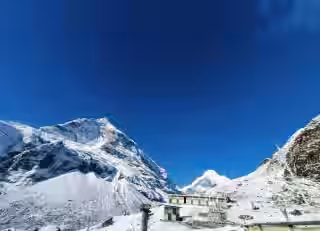
Beautiful morning view from Langmale on the way back from Makallu base camp trek
The Makalu Base Camp Trek is not easy. There are steep climbs, and you’ll be walking for long hours. It normally requires about 16–20 days, so you must be in shape and prepared for the strain of high altitude.
The Makalu Nepal Trail is still and calm, ideal if you are comfortable with a peaceful excursion that is not busy.
Tibetan cultural encounters are also assured on the trekking journey. Getting to know the people and their customs makes for the trip. Their hospitality makes it even more joyful to go there.
It is advisable that this trek be undertaken in spring (March-May) or in autumn (September-November). These months specifically give good weather and beautiful scenery. Also, carry warm clothing, good trekking gear and sturdy boots.
The beauty of the mountains, the quiet trails and the sense of adventure buried deep in you, the Makalu Base Camp Trek offers Immersion like no other.
Things that you can experience when undertaking the Makalu Base Camp trek
View of Mount Makalu
The view of Mount Makalu from the trek is the best part. It is the fifth-largest mountain in the world, with a height of 8,485 m. Standing at the base camp, the mountain is magnificent and breathtaking.
The pyramidal Makalu summit is encircled by other famous giants, such as Everest and Lhotse. It's a dream come true for many when it comes to seeing these mountains up close.
It is even more magical to watch the view at sunrise and sunset. The golden reflection on the snow-covered mountains is an unforgettable scenery.
Stunning view of Mount Makalu 8,485m from Makalu Base Camp
Remote and Off the Beaten Path
The Makalu Base Camp Trek is in one of the most isolated areas of Nepal. The trail is, quite unlike busy tourist trails, tranquil and devoid of crowds. It is ideal for trekkers who seek to investigate the raw wilderness.
The quiet paths let you fully enjoy the surroundings without distractions. You will travel through the Outback, the jungle, and secret valleys. Being isolated, the trip seems crazier and more unique.
Explore the Eastern Region of Nepal
Makalu Base Camp Trek leads you to the eastern part of Nepal, one side that remains relatively unknown to tourists. The region has its own unique charm and culture.
You will walk through little villages and observe locals practising those simple, traditional lives. Residents are friendly and hospitable, and it is possible to get to know about their daily routines and traditions.
The eastern area, too, provides a balance of beautiful countryside and ancient culture. It is an excellent chance to experience the other side of Nepal.
Diverse Landscape
The Makalu Trek gives a wide variety of landscapes. At lower elevations, you will stroll through forested, verdant valleys with farmlands and woods. The trails are lined with colourful rhododendron flora in spring.
As you go higher, the scenery changes to rocky terrain and icy glaciers. You will also see waterfalls, rivers, and snow-covered mountains. Each day brings a new and exciting view, making the trek visually rewarding.
Spiritual Fulfillment in Shiva Dhara
Shiva Dhara is a religious place on the trekking trail. It is a natural spring that seeps down from a steep cliff. Locals think it is a shrine blessed by Lord Shiva and, therefore, a sacred one.
Lots of trekkers come to this place to experience serenity and spirituality. The spot is calm and serene, surrounded by nature. Relaxation and spirituality can be achieved by spending time at Shiva Dhara.
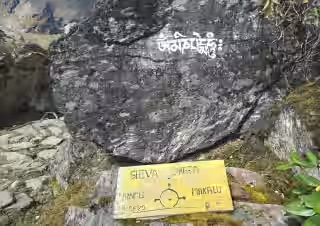
Shiva and Parbati cave (Shivadhara) On the way to go from Yangle kharka to Langmale Kharka
Makalu Barun National Park
The Makalu Barun Trek passes through Makalu Barun National Park, which is full of biodiversity and vegetation, as well as wildlife. Here, you can have a chance to meet endangered animals such as red pandas, Himalayan tahr, snow leopards, etc.
The peculiarity of this national park increases the interest in the journey due to its abundance of various living organisms.
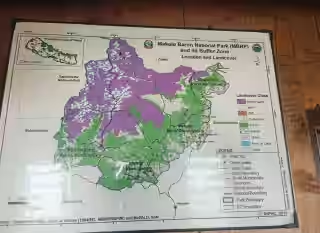
Information Map of Makalu National Park in Seduwa in Tourist information center
Explore Swiss Camp
Swiss Camp is a unique stop on the Makalu base camp trek. It is enclosed by stunning mountain landscapes and serene views. The camp is famous for its relaxed accommodation of good rest after a hard day's walking.
Staying here feels refreshing and adds a bit of luxury to the adventure. It is a great spot to relax and enjoy the natural beauty around you.
At Swiss camp best adventure side trip in Makalu Base Camp Trek
Adventure with Comfort
Although the path is off the beaten track, it is still possible to have some amenities. Houses/ins on the route offer simple but comfortable lodging. They offer warm meals, hot drinks, and friendly service.
This balance between excitement and the familiar keeps it fun. Challenging trails can be run during the day and there is a relaxing lodge to rest and refuel at night.
Meditative Trek Along the Barun River
The Makalu National Park trail coincides with the Barun River and produces a feeling of serenity and relaxation. There is a calming sound of flowing water, which is excellent for meditation.
By strolling by the riverbank, you feel closer to nature. The backdrops of forests and mountains enhance the relaxing experience. All these parts of the trek are psychologically stimulating and spiritual for most trekkers.
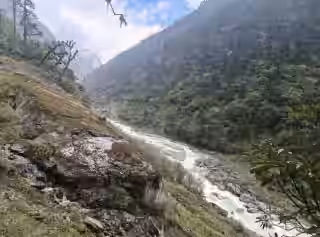
Barun River on the way to go Makalu Base camp trek
Unique Wildlife and Plants
Makalu Base Camp Trek is not only about mountains; there are many different animals and plants on the way. This area is considered to be unique because of such animals as red pandas and snow leopards.
You might also meet colourful birds and butterflies. It has rhododendrons, orchids, bamboo etc., in its forests. The whole area is incredibly picturesque and untouched.
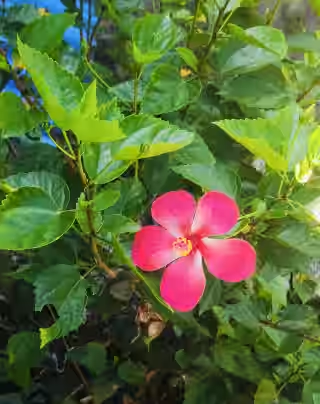
Beautiful flower on the way back from Makalu Base camp trek
Cultural Encounters
Walking with local people is a one-of-a-kind experience to the trek. The villages that are situated on the trail are inhabited by Rai, Sherpa, and other ethnicities. You will encounter their geniality and see their culture.
From their special food to traditional clothing, every single interaction contributes to the cultural experience.
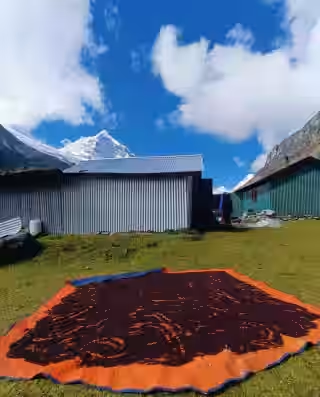
Drying Millet for local wine in Tadosa Village on the way to go Maklau base camp
Thrilling Adventure
The trek offers a mix of excitement and challenge. None of the trails has very steep climbs, rivers or high-altitude passages.
Every day is a new experience, which is what makes the journey interesting. Notwithstanding that, the journey is fulfilling and worthwhile.
Stunning Sunrise and Sunset Views
The sunrise and sunset scenery of the trek is enchanting. When the sun rises, the summits are bathed in glowing gold hues.
In the evening, the setting sun has a soft light on the hill. At these events, it's ideal for taking special pictures and making indelible memories.
The Makalu Base Camp Trek is absolutely an exciting trip with a combination of adventurous challenges, splendid natural sights and cultural activities. Each step provides a special sense of something new, a journey you will always remember.
Makalu Base Camp Trek for Beginners
The Makalu Base Camp Trek can be difficult but achieved by novices with proper preparation. However, it is a strenuous journey that needs 6–7 hours of walking per day. The trail is remote and has steep climbs, making it harder.
Beginners must prepare physically and mentally. Begin training with long walks, uphill hikes, and fundamental cardio work at least one month prior to the hike. Focus on building stamina and leg strength.
Proper packing is essential. Take good trekking shoes, warm clothes, a sleeping bag, and common medicines. Carry light but necessary gear. In general, it is preferable for beginners to go trekking with a guide (i.e., a licensed guide) or with a group of people. Guides ensure safety and help navigate the trail.
Acclimatization is crucial since the itinerary culminates at 4,870 m at the base camp. Rest days should be taken to acclimatize to the altitude and to stay well hydrated to prevent altitude sickness.
The optimal season for novices is spring (March-May) or autumn (September– November). The conditions are clear, and the trails are less slippery.
Although challenging, the Makalu Base Camp offers beginners incredible views of mountains, peaceful hiking, and special memories. With training and preparation, this trail can be reached successfully by novices.
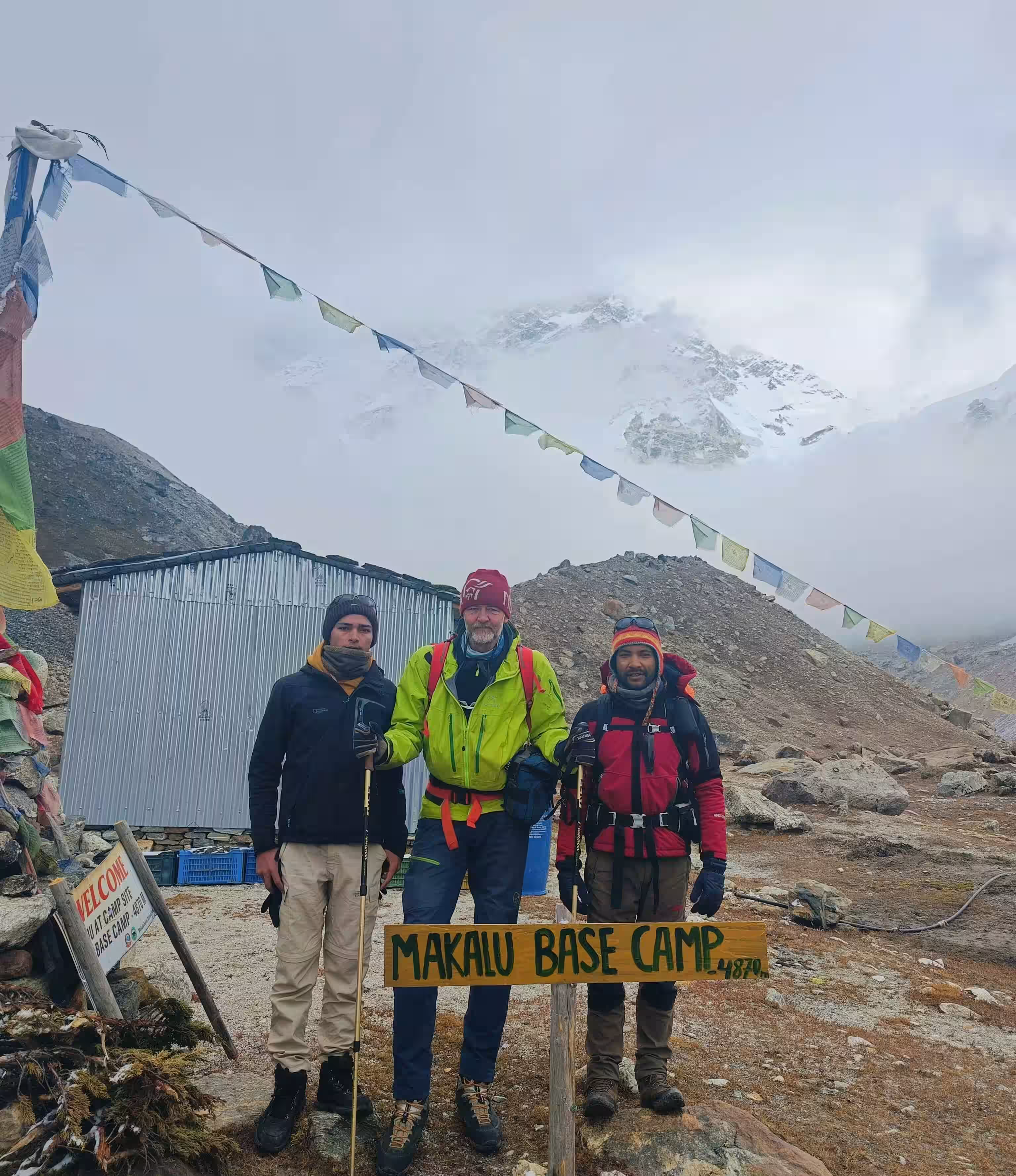
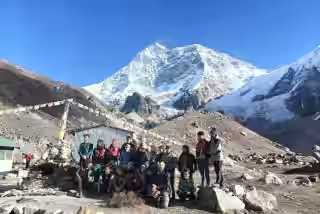
Group of people taking picture infront of Mount Makalu 8,485M in Makalu base camp
Preparation for Makalu base camp trek
Physical Fitness
Start training 4–6 weeks before the trek. Practice long walks and uphill hikes. Cardio exercises such as running or cycling to improve endurance. Strengthen your legs with squats and lunges.
Trekking Gear
Wear well-fitting trekking boots. Bring moisture-wicking clothing, warm layers, a down jacket, and rain gear. Bring a sleeping bag rated for -10°C. Carry trekking poles for support.
Packing Essentials
Bring a backpack (50–60L) with a rain cover. Pack a water bottle, snacks, and energy bars. Include sunscreen, lip balm, sunglasses, and a hat. Basic first-aid kit, personal medication and blister pads.
Permits
Obtain Makalu Barun National Park Permit and other necessary permits. These are mandatory for the trek.
Acclimatization
Plan for rest days to adjust to altitude. Walk slowly and stay hydrated. Avoid alcohol and smoking.
Guides and Porters
Hire a guide to navigate the trails safely. Consider hiring a porter to carry heavy loads.
Food and Water
Carry water purification tablets. Drink boiled water from teahouses. Eat high-calorie meals to maintain energy.
Mental Preparation
Be ready for long walks and remote areas. Stay positive and flexible. Prepare for unexpected challenges like weather changes.
Quick facts of Makalu base camp trek
Use these facts to judge the Makalu base camp trek before you read the full itinerary. The details below follow the current 15-day package structure on The Himalayan Odyssey page, with room for private changes when the route, health, or weather calls for more time.
Three main meals and two cups of drinks during the trek
Permits
Makalu barun National park permit, Restricated area permit
Guide
Licensed trek guide
Porter
Available as an extra service if not part of your final booking
Best months
March to May and September to December
Makalu base camp Trek Itinerary Summary
Plan
Meal plan
Sleep
1
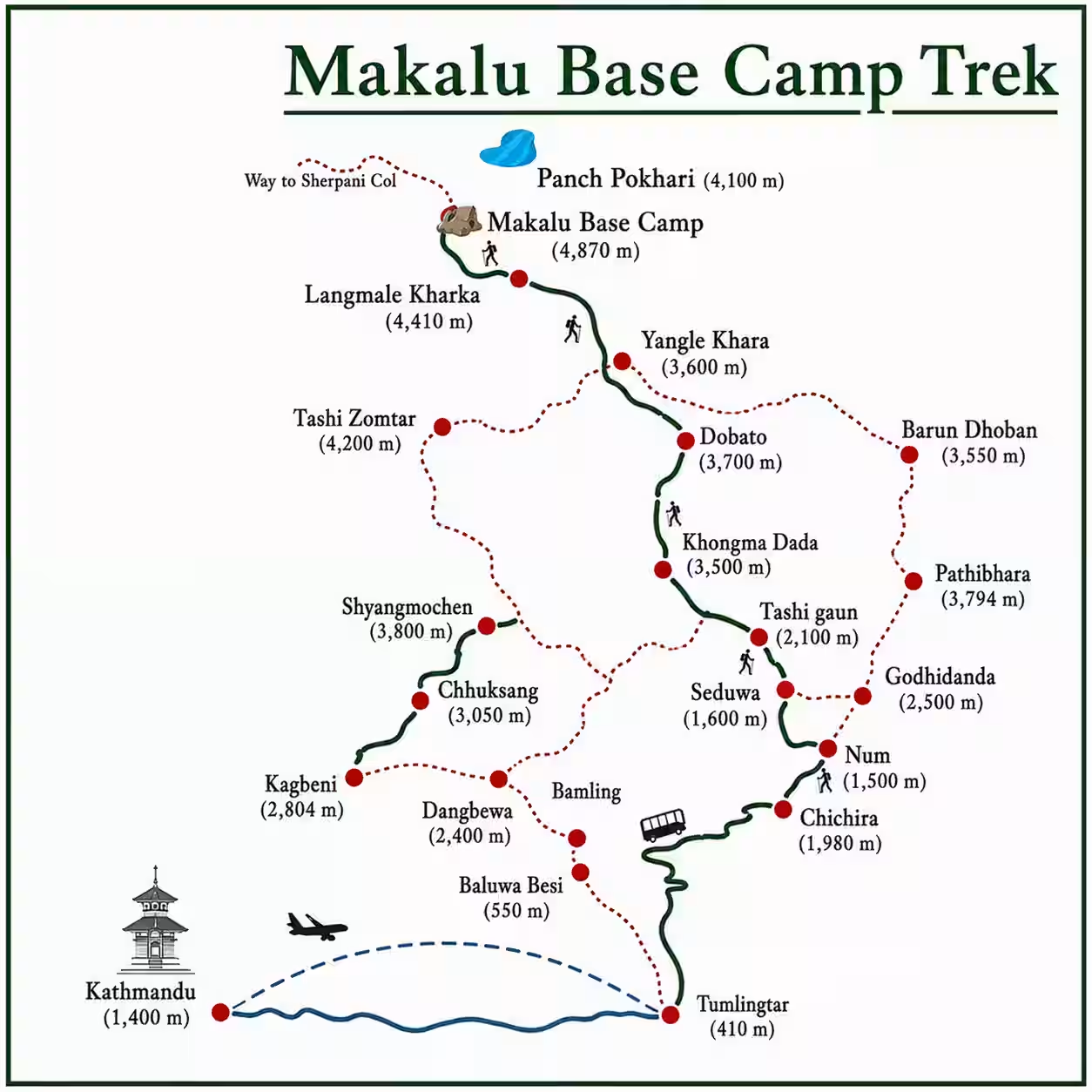
Drive to Tumlingtar and drive to num
Breakfast, lunch, dinner
Teahouse
2
Trek to Seduwa
Breakfast, lunch, dinner
Teahouse
3
Trek to Tashi gaun
Breakfast, lunch, dinner
Teahouse
4
Trek to Khongma dada
Breakfast, lunch, dinner
Teahouse
5
Trek to Dobato
Breakfast, lunch, dinner
Teahouse
6
Trek to Yangle Kharka
Breakfast, lunch, dinner
Teahouse
7
Acclimatization day
Breakfast, lunch, dinner
Teahouse
8
Trek to Langmale Khara
Breakfast, lunch, dinner
Teahouse
9
Trek to Makalu base camp trek
Breakfast, lunch, dinner
Teahouse
10
Explore makalu base camp
Breakfast, lunch, dinner
Teahouse
11
Trek to Yangle Kharka
Breakfast, lunch, dinner
Teahouse
12
Trek to Khongma dada
Breakfast, lunch, dinner
Teahouse
13
Trek to Seduwa
Breakfast, lunch, dinner
Teahouse
14
Trek to Arun river and drive to Tumlingtar
Breakfast, lunch, dinner
Tea house
15
Fly to KTM
Breakfast
Day01
Flight to Tumlingtar and drive to Num
35 min. flight and 4 hours drive Tea house/Lodge B,L,D
35 min. flight and 4 hours drive Tea house/Lodge B,L,D
Early in the morning, take a scenic flight to Tumlingtar. The 50-minute flight offers breathtaking views of the Himalayas.
In Tumlingtar, meet the driver and start the drive to Num. The drive is about 4–5 hours on a rough road, through picturesque hills, and terraced fields.
Num, a village perched on the mountain, commands spectacular views of the regional view.
At Hetauda on the way to go Tumlingtar from KTM by Jeep
Day02
Trek to Seduwa
5-6 hours Tea house/ Lodge B,L,D
5-6 hours Tea house/ Lodge B,L,D
The trek officially starts today. Descend sharply into dense vegetation to ford the Arun River. After crossing a suspension bridge, climb uphill to Seduwa.
The trail is arduous but satisfying, with colourful foliage and views ofthe countryside. Seduwa is a tiny village, and it will be possible to get your permits registered at a gate checkpoint.
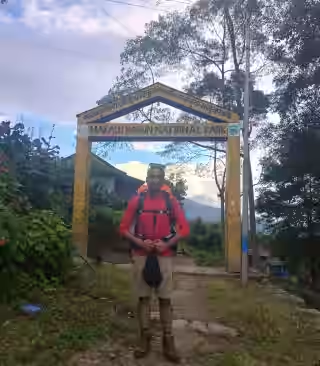
Just before to enter Makalu National Park in Seduwa
Day03
Trek to Tashigaon
4-5 hours Tea house/ Lodge B,L,D
4-5 hours Tea house/ Lodge B,L,D
From Seduwa, the track follows a gentle climb through terraces and little villages. Stroll by grazing cows and nice neighbours who are just getting on with their day.
The trek becomes steeper as you approach Tashigaun, the last permanent settlement on the route. Tashigaun provides breathtaking pictures of the adjacent hills and peaks.
Day 2 trekking just heading next to Tashigaun
Day04
Trek to Khongma Dada
6-7 hours Tea house/ Lodge B,L,D
6-7 hours Tea house/ Lodge B,L,D
Today is a challenging day as you ascend through dense forests of rhododendron and oak. The trail is steep, but the serene environment keeps you motivated.
You will experience streams and little patches of open space on the route. Khongma Danda is a ridge providing spectacular panoramic vistas of the neighbouring hills.
Only one lunch spot Dada kharka on the way to go Khongma dada from Tashigaun
Day05
Trek to Dobato
5-6 hours Tea house/ Lodge B,L,D
5-6 hours Tea house/ Lodge B,L,D
From Khongma Danda, the trail leads through a series of steep ascents and descents. Shipton La Pass, Where Panoramic vistas of Makalu and other peaks await.
Continue through rocky terrain and descend to Dobato. It's a tiring, long day, yet the views from the mountains make it all worthwhile.
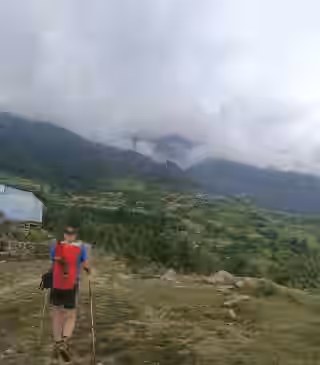
Early morning before to leave from Dobato traveler taking picture
Day06
Trek to Yangle Kharka
5-6 hours Tea house/ Lodge B,L,D
5-6 hours Tea house/ Lodge B,L,D
Today’s trail descends through lush forests and grassy meadows. You will go through waterfalls and side creeks, providing delight to the walk.
Yangle Kharka is a scenic valley covered by imposing towering peaks. The teahouse around here is a quiet place with a calm atmosphere very easy for unwinding.
Yangle kharka village
Day07
Acclimatization Day
3-4 hours Tea house/ Lodge B,L,D
3-4 hours Tea house/ Lodge B,L,D
Spend a day at Yangle Kharka for the purpose of acclimatizing to the altitude. Take short hikes around the valley to aid acclimatization.
Explore the area and take in the beautiful scenery of mountains and glaciers. Use this time to rest, hydrate, and prepare for higher altitudes.
Singe to go shivadhara on acclimatization day
Day08
Trek to Langma Le Kharka
4-5 hours Tea house/ Lodge B,L,D
4-5 hours Tea house/ Lodge B,L,D
Today’s trail leads you through alpine meadows and rocky outcrops. The ascent is slow and fatigable but demanding because of low air pressure. You will walk by small creeks and see beautiful views of the surrounding mountains.
Langma Le Kharka is a remote area with basic facilities, offering a true wilderness experience.
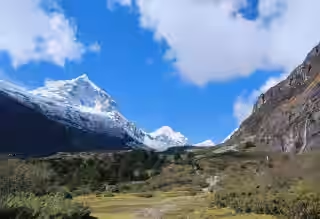
Beautiful Mountain view from Langmale Kharka
Day09
Trek to Makalu Base Camp
4-5 hours Tea house/ Lodge B,L,D
4-5 hours Tea house/ Lodge B,L,D
This is the most exciting day of the trek. The route is difficult, with stony steps and rocky trails.
Getting closer to the base camp, the imposing scale of Mount Makalu begins to dominate the view. The base camp is at 4,870 m and is protected by tall peaks and glaciers.
Gigantic Mt. Makalu inside cloud and red color tea house in Makalu base camp
Day10
Explore Makalu Base camp
3-4 hours Tea house/ Lodge B,L,D
3-4 hours Tea house/ Lodge B,L,D
Spend a day in the base camp and enjoy the amazing panorama. With Everest Lhotse, the imposing spire of Mount Makalu forms a spectacular view.
Go for short hikes, such as at the viewpoint, or simply relax and appreciate the peace of being in the high-altitude environment. Capture photos and create memories of this remarkable destination.
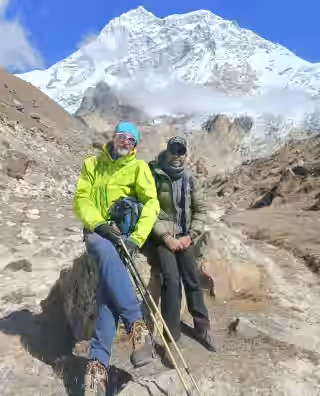
Taking rest on the way to go Swiss Camp from Makalu Base camp with Mount Makalu Background
Day11
Trek to Yangle Kharka
5-6 hours Tea house/ Lodge B,L,D
5-6 hours Tea house/ Lodge B,L,D
Start the trek down to Yangle Kharka, following rocky tracks and alpine pastures back up the hill. Downhill walking seems much less tiring, but the arduous times need endurance.
Please take in the changing scenery as you ascend to higher altitudes and as you descend to lower altitudes.
Beautiful Mountain view from Tadosa On the way back to Yangle Kharka
Day12
Trek to Khongma Dada
8-9 hours Tea house/ Lodge B,L,D
8-9 hours Tea house/ Lodge B,L,D
Today’s trek involves uphill and downhill sections as you return to Khongma Danda. The trail is familiar but still requires effort.
Stop at vantage points to enjoy one last time the mountain landscape. Lie down at Khongma Danda and contemplate the journey to date.
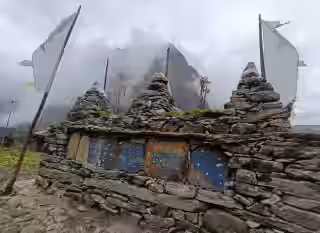
Spiritual Mane wall on the way back to Khongma dada
Day13
Trek to Seduwa
6-7 hours Tea house/ Lodge B,L,D
6-7 hours Tea house/ Lodge B,L,D
The trail descends steeply through forests and terraced fields. The colourful and lush greenery makes the trek worthwhile.
Arrive at Seduwa in the afternoon and get some rest from the challenging trails of the past couple of days.
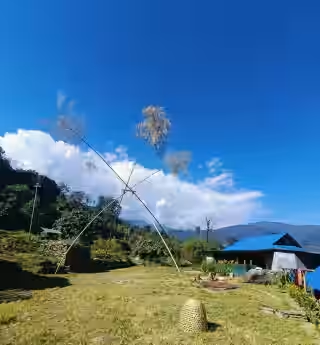
Traditional swing during Dashain and Tihar festival On the way back to Seduwa from Khongma
Day14
Trek to Arun river and drive to Tumlingtar
2 hours trek and 4 hours drive Hotel B,L,D
2 hours trek and 4 hours drive Hotel B,L,D
Enter the Arun River, walking across suspense bridges and feeling the soothing flow of water. After reaching the river, drive back to Tumlingtar.
Final scenes of the hills and of rural scenery are provided by the drive. Spend the night in Tumlingtar, getting ready for the flight back to Kathmandu.
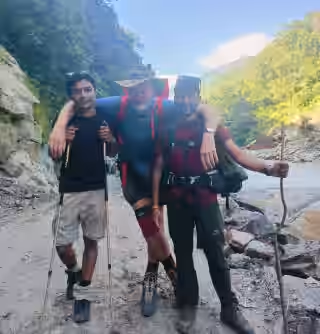
Just finishing trek with good smile in Arun River
Day15
Flight to Kathmandu
35min Hotel B
35min Hotel B
Fly in the morning from Tumlingtar to Kathmandu. The flight lasts 50 min., and this is the last view of the Himalayas from the helicopter.
On arrival at Kathmandu, transfer to your hotel. While you can also spend the day lying down, there is always an opportunity to visit some of the city’s markets and attractions.
Fixed departures of Makalu base camp trek
.
Date
Status
Price
Action
October 06, 2026
Available
$1,850$1,650
October 13, 2026
Available
$1,850$1,650
October 20, 2026
Available
$1,850$1,650
October 27, 2026
Available
$1,850$1,650
November 02, 2026
Available
$1,850$1,650
November 09, 2026
Available
$1,850$1,650
November 16, 2026
Available
$1,850$1,650
November 23, 2026
Available
$1,850$1,650
Oct 06, 2026
Oct 20, 2026
$1,850$1,650
Oct 13, 2026
Oct 27, 2026
$1,850$1,650
Oct 20, 2026
Nov 03, 2026
$1,850$1,650
Oct 27, 2026
Nov 10, 2026
$1,850$1,650
Nov 02, 2026
Nov 16, 2026
$1,850$1,650
Nov 09, 2026
Nov 23, 2026
$1,850$1,650
Nov 16, 2026
Nov 30, 2026
$1,850$1,650
Nov 23, 2026
Dec 07, 2026
$1,850$1,650
Makalu base camp trek map
Altitude profile of Makalu base camp trek
Start
Peak
End
Total Ascent:
Ktm
1,400m
Tumlingtar
410m
Num
1,500m
Seduwa
1,600m
Tashi gaun
2,100m
Thulo dada
2,700m
Khongma dada
3,500m
Dobato
3,700m
Yangle Khara
3,600m
Langmale Khara
4,410m
Makalu base camp
4,870m
Yangle Kharka
3,600m
Khongma
3,500m
Seduwa
1,600m
Tumlingtar
410m
Cost Details for Makalu base camp trek
The Himalayan Odyssey provides the Makalu Base Camp Trek Cost for USD 1,650. For all the services required with a corresponding and inclusive to permits, boarding, which comprises the trip, is included in this price.
The cost of Makalu Base Camp Trek varies to some extent depending on the length of the walk, the cost of the permits, the costs for the food and the costs of the nights in hotels. Generally, the trek is priced at about USD 1,450 and USD 2,000 per person.
This includes but is not limited to, permits, guide fees, porters, accommodation, food and drink and transport. It may be more expensive if you want options such as a private guide or if you hike in tourist season.
To ensure a pleasant and trouble-free experience, it is recommended to select a reputable trekking partner such as The Himalayan Odyssey. This ensures you’re fully prepared and have everything included in the package.
General Inclusions
Domestic Flight (KTM-Tumlingtar-KTM
Breakfast, Lunch, and Dinner during the trek
Accommodation during the trek
Tumlingtar to Num by shearing Jeep
Arun river to Tumlingtar transfer by shearing jeep
Professional trek Guide
All the required permits for trek
Salary, food, and accommodation of your staff during the trek
Staff Insurance
Tour Certificate
Not Included
KTM Hotel
Porter service
International flight ticket
International airport tax
Visa Fee
Other personal items. (Phone calls, snacks, hot and cold drinks, laundry, alcohol, extra porter, shower, etc )
Private Travel Equipment
Excess baggage cost during your domestic flight
Travel insurance
Tips for staff and guide
Anything that is not listed in the “PRICE INCLUDES” section above
Adds on and Makalu Base Camp Trek Extension
Makalu base camp trek extension
However, if you have spare time and a wanting for more adventure, there are some trek extensions and options within reach of the Makalu Base Camp Trek.
An example of this is the Barun Valley Trek, which leads you further into the Makalu Barun National Park. On this walk, one gets incredible views of snow-clad mountains and wild areas. It also provides a chance to explore untouched wilderness.
You may also opt for the Kanchenjunga Base Camp Trek, situated in the nearby Kanchanjunga area. In this trek, you will reach the foot of the world's third-highest mountain, Mount Kanchenjunga.
The trail is similar in its difficulty to the Makalu trek, but it provides different sceneries and cultural experiences.
An alternative is the Everest Base Camp Trek, by crossing Sherpani col the highest pass in the region,which is more widely used and accessible. Although more hectic, it still allows one to witness scenic vistas of the Himalayan ranges, such as Mount Everest. The way is very well-paved, and teahouses and facilities are abundant.
These extensions and alternatives provide various options depending on your interests and available time. They are all attractive and distinct in various degrees of difficulty and challenge, with each one offering different levels of experience.
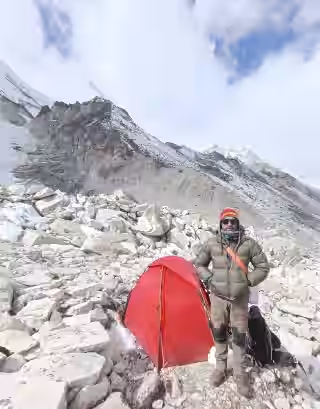
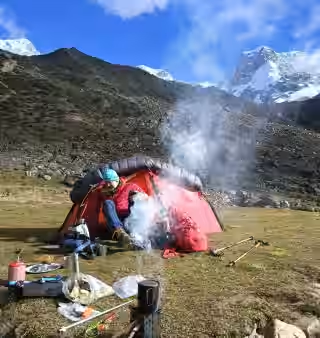
During the side trip in Makalu Base Camp trek doing camping in free space
Porter service
The Himalayan Odyssey provides trustworthy porter services that will help to improve the comfort of your trek. A porter will take all your large bags so that you can concentrate on good sightseeing.
Porters are seasoned and know the land, so your pack is hand-carried to each station safely. They are equipped to cope with the physical rigours of the trek and can cope with the difficult terrain.
The presence of a porter also facilitates the limits of the weight, because the load is carried by the porter, and you are carrying only the items necessary in your daypack. This will lessen the load and make you more mobile.
With the Himalayan Odyssey, every porter is taken care of, properly compensated, and works in safe surroundings.
If you’re looking for a more convenient trekking experience, The Himalayan Odyssey can arrange a porter for you.
This service provides the ability to be comfortable on a trek and to appreciate the beauty of Makalu Base Camp Trek without the complication of carrying heavy baggage.
One porter cost for this trek comes about $250 including all the transport, food and accommodation.
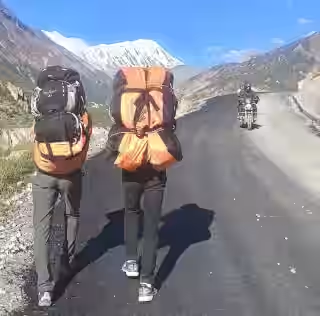
The Himalayan Odyssey Double bag carrying by our porter
Private transport
If you want to private transport insted of shearing from Tumlingtar to Num and from Arun river to Tumlingtar both way extra cost comes about $100.
Permits for Makalu base camp trek
For trekking in the Makalu area, there are three main permits required:
Makalu Barun National Park and Conservation Area Permit
Entry to Makalu Barun National Park is needed by this permit. The expense is around USD 30 per person for foreigners.
Makalu Rural Municipality Permit
This permit is necessary for entering the rural municipality area. The cost is around USD 20 per person.
Restricted Area Special Permit
This permit may be required if your route passes through restricted villages like Chepuwa, Hatiya, Kimathangka, and Pawakhola.
The permit is roughly USD 10 per person per week for the initial 4 weeks. Subsequently, the price rises to USD 20 per person per week.
These permits are crucial to guarantee safe and legal walking in the area. Make sure to apply for them before your trek and carry them at all times.
Accommodation and Food during Makalu base camp trek
Accommodation during Makalu Base Camp Trek
There are limited and basic accommodation options during the Makalu Base Camp Trek. In Kathmandu, you will be lodged in typical hotels with comfortable beds, private bathrooms and Wi-Fi. These hotels are clean and provide good meals.
In the journey, the lodging is based on most teahouses or lodges. Teahouses provide basic rooms containing twin beds, a mattress, a sheet and a pillow. Most rooms are small and have shared bathrooms. Hot showers are available at some teahouses but may cost extra.
In higher altitudes, facilities become more basic. Blankets can be light, and therefore, it really matters to have a warm sleeping bag with you. Toilets are often squat-style and outside the lodge.
Teahouses serve meals in a communal dining area. The food includes rice, lentils, noodles, soups, and tea. Vegetarian options are common.
Limited or no accommodation may be available in remote areas. Camping could become necessary, with tents and equipment carried by porters.
Expect simple living conditions but warm hospitality throughout the trek.
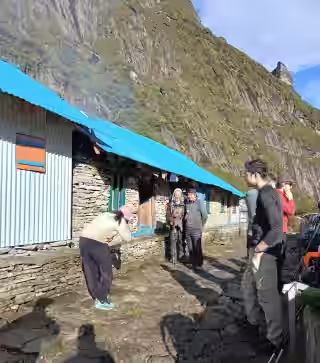
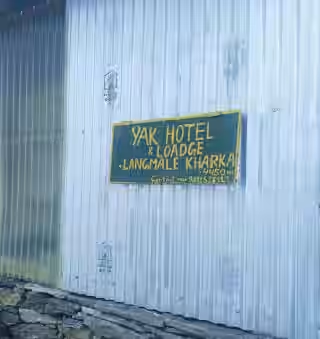
Best accommodation place in Langmale kharkha on the day before to reach Makalu base camp
Makalu Base Camp Trek Food
Food at Makalu Base Camp Trek is simple but nutritious. Meals are served in teahouses along the trail.
Breakfast options include bread, eggs, pancakes, porridge, and tea. Lunch is usually rice, lentils, noodles, or fried rice. Dinner includes similar items like dal bhat, pasta, soups, and potatoes.
Vegetarian meals are common and freshly prepared. Meat can be obtained at lower altitudes, but it is not highly suggested owing to storage issues. Snackable biscuits, chocolate, and energy bars can be purchased at some stops.
Drinks like tea, coffee, and hot water are available. Water can be bought in bottles, but it is more advisable to have a reusable bottle and water purification tablets. Food is easy, nourishing and keeps your energy going.
Day special in local tea house at Makalu base camp
Best seasons for Makalu base camp trek
The most ideal seasons for Makalu Base Camp Trekking are spring (March to May) and autumn (September to November).
The months have been over, and the weather has been dry and clear, hence clear and dry weather has allowed us to observe Himalayan ranges from an enormously far distance.
Spring offers warm weather, and flowers run alongside the trail. Autumn offers stable weather and colourful landscapes.
Summer (June to August) is the monsoon season, with heavy rainfall that can make trails slippery and difficult. Winter (December to February) is extremely cold, particularly at great heights, and it may snow.
To enjoy the full benefit, walk in spring or autumn when the Makalu weather is better, and the trekking conditions are optimal.
Spring ( March - May)
Autumn ( Sep - Nov)
Packing for Makalu base camp trek
Every trekking requires certain preparation of gears and types of equipment for the journey to make your trip more comfortable. It is recommended to carry the necessary and light things so that it will be easy while you are walking. The following belongings are recommended that should be brought, although we concede that our clients have their own decision for the clothing. To know what to expect in the Manaslu circuit Trek, we have prepared some useful clothing & gear during the trek.
Travel Documents
Airline tickets (confirmation and itinerary)
Nepal Visa form (may be obtained at Kathmandu Airport)
Travel insurance policy documents
Valid passport
Copy of passport (2 copies, first page only)
Passport photos (4)
Travel Equipment
Luggage locks
Travel wallet
Passport/money belt
Sleeping bag liner
Travel plug adapters
Electrical converter
Travel Clothing
Quick-dry undergarments
Synthetic or wool T-shirt
Long-sleeve, travel-friendly shirt and pants
Casual shoes
Mid-weight wool or synthetic socks
Trekking Equipment
Day pack (25–35 liters)
Sleeping bag comfortable to 0°F (dependent upon season, weather forecast and personal preference)
Waterproof hiking boots
Camp shoes (down booties or running shoes)
LED headlamp with extra batteries
Trekking poles
Trekking Clothing
Wool or synthetic T-shirts (2)
Mid-weight fleece or soft-shell jacket (2)
Mid-weight down or synthetic parka with hood
Convertible hiking pants
Fleece pants or insulated pants
Lightweight waterproof/breathable rain jacket and pants
Mid-weight waterproof and fleece gloves or mittens