
Mera Peak Climbing in Nepal

Mera Peak Climbing in Nepal

Mera Peak Climbing Overview

Mera Peak climbing in Nepal is a 15-day guided trip through the Hinku Valley to a 6,470 m summit. The route combines high-altitude trekking, acclimatization, climbing practice, High Camp, and an early summit attempt.

Your route starts with the trip to Lukla before you trek toward Chutanga. You then cross Zatrwa La and enter the Hinku Valley. The route continues through Thuli Kharka, Kothe, Thaknak, and Khare before the climbing stage begins.

This approach gives you several trekking days before you sleep above 5,000 m at Khare. You spend another night there for acclimatization and climbing preparation before moving to Mera High Camp.

At Khare, your climbing team prepares you for the equipment used higher on the mountain. Practice covers crampons, an ice axe, a climbing belt, an ascender, and the rope system used during the climb. You have time to check your personal climbing gear before leaving for High Camp.

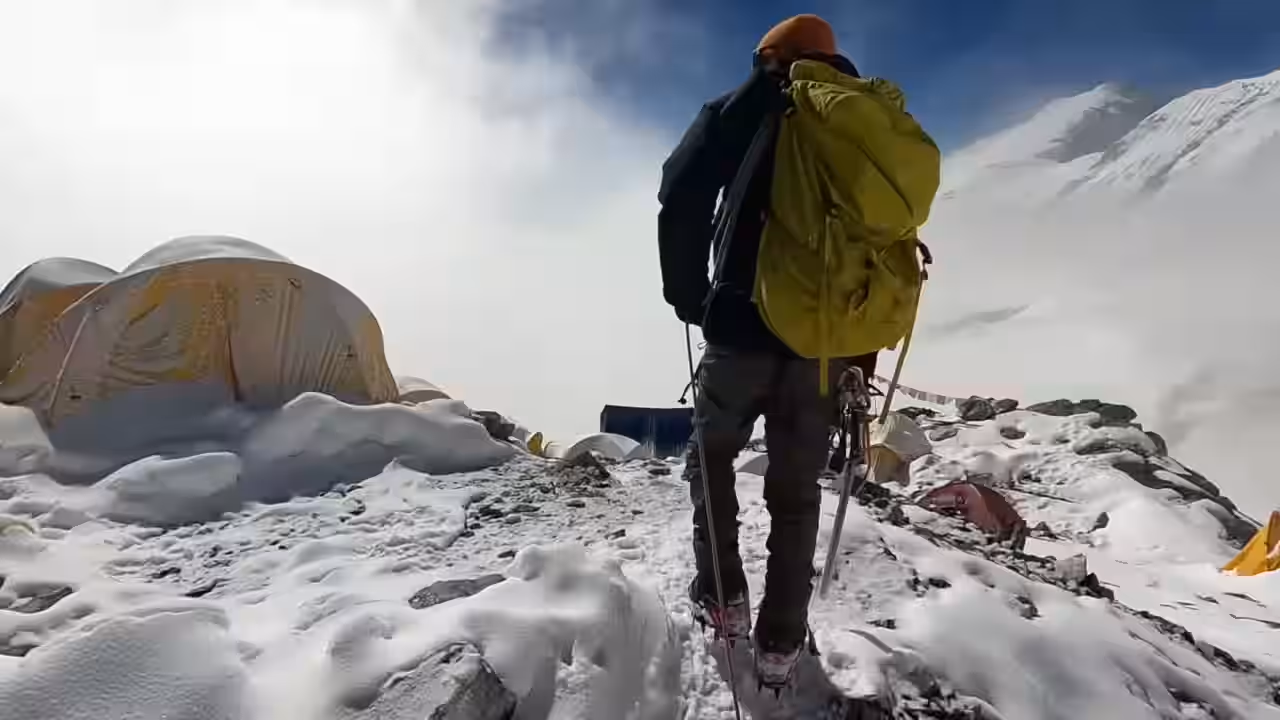
The climbing stage takes you from Khare at about 5,045 m to High Camp at about 5,780 m. This is the final overnight stop before the summit attempt. The higher route moves onto snow and glacier terrain where your guide manages the climbing line and rope system.

Summit day starts around 2:00 a.m. from High Camp. You prepare your cold-weather clothing and climbing equipment before leaving in darkness. The route continues across snow and glacier terrain toward the summit. Ropes may be used where the route crosses crevasses or where the climbing line requires protection.

Your guide controls the pace throughout the ascent. Weather, snow, glacier conditions, team progress, and individual conditions can change the summit plan. Reaching the summit never takes priority over a safe turnaround decision.

After the summit attempt, you descend from the upper mountain toward Khare. The itinerary keeps the following day as a reserve day. We can use it when weather or another operating issue prevents the planned summit attempt.

The package brings the main parts of the Mera Peak climb into one planned trip. Our team coordinates the approach route, climbing support, required permits, mountain accommodation, High Camp arrangements, meals included in the package, and return to Kathmandu.

Mera Peak suits you if you have strong trekking fitness and want to progress into a 6,000 m Himalayan climb. You should be ready for repeated trekking days, very high altitude, glacier travel, cold conditions, and a long summit stage. Previous high-altitude trekking and practice with climbing equipment give you better preparation for the trip.

The sections below show what the 15-day package includes. You can review the route, daily altitude changes, acclimatization plan, High Camp, summit day, climbing difficulty, required experience, accommodation, meals, gear, permits, price, reserve-day plan, and booking terms before you decide.
Mera Peak Trip at a Glance

Trip fact

Trip plan

Summit

6,470 m / 21,227 ft

Trip length

15 days

Route

Lukla, Chutanga, Zatrwa La, Hinku Valley, Khare, High Camp

Khare

About 5,045 m

High Camp

About 5,780 m

Best periods

March to May; September to November

Trip style

Teahouses plus one High Camp night

Starting price

USD 2,150 per person

Summit support

One Sherpa climbing guide for up to two climbers

What You Get From This Climb

  • 6,470 m summit objective through the Hinku Valley.
  • Compact Lukla and Zatrwa La approach before the higher valley stages.
  • Khare acclimatization and climbing preparation before High Camp.
  • Glacier travel and an early summit push with rope use where the climbing line requires it.
  • A shorter single-summit option than the Mera and Island Peak trip.

Why Choose Mera Peak?

Mera Peak gives you a serious Himalayan summit without the sustained steep climbing found on some other 6,000 m peaks. The main challenge comes from altitude, long days, cold, and movement on snow or glacier terrain.

The Hinku Valley approach has fewer services than the main Everest Base Camp corridor. You spend several days moving through the valley before reaching Khare and the climbing stage.

Choose Mera when you want one summit and a shorter climbing program. Choose the Mera and Island Peak trip when you want two 6,000 m summits and the Amphu Laptsa crossing.

mera-peak-high-camp_nikon_z_8.jpg
High Camp for Mera Peak Climbing

Is This Mera Peak Trip Right for You?

Mera Peak works best when you already have strong trekking fitness and can handle several active days in a row. Prior high-altitude trekking gives you a better reference for how your body reacts above 4,000 m.

THO strongly prefers previous high-altitude trekking. Basic practice with crampons, an ice axe, a climbing belt, and roped glacier travel is strongly preferred too.

You do not need to arrive as an advanced alpinist. You do need to arrive ready for cold starts, a long summit day, and instructions from the climbing guide.

Fit check

What it means

GOOD FIT

Strong trekker, comfortable with long uphill days, ready for snow and glacier travel.

THINK TWICE

You want a trekking-only trip, dislike cold alpine starts, or do not have time to train for repeated uphill days.


Route Overiew

The 15-day route begins in Kathmandu, then uses the early road transfer to Manthali and the flight to Lukla. From Lukla, you trek to Chutanga, cross Zatrwa La, and enter the Hinku Valley. The approach continues through Thuli Kharka, Kothe, Thaknak, and Khare.

Khare is the main preparation point. You sleep there for two nights, use Day 7 for acclimatization and climbing practice, then move to High Camp at about 5,780 m. Day 9 starts around 2:00 a.m. for the summit attempt. Day 10 sits directly after the planned summit day as the built-in reserve position.

The return follows Khare, Kothe, Thuli Kharka, Zatrwa La, and Lukla. You then fly to Manthali and return to Kathmandu by road. The itinerary does not add Island Peak, Amphu Laptsa, or another summit.

Route stage

Altitude / high point

What changes

Kathmandu to Chutanga

Chutanga about 3,050 m

Early road transfer to Manthali, flight to Lukla, then the first 3-4 hour trek through forest.

Chutanga to Thuli Kharka

Zatrwa La 4,600 m

A steep climb reaches the pass, followed by a steep descent to the overnight stop.

Thuli Kharka to Kothe

Kothe about 4,095 m

The route trends downhill through pine and larch forest before reaching Kothe.

Kothe to Thaknak

Thaknak about 4,350 m

The route passes Gondishung and Lungsumba Gompa and moves above 4,000 m.

Thaknak to Khare

Khare 5,045 m

Narrow and rocky ground leads past Hinku Nup and Shar glaciers before a steep finish.

Khare second night

5,045 m

Acclimatization, equipment practice, recovery, and gear check before High Camp.

Khare to High Camp

5,780 m

About 735 m higher sleeping altitude. The climbing stage begins.

High Camp to summit and descent

6,470 m summit

2:00 a.m. start, cold pre-dawn climbing, snow or glacier ground, rope use at crevasses, then descent toward Khare.

Reserve-day position

Toward Khare

Day 10 can absorb a blocked summit attempt or support the post-summit return plan.

Khare to Lukla return

Zatrwa La 4,600 m on Day 13

Descend to Kothe, return to Thuli Kharka, then cross the pass back to Lukla.

Brief Itinerary for Mera Peak Climbing

Day

Route

Start -> sleep altitude

Time

Stay

Meals

1

Kathmandu Airport -> Kathmandu hotel

Kathmandu

Airport transfer

Hotel

Welcome dinner

2

Kathmandu -> Manthali -> Lukla -> Chutanga

Lukla about 2,800 m -> Chutanga about 3,050 m

Road starts about 1:00 a.m.; ~35 min flight; 3-4 h trek

Teahouse

B, L, D

3

Chutanga -> Zatrwa La -> Thuli Kharka

~3,050 m -> 4,600 m high point -> ~3,900 m sleep

7-8 h walking

Teahouse

B, L, D

4

Thuli Kharka -> Kothe

~3,900 m -> ~4,095 m

5-6 h walking

Teahouse

B, L, D

5

Kothe -> Gondishung -> Lungsumba Gompa -> Thaknak

~4,095 m -> ~4,350 m

About 4 h walking

Teahouse

B, L, D

6

Thaknak -> Dig Kharka -> Khare

~4,350 m -> 5,045 m

About 3 h walking

Teahouse

B, L, D

7

Khare -> training and acclimatization -> Khare

5,045 m -> 5,045 m

Training and recovery day

Teahouse

B, L, D

8

Khare -> Mera High Camp

5,045 m -> 5,780 m

About 6 h climbing / trekking

Tent

B, L, D

9

Mera High Camp -> Mera Peak summit -> descent toward Khare

5,780 m -> 6,470 m -> lower descent position

About 8-12 h summit stage

Planned lower camp during descent toward Khare

B, L, D

10

Post-summit position -> Khare | reserve day

Reserve position -> Khare

Used for second summit attempt or return / recovery

Khare after planned Day 9; climbing camp plan if summit moves to Day 10

B, L, D during the mountain reserve day

11

Khare -> Kothe

5,045 m -> about 4,095 m

About 4-5 h walking

Teahouse

B, L, D

12

Kothe -> Taktho -> Thuli Kharka

~4,095 m -> ~3,900 m

About 5-6 h walking

Teahouse

B, L, D

13

Thuli Kharka -> Zatrwa La -> Lukla

~3,900 m -> 4,600 m high point -> ~2,800 m

About 6-7 h walking

Teahouse

B, L, D

14

Lukla -> Manthali -> Kathmandu

~2,800 m -> Kathmandu

Flight and road transfer

Hotel

Breakfast, lunch, and dinner

15

Kathmandu hotel -> international airport

Kathmandu -> airport

Airport transfer

Departure day

Breakfast before departure

Upcoming Departures and Private Dates

THO offers scheduled departures and private-date options during the main climbing periods. Ask for the next available date, current group size, and live price before booking.

The departure calendar shows start date, end date, trip status, price, and remaining spaces for confirmed departures.

Detailed Day-by-Day Itinerary for Mera Peak Climbing

The short table shows the schedule. The daily entries below add the route movement, altitude change, terrain, day purpose, sleeping place, and meal plan.

Day 01
Kathmandu Airport to Kathmandu Hotel
Kathmandu hotel Welcome dinner

THO representative meets you at the airport and transfers you to your Kathmandu hotel. Use the arrival day to recover from the international flight and settle before the mountain section.

You meet the trekking team in Kathmandu and review the route before departure. There is time for last-minute shopping before the early Manthali transfer.

Day 02
Kathmandu to Manthali to Lukla to Chutanga
Teahouse B, L, D
Teahouse B, L, D

The day starts very early with the road transfer from Kathmandu to Manthali. You then fly to Lukla, eat breakfast, sort the trekking gear, and begin the first walking stage.

The trail to Chutanga runs through forest, with no teahouses between the two camps. The walking section is shorter than the past day that follows, which gives you time to settle into the mountain routine before the steeper climb.

You finish at Chutanga and stay there overnight. The next morning begins the first major altitude and terrain change of the route.

Day 03
Chutanga to Zatrwa La to Thuli Kharka
Teahouse B, L, D
Teahouse B, L, D

This is the first long mountain day. The route climbs steeply from Chutanga toward Zatrwa La at 4,600 m. The pass creates a large daytime altitude gain before you drop to a lower sleeping point.

This pass day forms part of the acclimatization pattern. After the pass, the trail descends steeply for about three hours toward Thuli Kharka.

The day is harder than the opening trek because you combine a high pass with a long descent. Keep the pace steady and follow your guide if weather, trail conditions, or altitude response changes the plan.

Day 04
Thuli Kharka to Kothe
Teahouse B, L, D
Teahouse B, L, D

The route becomes easier than the pass day. It follows a mostly gradual descent through pine and larch forest before you reach Kothe.

Although the route loses height for much of the day, your overnight point remains in the high Hinku Valley. Kothe becomes the base for the next stages toward Thaknak and Khare.

Your climbing paperwork stays within the THO package, so Kothe remains a normal trekking stop rather than a separate permit task for you.

Day 05
Kothe to Gondishung to Lungsumba Gompa to Thaknak
Teahouse B,L,D
Teahouse B,L,D

You continue higher through the Hinku Valley. The route passes Gondishung and Lungsumba Gompa before moving above 4,000 m and reaching Thaknak.

This day extends your time above 4,000 m before the larger move to Khare. The terrain is still part of the trekking approach, but the next day becomes rockier and finishes with a steeper climb.

Thaknak gives you another mountain night before the route reaches the main climbing preparation point at Khare.

Day 06
Thaknak to Dig Kharka to Khare
Teahouse B,L,D
Teahouse B,L,D

The route becomes narrower and rockier as you leave Thaknak. It passes Dig Kharka, goes by the Hinku Nup and Shar glaciers, and finishes with a steep climb to Khare.

This is a large sleeping-altitude gain. The itinerary responds by keeping you at Khare for a second night instead of moving straight to High Camp the next morning.

When you reach Khare, the focus shifts from normal trekking toward acclimatization, climbing practice, and the gear needed for the upper mountain.

Day 07
Khare to Climbing Practice to Khare
Teahouse B,L,D
Teahouse B,L,D

Day 7 keeps you at the same sleeping altitude after the large move from Thaknak. This gives your body another night at 5,045 m before you climb more than 700 m higher to High Camp.

Climbing practice covers climbing boots, crampons, an ice axe, a climbing belt, and an ascender. Your team reviews the rope system used on the upper route.

Use the session to fit equipment, practice the guide commands you will need, and resolve gear problems before High Camp. The rest of the day supports food, hydration, recovery, and preparation for the climbing stage.

Day 08
Khare to Mera High Camp
Tent at Mera High Camp B,L,D

You leave the teahouse stage and move to the final camp before the summit attempt. The route to High Camp is steep and demanding.

The sleeping altitude rises from 5,045 m to about 5,780 m. Your guide controls the pace because the move comes directly after the two-night Khare stop and places you close to the summit stage.

At High Camp, the team prepares the tented setup and climbing equipment for the night. Eat, drink, organize your summit layers, and get as much rest as the early departure allows.

Day 09
Mera High Camp to Mera Peak Summit and Descent Toward Khare
Teahouse B,L,D
Teahouse B,L,D

You prepare before the 2:00 a.m. start because the climb begins in darkness and cold. Put on the summit layers and check the boots, crampons, climbing belt, ice axe, ascender, headlamp, and rope setup with your guide before leaving camp.

The upper route moves across snow or glacier terrain. It includes steep sections, narrow ground, and rope use where the line crosses crevasses. Your guide chooses the climbing line and keeps the group on a controlled pace.

The summit is the 6,470 m high point. Wind, snow, glacier condition, timing, and how each climber is moving can change the plan before the top. The climbing guide can set a turnaround point when continuing would put the team outside the safe operating plan.

After the summit attempt, you reverse the climbing route and descend from the upper mountain toward Khare. The package uses a planned lower camp during this descent before Day 10 continues the return to Khare. Day 10 sits immediately after this stage as the reserve position.

Day 10
Post-Summit Position to Khare | Reserve Day
Teahouse B,L,D
Teahouse B,L,D

Day 10 is the built-in reserve position for the summit stage. If weather or another operating problem blocks the Day 9 attempt, THO can use this day for another summit attempt when the guide decides conditions allow it.

When the Day 9 summit stage runs as planned, the reserve position supports the return toward Khare and recovery before the lower-valley descent. It is not an extra sightseeing day.

The route after the reserve day must place the team at Khare before Day 11 begins. This protects the fixed return sequence through Kothe, Thuli Kharka, Zatrwa La, and Lukla.

Day 11
Khare to Kothe
Teahouse B,L,D
Teahouse B,L,D

The return begins with a large descent from Khare toward Kothe. You retrace the Hinku Valley route and leave the highest teahouse stages behind.

The lower sleeping altitude gives the group more recovery after the summit block. Kothe places you on the return line toward Thuli Kharka and Zatrwa La.

This is a descent day rather than another acclimatization stage. Keep your trekking layers and rain protection available because the route moves back toward lower valley conditions.

Day 12
Kothe to Taktho to Thuli Kharka
Teahouse B,L,D
Teahouse B,L,D

You leave Kothe and use Taktho as the first named stop. From there, the trail climbs toward Thuli Kharka.

You are now preparing for the final pass crossing rather than gaining altitude for the summit. Thuli Kharka positions the group for Zatrwa La the next day.

By this stage, the climbing gear is no longer the focus. Your daypack, trekking layers, water, and steady return pace matter more for the pass approach.

Day 13
Thuli Kharka to Zatrwa La to Lukla
Teahouse B,L,D
Teahouse B,L,D

The final trekking day starts with the climb back to Zatrwa La. After the pass, the route drops toward the Lukla side of the mountains.

This day reverses the first major pass stage of the trip. The main difference is the large descent after the 4,600 m high point rather than another move deeper into the Hinku Valley.

You finish the walking portion in Lukla and prepare for the flight out the next day.

Day 14
Lukla to Manthali to Kathmandu
Kathmandu Hotel B,L,D

The return reverses the transport link used at the start of the trip. You fly from Lukla to Manthali and continue to Kathmandu by road.

Flight operations can change with weather and airport conditions. Keep the final international departure separate from this mountain transport day when your wider travel plan allows it.

You return to a Kathmandu hotel after the mountain section.

Day 15
Kathmandu Hotel to International Airport
Breakfast Before Departure

We transfers you to the airport for your international departure. Keep the pickup time tied to your confirmed flight and current traffic conditions.

This closes the 15-day Kathmandu-to-Kathmandu package. Any extra hotel night or Nepal extension sits outside this itinerary when it is not part of your written booking.

Start
Peak
End
Total Ascent:
Elevation changes from 1,400m to a peak of 6,470m 1,400m Kathmandu 3,050m Chutanga 4,100m Thuli Kharka 3,580m Kothe 4,700m Thaknak 5,045m Khare 5,900m High Camp 6,470m Mera Peak summit 5,045m Khare 3,580m Kothe 3,650m Taktho 4,100m Thuli Kharka 4,600m Zatrwa La 2,800m Lukla 475m Manthali 1,400m Kathmandu
Kathmandu
1,400m
Chutanga
3,050m
Thuli Kharka
4,100m
Kothe
3,580m
Thaknak
4,700m
Khare
5,045m
High Camp
5,900m
Mera Peak summit
6,470m
Khare
5,045m
Kothe
3,580m
Taktho
3,650m
Thuli Kharka
4,100m
Zatrwa La
4,600m
Lukla
2,800m
Manthali
475m
Kathmandu
1,400m

Mera Peak Climbing Cost

The current package starts at USD 2,150 per person before group discounts. Your final quotation reflects the departure date, group size, staffing, transport, and camp plan.

Group size

Package price

Standard listed price

USD 2,150 per person

3 to 5 travelers

USD 2,050 per person

6 to 10 travelers

USD 1,950 per person

11 to 16 travelers

USD 1,850 per person

Detailed Summit Day: High Camp to 6,470 m and Descent Toward Khare

The summit stage starts at Mera High Camp at about 5,780 m. Departure is around 2:00 a.m., so you prepare your cold-weather clothing and climbing equipment before leaving in darkness.

Before departure, your guide checks the equipment used on the upper route. The equipment check covers climbing boots, crampons, an ice axe, a climbing belt, an ascender, a headlamp, carabiners, and the rope system. Group ropes and anchors remain part of the operating equipment.

The climb continues over snow or glacier terrain. The route includes steep and narrow sections and rope use for crevasse crossings. Snow cover and glacier condition decide the exact line, so the guide can change rope placement or the pace from one departure to another.

The summit reaches 6,470 m. The climb does not end when you reach the high point. You must reverse the route and descend from the upper mountain toward Khare. Cold, wind, snow, visibility, timing, route condition, and the condition of each climber can force a turnaround before the summit.

Plan on about 8-12 hours for the summit stage. Your pace, weather, snow, and glacier conditions can change the actual time.

Day 10 remains directly behind the planned summit stage. If Day 9 is unable to proceed, the guide can use that position for another attempt when conditions allow. If Day 9 proceeds, the day supports the return to Khare and recovery before the lower-valley descent.

How the 15-Day Plan Builds Acclimatization

The route does not climb in one continuous line. Day 3 reaches Zatrwa La at 4,600 m and then drops to Thuli Kharka. The next stages move through Kothe and Thaknak before the larger sleeping-altitude gain to Khare at 5,045 m.

Khare is the main acclimatization pause before the climbing stage. Day 7 keeps the same sleeping altitude, adds climbing practice, and gives you another night at 5,045 m before High Camp.

Day 8 then moves to High Camp at about 5,780 m. That is a large rise in sleeping altitude, which is why the earlier route and the second Khare night matter. Fitness helps you handle the work, but it does not replace the time spent adapting to altitude.

The guide can change the pace, camp plan, or summit decision when a climber is not adapting well. The itinerary is a package plan, not a promise that every person will follow the same altitude response.

Khare Training Day Before High Camp

Day 7 is not an empty rest day. It combines acclimatization, equipment practice, recovery, and preparation for the move to High Camp.

Practice covers climbing boots, crampons, an ice axe, a climbing belt, and an ascender. The climbing team reviews the rope system used higher on the mountain.

Use the session to check fit and movement before the summit block. A problem with boots, crampons, gloves, or your climbing setup is easier to solve at Khare than after you move to High Camp.

Where the Reserve Day Sits

Day 10 sits immediately after the planned Day 9 summit attempt. This is the package reserve position for weather or another operating problem that blocks the first attempt.

If the summit attempt is delayed, the climbing guide decides whether a second attempt is practical. If Day 9 runs as planned, the reserve position supports the descent to Khare and recovery before Day 11.

When Day 9 runs as planned, Day 10 finishes the return to Khare and gives you recovery time before Day 11. If the summit moves to Day 10, the climbing guide adjusts the return camp and lower-valley schedule.

How Hard Is Mera Peak?

Mera Peak is not a casual trekking extension. Its altitude and long summit stage demand more than the moderate climbing angle suggests.

Factor

Rating

What it means for you

Physical

High

Repeated trekking days plus a long summit stage.

Altitude

Very high

The summit reaches 6,470 m, with High Camp near 5,780 m.

Technical

Moderate

Snow and glacier movement with standard mountaineering equipment.

Exposure

Moderate

Open upper terrain can feel exposed in wind or poor visibility.

Objective hazards

Variable

Crevasses, hard snow, ice, loose rock, and slips can affect the line.

Weather

High influence

Wind, snow, cloud, and cold can stop the summit attempt.

Remoteness

High

The Hinku Valley has fewer services than the main Everest trekking corridor.

Rescue limits

Condition-dependent

Weather, communications, location, and aircraft access affect rescue options.

General Inclusions
  • Airport arrival and departure transfers in Kathmandu.
  • Kathmandu hotel stay with breakfast.
  • Kathmandu-Manthali road transfers and Manthali-Lukla flights.
  • Teahouse accommodation through the Hinku Valley and the descent.
  • Tent accommodation at Mera High Camp.
  • Breakfast, lunch, and dinner during the mountain section.
  • Mera Peak climbing permit, Makalu-Barun National Park entry, TIMS, and trip paperwork.
  • A trekking guide on the approach and a professional and local Sherpa climbing guide for the climbing stage.
  • One Sherpa climbing guide for up to two climbers during the summit stage.
  • One porter for every two guests, with about 10 to 12 kg of guest baggage per person.
  • Shared ropes, anchors, High Camp tents, kitchen equipment, and group first-aid supplies.
  • Staff wages, meals, lodging, transport, and insurance.
Not Included
  • International flights to and from Nepal.
  • Nepal visa fees.
  • Personal travel and climbing insurance.
  • Personal trekking clothing and footwear.
  • Personal climbing gear, including boots, crampons, helmet, climbing belt, ice axe, ascender, carabiners, and descent device.
  • Personal drinks, snacks, charging, Wi-Fi, hot showers, bottled water, and lodge extras.
  • Tips for guides, climbing staff, porters, drivers, and other support staff.
  • Extra hotel nights, meals, transport, or staff costs caused by personal changes or delays outside the package terms.

Permits and Official Fees

Current Nepal climbing records list Mera Peak at 6,470 m. The foreign climbing fee is USD 350 in spring and USD 175 in the other listed seasons.

Makalu-Barun National Park entry currently costs NPR 3,000 for foreign visitors and NPR 1,500 for SAARC visitors. The current TIMS fee for Mera Peak Trek is NPR 2,000 for non-SAARC guests and NPR 1,000 for SAARC guests.

We include the climbing permit, national park entry, TIMS, and required trip paperwork in the confirmed package.

Accommodation, Meals, and Transport

The route uses teahouses from Chutanga through Khare, a tent at Mera High Camp, and teahouses again on the return to Lukla. Kathmandu uses a hotel under the confirmed package.

Breakfast, lunch, and dinner are included during the mountain section. Kathmandu meal coverage follows the final quotation and the confirmed hotel plan.

Day 10 mountain meals are breakfast, lunch, and dinner when the reserve day is used. Day 14 meal coverage and Day 15 breakfast must match the final Kathmandu hotel and meal plan.

The outbound plan uses an early road transfer to Manthali, a flight to Lukla, then the Hinku Valley approach. The return follows the Lukla-Manthali link before the road transfer to Kathmandu.

Drinking Water, Charging, Wi-Fi, and Communication

Your guide explains the drinking-water option available each day. Lodge charging and Wi-Fi may be available on some trekking stages for an extra fee. Service becomes more limited at climbing camps.

Carry enough battery capacity for the climbing stage. Keep travel documents and emergency contacts available offline.

Luggage and Porter Support

Your final booking details state the porter ratio and baggage allowance. They state the duffel policy and the load you carry in your daypack.

Climbing Gear and Sherpa Support

We supply the main group ropes, anchors, High Camp tents, kitchen equipment, and group first-aid supplies used by the operating team.

You bring or rent personal boots, crampons, helmet, climbing belt, ice axe, ascender, carabiners, and descent device. Warm layers, gloves, eye protection, a headlamp, and trekking gear remain part of your personal kit.

We works with professional and local Sherpa climbing guides for Mera Peak departures. One Sherpa climbing guide supports up to two climbers on the summit stage.

One porter supports two guests, with about 10 to 12 kg of guest baggage per person. You carry your daypack.

Best Time to Climb Mera Peak

March to May and September to November are the main climbing periods.

Spring often has warmer daytime conditions than autumn. Autumn can bring colder nights after the monsoon. Current snow, wind, and glacier conditions still control the summit plan on every departure.

Delays, Reserve Day, and Schedule Changes

Lukla and Manthali flight operations, Zatrwa La conditions, and high mountain weather can change the schedule. Keep buffer time around international flights.

Day 10 is the current package reserve position for the summit stage. If Day 9 is unable to proceed, the climbing guide decides whether a second attempt is practical. If Day 9 runs as planned, the day supports the return to Khare and recovery.

Your booking terms explain how an unused reserve day is counted and which extra costs apply when delays extend past the confirmed package.

Before You Travel

  • Send the passport details needed for permits and domestic travel.
  • Buy insurance that covers the climbing activity, maximum altitude, medical care, and rescue.
  • Review the final equipment list and resolve rental needs before the mountain section.
  • Confirm arrival, hotel, transport, and briefing details with THO.
  • Keep buffer time around international flights when mountain transport can be delayed.
  • THO sends the final trip briefing, payment status, emergency contact, and departure instructions after booking.

What a Normal Trekking Day Looks Like

Most trekking mornings start with breakfast and a route briefing. You walk in several stages, stop for meals as the route allows, reach the next teahouse, and review the next day after dinner. High Camp follows a tented alpine routine.

Safety, Turnaround Decisions, and Insurance

No company can guarantee a Mera Peak summit. Weather, route conditions, illness, injury, timing, and team condition can end the attempt.

The climbing guide can change the route, departure time, camp plan, or turnaround point when field conditions require another choice.

If an emergency occurs, the field team and THO office coordinate the response. Rescue options still depend on location, weather, communications, and aircraft access.

Your insurance must cover the climbing activity, the confirmed summit altitude, medical care, and rescue.

Why Climb With The Himalayan Odyssey?

From pre-trip planning to the climbing stage, we coordinate the trip through one booking and one main contact.

  • Nepal-based trip coordination before and during the climb.
  • Permit and route paperwork handled within the confirmed package.
  • Professional and local Sherpa climbing guides assigned to the climbing stage.
  • One point of contact for itinerary, payment, transport, and departure questions.

Responsible Climbing and Porter Welfare

THO applies a defined porter-load limit and staff insurance policy. It sets staff lodging, meals, waste handling, and campsite rules.

Ask THO for the current porter welfare and low-impact operating policy that applies to your departure.

Mera Peak or Mera and Island Peak?

Choose the standalone Mera Peak trip when Mera is your main summit goal and you want the shorter climbing program.

Choose Mera and Island Peak via Amphu Laptsa when you want two 6,000 m summits and a longer crossing into the Imja Valley.

Booking, Deposit, and Cancellation

Your quotation states the booking deposit, balance deadline, and payment method. It states cancellation, refund, weather, and safety-change terms too.

THO confirms the trip after the required booking payment and documents are received. Ask whether your departure is fixed, private, or joining an existing group.

FAQs about Mera Peak Climbing

Current Nepal climbing records list Mera Peak at 6,470 m, or about 21,227 ft.

Our package runs for 15 days from Kathmandu arrival to final departure.

Prior high-altitude trekking is strongly preferred. Basic practice with crampons, an ice axe, a climbing belt, and roped glacier travel is strongly preferred too.

The normal route uses snow and glacier travel rather than sustained steep technical climbing. You still use mountaineering equipment at very high altitude.

March to May and September to November are the main THO climbing periods. Current weather and snow still control each summit attempt.

Day 10 sits directly after the planned Day 9 summit attempt. It can support another attempt when conditions allow or the return to Khare after the planned summit stage.

Book Mera Peak with us

Ask THO for the current 15-day itinerary, live price, available departure dates, staff plan, reserve-day terms, and gear list before you pay a deposit.

Before paying, confirm the live price, departure status, package inclusions, guide arrangement, insurance requirement, reserve-day treatment, and cancellation terms in writing.

Choose a standalone Mera when you want one summit. Choose Mera and Island Peak via Amphu Laptsa when you want two 6,000 m summits and a longer expedition.

Chat with us
The Himalayan Odyssey