
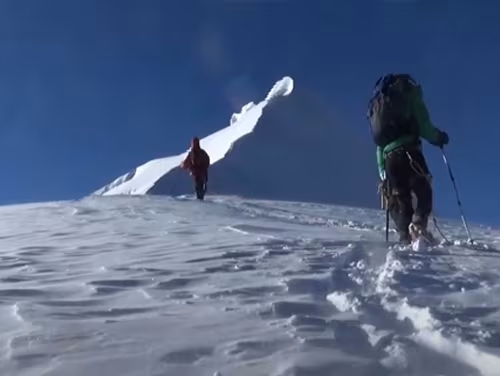
Chulu West Peak Climbing

Chulu West Peak Climbing

Chulu West Peak Climbing Overview

Chulu West Peak climbing in Nepal is a 22-day Annapurna trip that combines a 6,419 m summit with the Annapurna Circuit and a staged climbing-camp plan.

Your route starts with the road trip from Kathmandu to Syange. You then follow the Marsyangdi valley through Dharapani, Chame, Pisang, Ngawal, and Manang. These trekking days build altitude before the climbing section begins.

Manang gives you a second night at about 3,540 m. The route then moves to Ledar before leaving the main circuit for Chulu West Base Camp and the upper camps.

The current plan uses Base Camp near 4,900 m, Camp I near 5,100 m, and Camp II near 5,530 m. These camps break the climbing stage into smaller steps before summit day.

Summit day starts from Camp II. The current working plan uses a 1:00 a.m. to 3:00 a.m. departure and about 8 to 10 hours for the summit stage and descent to Camp I. Your climbing guide sets the pace, equipment system, and turnaround point for the conditions on the day.

After the climb, the trip returns to the Annapurna Circuit. You cross Thorong La at 5,416 m, descend to Muktinath, continue through Kagbeni to Jomsom, and fly to Pokhara.

We coordinate the trekking route, climbing permit, conservation paperwork, mountain stays, camp support, included meals, climbing staff, porter support, and return transport under one booking.

This trip suits strong trekkers who want a long Annapurna route with a serious 6,000 m climbing stage. High-altitude trekking and prior practice with climbing equipment give you better preparation for the upper camps and summit attempt.

The details below explain the route, daily altitude changes, summit plan, skills, price, permits, accommodation, meals, gear, support, delays, insurance, and booking terms before you decide.

Chulu West Trip at a Glance

Trip fact

THO trip plan

Peak

Chulu West

Official elevation

6,419 m / 21,059 ft

Region

Manang, Annapurna region, Nepal

Package duration

22 days

Main approach

Syange, Dharapani, Chame, Pisang, Ngawal, Manang, Ledar

Climbing camps

Base Camp about 4,900 m; Camp I about 5,100 m; Camp II about 5,530 m

Summit objective

Chulu West, 6,419 m

Route after the climb

Ledar, Thorong High Camp, Thorong La, Muktinath, Kagbeni, Jomsom, Pokhara

Main climbing periods

March to May and September to November

Group size

2 to 16 guests

Summit guide ratio

1 Sherpa climbing guide for up to 2 climbers

Porter support

1 porter for 2 guests; about 10 to 12 kg of guest baggage per person

Current working price

From USD 2,950 per person before group discounts

Dedicated contingency day

Day 15, directly after the planned summit day

What You Get From This Climb

  • A 6,419 m summit objective linked with a full Annapurna Circuit crossing.
  • Management of the Chulu West climbing permit, ACAP entry, TIMS, and route paperwork used for the trip.
  • Manang acclimatization before the route moves above 4,000 m.
  • A three-camp climbing stage using Base Camp, Camp I, and Camp II.
  • A guided summit attempt followed by a return to the Annapurna Circuit.
  • Teahouse stays on the trekking route and tented accommodation in the climbing camps.
  • Mountain meals, climbing support, porter support, and the return route through Thorong La.

The package is more than a peak-only climb. It combines trekking, camping, technical equipment, a summit attempt, and the western half of the Annapurna Circuit in one schedule.

Why Choose Chulu West?

Chulu West fits travelers who want the Annapurna Circuit to lead into a 6,000 m climb rather than remain a trekking-only trip. The route reaches Manang before the climbing camps, then returns to the circuit after the summit stage.

The camp sequence gives the climbing section its own structure. You move from lodge-based trekking to tents, camp meals, climbing equipment, and a much earlier summit-day schedule.

The trip continues after the summit attempt. Thorong La, Muktinath, Kagbeni, Jomsom, and Pokhara remain part of the package instead of ending the trip at the climbing camps.

Is Chulu West the Right Climb for You?

Chulu West suits strong trekkers who can handle many mountain days and several nights above 4,000 m. The climbing stage adds cold tents, technical equipment, early starts, and a summit objective at 6,419 m.

Previous high-altitude trekking is strongly preferred. Prior practice with crampons, an ice axe, a climbing belt, fixed ropes, an ascender, and a descent device is strongly preferred before this trip.

Choose a trekking-only Annapurna Circuit if you do not want the climbing stage. Pisang Peak may suit you better if you want a different camp structure and a lower summit objective. 

Fit check

What it means

STRONGER FIT

Strong trekking fitness, high-altitude experience, and prior practice with the equipment used on a guided snow or ice climb.

MORE PREPARATION NEEDED

Little mountain experience, weak uphill endurance, or no time to practise climbing equipment before departure.

DIFFERENT GOAL

You want the Annapurna Circuit without tents, climbing camps, rope systems, or a 6,419 m summit attempt.

How Chulu West Fits the Annapurna Circuit

The first part of the itinerary follows the Annapurna Circuit from Syange to Manang. The route then moves through Ledar and leaves the main trekking corridor for the climbing camps.

After the summit stage, you return to Ledar and rejoin the circuit. The trip then climbs to Thorong High Camp, crosses Thorong La at 5,416 m, and descends to Muktinath.

The route does not include Tilicho Lake in the current 22-day schedule. The western return continues through Kagbeni and Jomsom before the flight to Pokhara.

Route Overview

The route begins below the main high-altitude section at Syange. Successive nights in Dharapani, Chame, Pisang, Ngawal, and Manang bring you into the upper Marsyangdi valley before the climbing stage.

Manang is the main acclimatization stop. Day 9 keeps the same sleeping altitude. Day 10 then moves to Ledar before the itinerary leaves the normal circuit for Base Camp.

The climbing stage uses Base Camp around 4,900 m, Camp I around 5,100 m, and Camp II around 5,530 m. Day 14 attempts the 6,419 m summit and descends to Camp I. Day 15 sits directly behind summit day as the package contingency position.

Day 16 returns to Ledar. The final trekking stage crosses Thorong La and descends to lower Mustang. Jomsom is the departure point for the current flight to Pokhara.

Route stage

Start -> sleep altitude

What changes

Kathmandu to Syange

Kathmandu about 1,400 m -> Syange 1,130 m

Road access and a lower sleeping altitude before trekking starts.

Syange to Dharapani

1,130 m -> 1,860 m

The trek enters the Marsyangdi valley and gains about 730 m in sleeping altitude.

Dharapani to Chame

1,860 m -> 2,710 m

A large net sleeping gain before the upper valley.

Chame to Pisang

2,710 m -> 3,240 m

The route reaches a higher and drier part of the circuit.

Pisang to Ngawal

3,240 m -> 3,675 m

The upper route gains about 435 m in sleeping altitude.

Ngawal to Manang

3,675 m -> 3,540 m

A small net descent before the acclimatization day.

Manang second night

3,540 m -> 3,540 m

No sleeping gain. The day is used for acclimatization and recovery.

Manang to Ledar

3,540 m -> about 4,130 m

The trip returns to a strong sleeping-altitude gain.

Ledar to Base Camp

about 4,130 m -> about 4,900 m

The route leaves lodge trekking for the climbing camp.

Base Camp to Camp I

about 4,900 m -> about 5,100 m

The first upper camp keeps the next sleeping gain smaller.

Camp I to Camp II

about 5,100 m -> about 5,530 m

The final camp places the team below the summit stage.

Camp II to summit to Camp I

about 5,530 m -> 6,419 m -> about 5,100 m

Summit attempt followed by a major descent.

Return and Thorong La

Ledar -> 4,880 m -> 5,416 m -> Muktinath 3,802 m

The trip returns to the circuit and crosses the pass.

Muktinath to Jomsom

3,802 m -> 2,750 m

A long descent through lower Mustang before the flight stage.

Itinerary at a Glance

Day

Route

Start -> sleep altitude

Time / purpose

Stay

Meals

1

Kathmandu airport -> Kathmandu hotel

Kathmandu about 1,400 m

Arrival transfer

Hotel

Kathmandu hotel plan

2

Kathmandu preparation -> Kathmandu

About 1,400 m -> same

Briefing, cultural visits, equipment check

Hotel

Breakfast plan

3

Kathmandu -> Syange

About 1,400 m -> 1,130 m

Road transfer

Guesthouse

B, L, D

4

Syange -> Dharapani

1,130 m -> 1,860 m

Full trekking day; exact time to confirm

Lodge

B, L, D

5

Dharapani -> Chame

1,860 m -> 2,710 m

About 5-6 h walking

Lodge

B, L, D

6

Chame -> Pisang

2,710 m -> 3,240 m

About 5-6 h walking

Lodge

B, L, D

7

Pisang -> Ngawal

3,240 m -> 3,675 m

About 4-5 h walking

Guesthouse

B, L, D

8

Ngawal -> Manang

3,675 m -> 3,540 m

About 3-4 h walking

Guesthouse

B, L, D

9

Manang acclimatization -> Manang

3,540 m -> 3,540 m

Acclimatization and recovery

Guesthouse

B, L, D

10

Manang -> Ledar

3,540 m -> about 4,130 m

About 4-5 h walking

Guesthouse

B, L, D

11

Ledar -> Chulu West Base Camp

about 4,130 m -> about 4,900 m

High-altitude approach; exact time to confirm

Tent

B, L, D

12

Base Camp -> Camp I

about 4,900 m -> about 5,100 m

Climbing-camp move; exact time to confirm

Tent

B, L, D

13

Camp I -> Camp II

about 5,100 m -> about 5,530 m

Upper-camp move; exact time to confirm

Tent

B, L, D

14

Camp II -> Chulu West -> Camp I

about 5,530 m -> 6,419 m -> about 5,100 m

Start 1-3 a.m.; about 8-10 h summit stage

Tent

B, L, D

15

Contingency day in climbing camps

Camp position depends on Day 14

Reserve for delayed summit or camp recovery

Tent

B, L, D

16

Chulu West climbing camps -> Ledar

Upper camp -> about 4,200 m

Descent; exact time to confirm

Lodge

B, L, D

17

Ledar -> Thorong High Camp

About 4,200 m -> 4,880 m

High-altitude trek; exact time to confirm

Guesthouse

B, L, D

18

Thorong High Camp -> Thorong La -> Muktinath

4,880 m -> 5,416 m -> 3,802 m

Long pass day; exact package time to confirm

Guesthouse

B, L, D

19

Muktinath -> Kagbeni -> Jomsom

3,802 m -> 2,750 m

About 5-6 h on the current trekking route

Guesthouse

B, L, D

20

Jomsom -> Pokhara

2,750 m -> Pokhara

Mountain flight and hotel transfer

Hotel

Breakfast

21

Pokhara -> Kathmandu

Pokhara -> Kathmandu about 1,400 m

About 5-6 h by road under current route evidence

Hotel

Breakfast, lunch

22

Kathmandu hotel -> international airport

Kathmandu -> airport

Departure transfer

Departure day

Breakfast if flight time and hotel plan allow

What a Normal Trekking Day Looks Like

Most circuit days start with breakfast at the lodge. You pack your day bag, leave the porter duffel for the support team, and walk at the pace set for the group and altitude.

Lunch comes during the route where the daily plan allows. You reach the next lodge, settle in, eat, refill water, charge devices where available, and prepare clothing for the next day.

Walking time changes by route, altitude, weather, rest stops, and group pace. Use the day-by-day time only as a planning range, not a guaranteed arrival time.

What a Normal Climbing-Camp Day Looks Like

At the climbing camps, the lodge routine ends. You sleep in tents and use the camp meal system. Packing, equipment checks, water, clothing, and departure timing take more planning.

Camp moves can be shorter in distance but harder because of altitude and terrain. The climbing guide decides the pace and the equipment needed for each stage.

Summit-day preparation happens before you sleep. Put the clothing, headlamp, water, food, gloves, and climbing equipment where they can be reached quickly during the early start.

Itinerary
Day 01
Arrival in Kathmandu
3-star Kathmandu hotel Arrival-day lunch and dinner follow your final booking confirmation.

Our representative meets you at the airport and transfers you to your Kathmandu hotel. This day gives you time to settle in before the trip briefing and road trip to the Annapurna region.

Keep your passport, insurance details, and travel documents ready for the next day. Your climbing equipment does not need to be packed for the mountain until the team completes the gear check.

Day 02
Preparation Day in kathmandu
3-star Kathmandu hotel Based on the Quotation Details

Today you meet the THO team and review the 22-day route. The briefing covers the road approach, trekking section, climbing camps, summit plan, contingency day, Thorong La crossing, and return transport.

Check personal trekking and climbing gear before leaving Kathmandu. Resolve missing boots, crampons, helmet, climbing belt, ice axe, ascender, carabiners, descent device, headlamp, and cold-weather clothing before the mountain section.

The live itinerary places cultural visits on this day. Keep enough time for the equipment check and final packing because the next day starts the road transfer to Syange.

Day 03
Kathmandu to Syange
Teahouse B,L,D
Teahouse B,L,D

You leave Kathmandu for the Annapurna Circuit starting area. This is a road day rather than an acclimatization gain, and you sleep lower than the previous night.

Road time can change with traffic, road works, landslides, and weather. Keep water, medication, a warm layer, and personal items in your day bag rather than inside the porter duffel.

Day 04
Syange to Dharapani
Tea house B L D
Tea house B L D

We begin the trekking section through the Marsyangdi valley. The route gains a large amount in sleeping altitude, but it remains well below the high-altitude climbing camps.

The trail uses the established Annapurna Circuit corridor. River crossings, village sections, climbs, descents, and road-trail changes can affect the pace on this lower section.

Day 05
Dharapani to Chame
Tea house B L D
Tea house B L D

The trail climbs from Dharapani toward the Manang district center at Chame. Our route is the same path for the Annapurna corridor at this stage at about five to six hours.

This is one of the larger sleeping-altitude gains in the lower approach. Eat well, drink regularly, and use the evening for rest because the route keeps gaining the next day.

Day 06
Chame to Pisang
Tea house B L D
Tea house B L D

On Day 6 of Chulu West peak Climbing, we continue up the Marsyangdi corridor from Chame toward Pisang. The route moves into higher terrain and reaches the first sleeping night above 3,000 m on this package.

The pace now matters more than speed. Keep a steady rhythm and save energy for the higher route to Ngawal and the acclimatization period in Manang.

Day 07
Pisang to Ngawal
Tea house B L D
Tea house B L D

We take the higher route toward Ngawal rather than dropping straight toward lower Manang. The higher sleeping point adds useful altitude exposure before the itinerary descends slightly the next day.

This stage is still trekking, not climbing. Keep the mountaineering equipment packed while you focus on steady movement, hydration, food, and recovery.

Day 08
Ngawal to Manang
Tea house B L D
Tea house B L D

On the eighth day we descend from Ngawal and continue toward Manang. The lower sleeping altitude gives you a break after the higher night in Ngawal while keeping you inside the upper Annapurna valley.

You now have two consecutive nights in Manang. Use the first afternoon to rest, eat, drink, and prepare for the planned acclimatization day.

Day 09
Acclamization/Free day in Manang
Tea house B L D
Tea house B L D

You spend a second night in Manang before the route moves above 4,000 m. The day can include a short acclimatization walk chosen by the guide, followed by a return to the same sleeping altitude.

This day separates the approach from the steeper sleeping-altitude gains that follow. The guide checks how the group is eating, sleeping, walking, and recovering before the route goes higher.

If there is any uneasiness or comfort, let the guide know to assess the situation.

Day 10
Manang to Ledar Phedi
Tea house B L D
Tea house B L D

You leave Manang and continue on the Annapurna Circuit toward the Ledar area. This day places you above 4,000 m for the first time en route to Chulu West Peak climbing goal.

The stage comes directly after the Manang acclimatization day. Keep the pace controlled because the next day leaves the main trekking route for a much higher camp.

Day 11
Ledar to Chulu West Base Camp
Overnight in Camp B L D

On the eleventh day we leave the normal lodge route and move into the Chulu West climbing section. The day changes both the sleeping altitude and the service style, because the package switches from a guesthouse to a tented camp.

The proposed Base Camp altitude creates a large sleeping gain from Ledar. The climbing team sets the pace and checks group conditions before the higher camps.

Base Camp becomes the first place where the full camp system, shared ropes, tents, kitchen gear, and climbing equipment need to be checked together. The exact training block at Base Camp must match the current guide plan.

Day 12
Chulu West Base Camp to Chulu West Camp I
Tent at Camp I B,L,D

Move from Base Camp to the first upper camp. The proposed 200 m sleeping gain is smaller than the previous day, but you are now sleeping above 5,000 m.

Pack only the items needed for the upper camps and summit stage. The guide decides which technical equipment is worn during this move and which items remain packed for the next stage.

Day 13
Chulue West Camp I to Chulue West Camp II
Tent at Camp II B,L,D

Continue to the upper camp used for the summit attempt. The day is shorter in distance than the trekking approach, but the altitude and camp setting make recovery more important.

After reaching Camp II, prepare the clothing, boots, headlamp, gloves, eye protection, food, water, and climbing equipment needed for summit day. The guide gives the final start time and rope plan after checking conditions and the team.

Day 14
Chulu West Summit Day

The current working plan starts between 1:00 a.m. and 3:00 a.m. that allows about 8 to 10 hours for the summit stage and descent. A start in darkness means your headlamp and cold-weather clothing are prepared before you leave the tent.

Your guide checks boots, crampons, climbing belt, rope attachment, ascender, ice axe, carabiners, and descent device before each item is needed. The equipment system can change with the working route.

The upper route can contain firm snow, ice, mixed ground, and steeper sections where fixed ropes are used. Snow, wind, temperature, visibility, and the condition of the route can change the pace and the workable line.

The guide sets turnaround decisions from the team condition, route, weather, time, and descent needs. Reaching 6,419 m never overrides the need to return safely.

After the summit attempt, descend to Camp I under the current plan. Eat, drink, change into dry layers if needed, and recover for the contingency position that follows.

Day 15
Contingency Day (Chulu West Climbing Camps)
Tented camp B,L,D
Tented camp B,L,D

Day 15 is the dedicated contingency position immediately after the planned summit day. If Day 14 is not workable for the summit attempt, the climbing team can move the attempt into Day 15 when conditions and the remaining schedule allow.

If the Day 14 summit stage is completed, we use Day 15 for camp recovery, descent preparation, or schedule protection according to the actual camp position.

The contingency day does not guarantee a second summit attempt. Weather, route condition, team condition, camp logistics, and the fixed return schedule still control what can be done.

Day 16
Chulu West Climbing Camps to Ledar Phedi
Tea house B,L,D
Tea house B,L,D

Leave the climbing camps and return to the Annapurna Circuit at Ledar. This is the transition back from tented climbing logistics to lodge/teahouse accommodation.

The descent gives the body a much lower sleeping altitude after the upper camps. Use the evening for food, fluids, rest, and preparation for the Thorong La stage.

Day 17
Ledar to Thorang High Camp
Teahouse B,L,D
Teahouse B,L,D

Rejoin the Annapurna Circuit and climb toward Thorong High Camp. The sleeping altitude rises sharply again after the post-climb descent to Ledar.

Keep the pace steady and prepare an early-day pack for the Thorong La crossing. The next stage goes over 5,416 m before dropping more than 1,600 m to Muktinath.

Day 18
Thorang High Camp to Muktinath via Throng La Pass
Teahouse B,L,D
Teahouse B,L,D

Start early for Thorong La. The day first climbs to the pass, then changes into a long descent toward Muktinath on the western side of the Annapurna range.

This is still a demanding high-altitude day after the peak-climbing section. Wind, snow, trail condition, and group pace can change the crossing time.

Reaching Muktinath gives you a much lower sleeping altitude than Thorong High Camp. The following day continues the descent toward Jomsom.

Day 19
Muktinath to Josmosm via Kagbeni
Teahouse B,L,D
Teahouse B,L,D

On the nineteenth day you continue through the lower Mustang toward Kagbeni and Jomsom. This stage keeps descending and returns you to the main transport hub used by the package.

The itinerary takes you to Jomsom before the flight. We will go to Jomsom, not Kagbeni, as the departure point for the next day under the current plan.

Day 20
Fly back to Pokhara from Jomsom
Hotel Breakfast is included. Lunch and dinner follow the final package terms.

Today, you fly from Jomsom to Pokhara under the itinerary plan. Mountain flights can be delayed or cancelled when weather or airport conditions are unsuitable.

After arrival, transfer to the Pokhara hotel and use the day for recovery. Keep international travel buffers because a Jomsom delay can affect the next stage.

Day 21
Pokhara to Kathmandu
kathmandu Hotel Breakfast and lunch are included under the current live itinerary. Dinner follows the final booking confirmation.

You return to Kathmandu by road. Road time can change with traffic, maintenance, weather, and landslides.

We will transfer you to the hotel after arrival. Keep the final evening free for repacking and checking your international departure details.

Day 22
Departure Day

THO representative arranges the airport transfer for your international departure according to the confirmed pickup time.

Check your passport, flight details, baggage, climbing certificate status, and any stored luggage before leaving the hotel.

Altitude Profile for Chulu West Peak Climbing

Start
Peak
End
Total Ascent:
Elevation changes from 1,321m to a peak of 6,330m 1,321m Kathmandu 1,130m Syange 1,860m Dharapani 2,650m Chame 3,250m Pisang 3,667m Ngawal 3,547m Manang 4,250m Ledar 4,849m Chulu West Base Camp 5,100m Chulu West Camp I 5,530m Chulu West Camp II 6,330m Chulu West 5,100m Chulu West Camp I 5,416m Thorang la 4,250m Ledar 3,800m Muktinath 2,733m Jomsom 845m Pokhara 1,321m Kathmandu
Kathmandu
1,321m
Syange
1,130m
Dharapani
1,860m
Chame
2,650m
Pisang
3,250m
Ngawal
3,667m
Manang
3,547m
Ledar
4,250m
Chulu West Base Camp
4,849m
Chulu West Camp I
5,100m
Chulu West Camp II
5,530m
Chulu West
6,330m
Chulu West Camp I
5,100m
Thorang la
5,416m
Ledar
4,250m
Muktinath
3,800m
Jomsom
2,733m
Pokhara
845m
Kathmandu
1,321m

Detailed Chulu West Summit Day

The current working summit plan leaves Camp II at about 1:00 a.m. to 3:00 a.m. That timing places the first part of the climb in darkness. Pack your headlamp, spare power, gloves, eye protection, water, and high-energy food before you rest.

Your climbing guide checks the technical system before departure. This can include crampons, a climbing belt, rope attachment, an ascender, an ice axe, locking carabiners, and a descent device. The guide decides when each item is used on the working route.

The upper route can include firm snow, ice, mixed ground, and steeper sections protected by fixed ropes. The surface and line can change between departures, so the page does not promise one fixed sequence of features.

Camp II sits around 5,530 m under the current working plan. From there, the summit stands at 6,419 m, which creates about 889 m of ascent before the descent begins.

Daylight arrives during the climb when the team leaves in the early hours. Wind, cold, snowfall, cloud, snow condition, and route condition can change the speed and the turnaround time.

The guide controls pace and turnaround decisions. Team condition, daylight, time, route, weather, and the descent all matter. A summit attempt can end below 6,419 m when those factors require it.

After the summit attempt, the current plan descends to Camp I around 5,100 m. The team then uses Day 15 as the contingency and recovery position before returning to Ledar.

Chulu West Acclimatization Details

The itinerary gains altitude over several trekking days before the climbing camps. Ngawal sits higher than Manang, then Day 9 keeps the same sleeping altitude in Manang before the route climbs above 4,000 m.

The sequence then rises from Manang to Ledar, Base Camp, Camp I, and Camp II. The proposed Ledar-to-Base-Camp gain is large, which makes the Manang acclimatization day and group condition checks important to the operating plan.

The itinerary is not built around one rest day alone. It uses repeated nights on the approach, a higher night at Ngawal, the second Manang night, and staged climbing camps before summit day.

Altitude illness needs prompt medical judgment. Tell your guide about worsening symptoms rather than hiding them to protect the schedule. Descent and evacuation decisions belong to the field team and medical advice available at the time.

Chulu West Climbing Cost

The current package starts from USD 2,950 per person. Your written quotation shows the final date, group size, transport plan, permit costs, staffing, and package services before payment.

Group size

Working price per person

1 to 2 guests

USD 2,950

3 to 5 guests

USD 2,850

6 to 10 guests

USD 2,750

11 to 16 guests

USD 2,650

Prices can change when permit charges, transport, hotel terms, camp logistics, staffing, or private arrangements change. Use the written quotation for the actual booking amount.

Travel and Climbing Insurance

Buy insurance that covers the activity you are booking and the maximum altitude of 6,419 m. Read the policy wording before you pay for the trip.

Check medical treatment, emergency evacuation, peak climbing, altitude limits, trip interruption, and insurer authorization rules. Carry the policy number and emergency contact details on the mountain.

Insurance terms vary by provider. We can state the trip altitude and activity, but your insurer must confirm whether your policy covers them.

Why Climb With The Himalayan Odyssey?

We coordinate the trip from Kathmandu through the Annapurna approach, climbing camps, summit stage, Thorong La crossing, Jomsom flight, and return to Kathmandu.

  • Nepal-based trip coordination before and during the climb.
  • Permit and route paperwork handled under the confirmed package.
  • Local and Professional Sherpa climbing guides assigned to the technical stage.
  • One contact for itinerary, payment, transport, and departure questions.
  • A written quotation that ties the route, services, staff, and price to your departure.

Responsible Climbing and Porter Welfare

THO applies a defined porter load limit, staff insurance, staff meal and lodging rules, and camp waste procedures. Ask for the current operating policy that applies to your departure.

Keep personal baggage within the confirmed allowance. Extra baggage can change porter loads, staffing, and camp logistics.

Use refill and waste systems provided by the route and camp team. Take batteries, damaged gear, and non-biodegradable personal waste back to a proper disposal point.

What the package Includes and Excludes

General Inclusions
  • Airport arrival and departure transfers in Kathmandu.
  • Three-star Kathmandu hotel accommodation on a breakfast plan.
  • Road transport from Kathmandu to the Annapurna Circuit starting point.
  • Teahouse or guesthouse accommodation during the trekking section.
  • Tented accommodation at Chulu West Base Camp, Camp I, Camp II, and the camp position used for Day 15.
  • Breakfast, lunch, and dinner during the mountain trekking and climbing section.
  • Chulu West climbing permit, ACAP entry, TIMS, and current route paperwork used for the confirmed itinerary.
  • A trekking guide on the approach and a freelance Sherpa climbing guide for the climbing stage.
  • One Sherpa climbing guide for up to two climbers during the summit stage.
  • One porter for two guests, with about 10 to 12 kg of guest baggage per person.
  • Shared ropes, anchors, climbing tents, kitchen gear, group first-aid supplies, and camp equipment.
  • Staff wages, meals, lodging, transport, and insurance under the package plan.
  • Jomsom to Pokhara flight and the Pokhara to Kathmandu return under the confirmed itinerary.
  • A climbing certificate when the issuing conditions are met.
Not Included
  • International flights to and from Nepal.
  • Nepal visa fees.
  • Personal travel and climbing insurance.
  • Personal trekking clothing and footwear.
  • Personal climbing gear when the quotation does not include it. This can include boots, crampons, helmet, climbing belt, ice axe, ascender, carabiners, and a descent device.
  • Personal drinks, snacks, charging, Wi-Fi, hot showers, bottled water, and lodge extras.
  • Tips for guides, climbing staff, porters, drivers, and support staff.
  • Extra hotel nights, meals, transport, staff, or flight changes caused by personal changes or delays outside the package terms.
  • Any service that the written quotation does not list as included.

Permits and Route Fees

Current government and climbing records list Chulu West at 6,419 m. The Nepal Mountaineering Association foreign-climber fee table lists USD 350 per person in spring and USD 175 in autumn, winter, and summer.

The National Trust for Nature Conservation e-permit record lists the Annapurna Conservation Area entry fee at NPR 3,000 for foreign visitors. Nepal Tourism Board lists TIMS at NPR 2,000 for non-SAARC trekkers and NPR 1,000 for SAARC trekkers.

The standard Chulu West route uses the Annapurna Circuit and does not enter the designated Nar or Phu restricted zones in the current itinerary. Extra restricted-area paperwork applies only if we change the route into a restricted zone.

We arrange the climbing and trekking paperwork included in your confirmed package. Carry the passport information and photographs requested for the application process.

Accommodation, Food and Support

Kathmandu uses a three-star hotel on the package breakfast plan. The Annapurna Circuit section uses teahouses or guesthouses in Syange, Dharapani, Chame, Pisang, Ngawal, Manang, Ledar, Thorong High Camp, Muktinath, and Jomsom.

The climbing section uses tents at Base Camp, Camp I, Camp II, and the Day 15 camp position. Camp service is simpler than a teahouse, so plan for fewer comforts and limited device services.

Pokhara and Kathmandu return to hotel accommodation after the mountain section. Room type, single supplements, and any upgrade request should appear on the final quotation.

Meals and Drinking Water

Breakfast, lunch, and dinner are included during the mountain trekking and climbing section. Kathmandu and Pokhara use the meal plan shown in the final itinerary and quotation.

Teahouse menus give you the normal meal choice during the circuit. At climbing camps, the camp team prepares the meals included in the package.

At the climbing camps, we provide treated drinking water for the team. The final trip briefing should state how water is treated and how much you need to carry between refill points.

Bottled water, soft drinks, alcohol, extra snacks, and lodge drinks are personal costs when the quotation does not state otherwise.

Charging, Wi-Fi, and Communication

Charging and Wi-Fi can be available at some teahouses for a fee. Service becomes less dependable as the route moves higher, and personal charging or Wi-Fi costs sit outside the package.

Do not plan on normal charging or Wi-Fi at Base Camp, Camp I, or Camp II. Carry a charged power bank and protect batteries from cold.

Keep travel documents, insurance details, emergency contacts, and the THO contact number saved offline. The field team uses the communication available for the location and conditions.

Luggage, Porter Support, and Your Daypack

The current working porter plan uses one porter for two guests, with about 10 to 12 kg of guest baggage per person. We confirm the final duffel allowance before departure.

Carry your own daypack. Keep water, rain protection, warm layers, sun protection, medication, valuables, passport copy, snacks, and items needed during the walking day with you.

The upper-camp load plan can differ from normal teahouse trekking. Follow the climbing team instructions when repacking for Base Camp, Camp I, Camp II, and summit day.

Climbing Gear

Chulu West needs normal trekking equipment plus personal mountaineering gear. The final equipment list should match the camp plan, season, and current route.

Personal climbing gear

Shared THO group gear

Mountaineering boots

Main group ropes

Crampons

Anchors and shared rope hardware

Helmet

Climbing tents

Climbing belt

Kitchen and camp equipment

Ice axe

Group first-aid supplies

Ascender / Jumar

Other shared safety and camp items in the quotation

Locking carabiners

Descent device

Headlamp and spare power

Bring warm layers, gloves, eye protection, gaiters, trekking poles where useful, sleeping gear, and your normal personal trekking equipment. Check compatibility between boots and crampons before leaving Kathmandu.

Climbing Guide and Support Model

We use professional and local Sherpa climbing guides for peak departures. The assigned climbing guide can change by date, group size, staff availability, and the needs of the departure.

The current working summit ratio is one Sherpa climbing guide for up to two climbers. THO should state the final ratio and assigned guide plan on the departure record.

The trekking guide manages the approach route. The climbing guide manages the technical stage, rope system, climbing pace, camp decisions, and summit turnaround decisions.

Best Time to Climb Chulu West

March to May and September to November are the main climbing periods. These windows match the main spring and autumn seasons in the Annapurna region.

A seasonal label does not guarantee a summit day. Wind, snowfall, cold, cloud, route condition, and snow surface can still delay or stop the climb inside the main months.

Ask us for the current route and camp status before departure. A recent field update is more useful for packing and summit planning than a broad seasonal promise.

Road, Flight, and Mountain Delays

Road access from Kathmandu to Syange can change with traffic, road work, rain, landslides, and local conditions. The return flight from Jomsom can change with mountain weather and airport operations.

Weather on Chulu West can alter the camp schedule even when the lower route is clear. Snow, wind, visibility, route work, or team conditions can move the summit plan into the contingency day.

Keep buffer time before your international departure. Your booking terms should state which delay costs THO covers and which extra hotel, transport, meal, staff, or flight costs remain personal.

Preparation Before You Travel

  • Send the passport details and images needed for permits and domestic travel.
  • Buy insurance that covers Chulu West climbing to 6,419 m and emergency evacuation under your insurer terms.
  • Build trekking fitness for repeated uphill days and a long summit stage.
  • Practice the personal climbing equipment listed for your departure.
  • Complete the Kathmandu briefing and equipment check before the mountain section.
  • Confirm the live route, camp plan, departure status, price, guide arrangement, and porter allowance.
  • Keep buffer time around your international flights.
  • Carry enough Nepalese cash for personal mountain expenses where card payment is unavailable.

Kathmandu Briefing and Equipment Check

The Kathmandu briefing covers the complete 22-day schedule, camp sequence, summit-day plan, contingency day, permits, porter allowance, emergency contacts, flight plan, and booking terms.

Lay out the climbing equipment before repacking. Check boot fit, crampon fit, headlamp power, gloves, eyewear, climbing belt, ascender, ice axe, carabiners, and descent device.

Ask questions before the road departure. It is harder to replace specialist equipment after the trip has entered the Annapurna region.

Climbing Gear

Chulu West needs normal trekking equipment plus personal mountaineering gear. The final equipment list should match the camp plan, season, and current route.

Personal climbing gear

Shared group gear

Mountaineering boots

Main group ropes

Crampons

Anchors and shared rope hardware

Helmet

Climbing tents

Climbing belt

Kitchen and camp equipment

Ice axe

Group first-aid supplies

Ascender / Jumar

Other shared safety and camp items in the quotation

Locking carabiners

Descent device

Headlamp and spare power

Bring warm layers, gloves, eye protection, gaiters, trekking poles where useful, sleeping gear, and your normal personal trekking equipment. Check compatibility between boots and crampons before leaving Kathmandu.

Climbing Guide and Support Model

We use professional and local Sherpa climbing guides for peak departures. The assigned climbing guide can change by date, group size, staff availability, and the needs of the departure.

The current working summit ratio is one Sherpa climbing guide for up to two climbers. THO should state the final ratio and assigned guide plan on the departure record.

The trekking guide manages the approach route. The climbing guide manages the technical stage, rope system, climbing pace, camp decisions, and summit turnaround decisions.

Reserve and Contingency Planning

The current itinerary places Day 15 directly after the planned summit attempt. That is the package contingency position.

If Day 14 is not workable, the climbing team can use Day 15 for a delayed attempt when route, weather, team condition, camp position, and the remaining itinerary allow.

A contingency day is not a summit guarantee. A delay can still be longer than one day, and the team may need to descend or protect the fixed return schedule.

Turnaround Decisions, Emergency Response, and Rescue Limits

We do not guarantee the summit. The climbing guide can turn the team around because of weather, snow, route condition, illness, injury, pace, time, equipment, or team condition.

If an emergency occurs, the field team and THO Kathmandu office coordinate the response from the actual location. Trail access, weather, communication, staff, transport, and available rescue services control the options.

Air rescue is not promised on demand. Mountain weather, aircraft availability, landing options, communication, and insurer approval can delay or prevent a flight response.

Training and Climbing Preparation for Chulu West Climb

Preparation starts in Kathmandu with the equipment check. The team confirms that your boots, crampons, climbing belt, ice axe, ascender, carabiners, descent device, helmet, headlamp, gloves, and clothing fit the trip plan.

Before the summit stage, the climbing guide reviews the rope system, crampon use, ice-axe handling, ascender use, descent technique, and team commands used for the departure. The exact training location and duration must match the current guide plan.

Arrive with enough fitness to learn while tired and at altitude. A short mountain practice block does not replace months of walking, strength work, uphill training, and prior equipment practice.

Previous Experience and Skills

We treat Chulu West as a serious 6,000 m climb. Previous high-altitude trekking and prior practice with crampons, fixed ropes, an ice axe, an ascender, and a descent device are strongly preferred.

You need strong uphill endurance and the ability to walk for many days before the climbing stage. You should remain comfortable following guide instructions while wearing boots, gloves, a helmet, and a climbing belt.

Do not use age alone as the qualification test. Fitness, altitude history, training, equipment skill, health, and the current route matter more than being over a fixed age.

How Hard Is Chulu West?

Chulu West combines a long trekking approach with a high camp system and a 6,419 m summit. The Annapurna Circuit and the peak climb create different demands, so they should not share one vague difficulty label.

Factor

What it means for you

Physical

Many trekking days come before the climbing camps. The summit stage follows several nights at high altitude.

Altitude

The summit reaches 6,419 m. The proposed Camp I and Camp II sleep above 5,000 m.

Technical

The climb can use crampons, fixed ropes, a climbing belt, an ascender, an ice axe, and a descent device.

Exposure

Upper snow, ice, mixed ground, and steeper climbing sections can require protected movement.

Objective hazards

Snow, ice, rock, changing route conditions, and camp position can affect the working line.

Weather

Wind, cold, snowfall, cloud, and visibility can delay or stop the summit attempt.

Remoteness

The climbing camps have fewer services and less transport access than the teahouse route.

Rescue limits

Response depends on camp position, weather, communication, trail access, and available ground or air support.

Physical Demand

The physical work begins well before the summit. You trek from Syange through Manang, climb into the camps, attempt the summit, return to the circuit, and still cross Thorong La before the trip ends.

Train for repeated uphill days rather than one long hike. Build leg strength, steady aerobic fitness, downhill tolerance, and the ability to recover for another mountain day.

Altitude Demand

The route reaches 3,675 m at Ngawal, 4,130 m at Ledar, and then moves into camps near or above 5,000 m. The summit adds another large gain from Camp II.

Good fitness does not remove altitude risk. Pace, acclimatization, symptoms, hydration, food, rest, and guide decisions still matter as sleeping altitude rises.

Technical Climbing Demand

The upper stage is not a normal trekking trail. Crampons, a climbing belt, rope attachment, an ascender, an ice axe, carabiners, and a descent device can be part of the guided system.

Your guide decides which system is needed on the current line. Do not assume that a previous season used the same rope positions or surface conditions.

Exposure, Hazards, Weather, and Rescue Limits

Firm snow, ice, mixed ground, and steeper sections can make the upper route feel exposed. Route condition changes can alter where fixed ropes or protected movement are used.

Wind, snowfall, cold, cloud, and poor visibility can slow the team or end the attempt. The contingency day gives the schedule some room, but it does not remove weather risk.

The upper camps are remote compared with Manang or the main lodges. Any response depends on where the team is, communication, weather, trail access, staff, and available rescue services.

Frequently Asked Questions about Chulu West Peak Climbing

Current government and climbing records list Chulu West at 6,419 m, or about 21,059 ft.

The current itinerary runs for 22 days from Kathmandu arrival to final departure at Kathmandu.

No. Tilicho Lake does not appear in the current 22-day THO itinerary.

Yes. The approach follows the circuit to Manang and Ledar. After the climb, the trip crosses Thorong La and continues to Muktinath and Jomsom.

The current working plan uses Base Camp near 4,900 m, Camp I near 5,100 m, and Camp II near 5,530 m.

Previous high-altitude trekking and prior practice with crampons, an ice axe, fixed ropes, an ascender, a climbing belt, and a descent device are strongly preferred.

The current permit set includes the Chulu West climbing permit, Annapurna Conservation Area entry, and TIMS. Extra restricted-area paperwork applies only if the route enters a designated restricted zone.

March to May and September to November are the main operating windows. Current snow, wind, weather, and route conditions still control the summit plan.

Yes. Day 15 sits directly after the planned summit day and can protect the climbing schedule when conditions allow.

The current working plan uses tents at Base Camp, Camp I, Camp II, and the Day 15 camp position.

Bring or rent the personal gear on the final list, including mountaineering boots, crampons, helmet, climbing belt, ice axe, ascender, carabiners, descent device, and headlamp.

No. Weather, route condition, altitude, health, timing, equipment, and guide decisions can stop the attempt.

Yes. Your insurer should confirm coverage for Chulu West climbing to 6,419 m, medical care, and emergency evacuation under the policy terms.

Private dates are available in the main climbing seasons subject to permits, staff, camp logistics, and transport.

Book or Ask About Chulu West

Send us your preferred travel month, group size, trekking history, climbing practice, and private or group preference. Ask for the live departure status, current price, camp plan, guide ratio, porter allowance, and booking terms.

If Chulu West fits your goals and preparation, request the booking link and written quotation. If it does not, ask us to compare Pisang Peak or the trekking-only Annapurna Circuit against the same travel dates.

Chat with us
The Himalayan Odyssey