
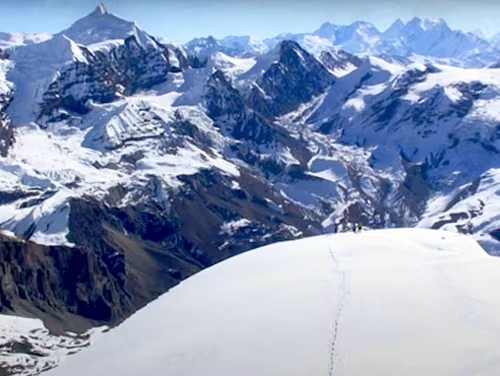
Thorong Peak Climbing

Thorong Peak Climbing

Thorong Peak Climbing Overview

Thorong Peak climbing in Nepal is a 15-day Annapurna trip with a 6,144 m summit objective above the Thorong La area. We use the eastern Annapurna Circuit for the approach, then add a tented climbing stage before the descent to Muktinath.

Thorong Peak climbing route starts after the road transfer through Besisahar to Dharapani. You then trek through Chame and Upper Pisang to Manang. A second night in Manang gives you time to adjust before the route moves higher through Yak Kharka and Thorong Phedi.

The climbing section starts after Thorong Phedi. Our current 15-day itinerary uses one tented climbing camp at about 5,416 m near the Thorong La area. There is no separate High Camp. This makes the summit stage very different from a normal Thorong La crossing.

At the climbing camp, our team prepares for the summit stage and checks the equipment needed for the route. The current package does not contain a separate full training day. The preparation is split between the Kathmandu briefing and the climbing-camp equipment review.

Summit day begins from the 5,416 m camp and targets Thorong Peak at 6,144 m. After the attempt, the route descends toward Muktinath. This creates a long day with about 728 m of ascent to the summit and a large descent to the lower Mustang side.

We coordinate the approach, conservation entry, trekking paperwork, mountaineering permit, mountain stays, climbing camp, trekking support, climbing staff, and the return through Jomsom and Pokhara. Your final quotation confirms the exact departure services before payment.

This trip suits strong high-altitude trekkers who want a summit in addition to the Annapurna Circuit. You should be comfortable with long mountain days and cold conditions. Practice with climbing equipment gives you a better base for the summit stage.

Details below explain the route, daily altitude changes, acclimatization, summit plan, skills, price, permits, accommodation, meals, gear, staff support, delays, rescue limits, and booking terms before you decide.

Thorong Peak Trip at a Glance

Trip fact

THO trip plan

Peak

Thorong Peak

Summit elevation

6,144 m / 20,157 ft

Trip duration

15 days

Region

Annapurna region, Nepal

Thorong La

5,416 m / 17,769 ft

Climbing camp

One tented camp near the Thorong La area at about 5,416 m

Separate High Camp

Not shown in the current 15-day THO itinerary

Trip style

Annapurna Circuit approach plus tented climbing stage

Main climbing periods

March to May and September to November

Group size

2 to 16 guests

Summit guide ratio

One Sherpa climbing guide for up to two climbers

Starting price

USD 2,485 per person

What You Get From This Climb

  • Annapurna Circuit approach through Upper Pisang, Manang, Yak Kharka, and Thorong Phedi.
  • A 6,144 m Thorong Peak summit objective that is separate from Thorong La.
  • A Manang acclimatization day before the route moves above 4,000 m.
  • One tented climbing camp near the Thorong La area before summit day.
  • Permit handling for ACAP, TIMS, and the Thorong Peak mountaineering permit.
  • Teahouse stays on the trekking route and tented support at the climbing camp.
  • Trekking support on the approach and Sherpa climbing support for the summit stage.
  • Jomsom to Pokhara flight after the descent through Muktinath.

Our package keeps the climbing stage inside a compact 15-day schedule. That saves time, but it leaves no separate reserve day after the summit attempt.

Why Choose Thorong Peak?

Thorong Peak adds a true climbing objective to a route that already includes the Annapurna Circuit approach. The summit is not the same objective as walking across Thorong La.

The combined route gives you several nights of gradual height gain before the climbing camp. Manang is the main acclimatization stop. Yak Kharka and Thorong Phedi then places you closer to the high pass area before the camp night at about 5,416 m.

The 15-day combined itinerary is shorter than our Chulu West program. It suits you when you want an Annapurna summit but do not have time for a longer multi-camp climbing schedule.

Is Thorong Peak and Thorong La the same?

Thorong La is a mountain pass at 5,416 m on the Annapurna Circuit. Thorong Peak is a separate 6,144 m climbing objective in the same wider area. Crossing the pass does not mean you have climbed the peak.

The distinction matters when you compare difficulty, permits, equipment, insurance, and itinerary length. A standard Annapurna Circuit trek crosses the pass. Thorong Peak climbing package adds mountaineering paperwork, a tented camp, climbing equipment, and a summit attempt.

Is Thorong Peak Right for You?

Thorong Peak suits you if you already have strong trekking fitness and want to move from high-altitude trekking into a guided Himalayan climb. The summit day comes after several trekking days and a night at the 5,416 m climbing camp.

Prior high-altitude trekking is strongly preferred. Basic practice with crampons, an ice axe, a climbing belt, an ascender, fixed-rope movement, and a descent device is strongly preferred too.

Who Should Choose Another Trip?

Choose a trekking-only route if you do not want to use climbing equipment or sleep in a high tented camp. A normal Annapurna Circuit still gives you the Thorong La crossing without a separate summit attempt.

Choose a longer climbing program if you want more days for camp progression and climbing practice. The current Thorong Peak package has one tented climbing camp and no separate reserve day.

Route Overview

The 15-day Thorong Peak climbing route uses the eastern side of the Annapurna Circuit. After the road transfer to Dharapani, you trek to Chame, Upper Pisang, Manang, Yak Kharka, and Thorong Phedi.

Manang is the main acclimatization stop. You spend two nights there before sleeping at Yak Kharka and Thorong Phedi. The next stage moves to the tented climbing camp near Thorong La at about 5,416 m.

Summit day starts from this camp and targets Thorong Peak at 6,144 m. After the summit attempt, the itinerary descends to Muktinath. You then walk to Jomsom, fly to Pokhara, and return to Kathmandu.

The current 15-day plan does not show a separate High Camp. It does not show a reserve day either. Those two facts matter when you compare this package with longer peak-climbing programs.

Itinerary at a Glance

Day

Route

Sleep

Sleep altitude

Time / purpose

1

Kathmandu arrival

Kathmandu

about 1,400 m

Airport transfer

2

Kathmandu preparation

Kathmandu

about 1,400 m

Briefing and equipment check

3

Kathmandu - Besisahar - Dharapani

Dharapani

THO to confirm

Road day; 6-7 hrs to Besisahar plus onward jeep

4

Dharapani - Chame

Chame

2,670 m

Walking time to confirm

5

Chame - Upper Pisang

Upper Pisang

3,200 m

5-6 hrs

6

Upper Pisang - Manang

Manang

3,540 m

about 5 hrs

7

Manang acclimatization

Manang

3,540 m

Acclimatization day

8

Manang - Yak Kharka

Yak Kharka

4,020 m

about 5 hrs

9

Yak Kharka - Thorong Phedi

Thorong Phedi

about 4,500-4,560 m

Walking time to confirm

10

Thorong Phedi - Thorong Peak climbing camp

Tented camp

about 5,416 m

4-5 hrs

11

Climbing camp - Thorong Peak - Muktinath

Muktinath

3,749 m

Full summit and descent day

12

Muktinath - Jomsom

Jomsom

2,720 m

5-6 hrs

13

Jomsom - Pokhara

Pokhara

about 827 m

Morning flight

14

Pokhara - Kathmandu

Kathmandu

about 1,400 m

Road return under standard inclusion

15

Kathmandu - departure

-

-

Airport transfer


What a Normal Trekking Day Looks Like

On trekking days, you eat breakfast at the lodge, pack your day items, and walk with your guide toward the next overnight stop. Your porter moves the main duffel under the confirmed baggage plan.

You carry water, layers, sun protection, valuables, medicine, and items needed before the next lodge. Walking time varies by stage and by your group pace.

What the Climbing-Camp Day Looks Like

Day 10 moves from Thorong Phedi to the tented camp. The team sets the camp while you arrange your sleeping system, summit clothing, personal equipment, water, and food for the next stage.

The climbing guide reviews the route plan and your equipment before you rest. The exact briefing, rope practice, meal time, and summit departure time are set for the conditions faced by your departure.

Why Climb Thorong Peak With The Himalayan Odyssey?

We keep the approach, permits, mountain accommodation, climbing camp, climbing staff, Jomsom flight, and return logistics inside one booking. That gives you one company to contact when route, payment, permit, or transport questions arise.

Porter loads, staff insurance, camp waste, staff meals, and staff lodging are operating matters that should be written into the departure plan rather than left as broad promises.

We provide the current porter-load policy and climbing-camp waste plan with the final trip information.

Day-by-Day Itinerary of Thorong Peak Climbing

The short table above shows the schedule. The daily entries below add the route movement, altitude change, terrain, day purpose, sleeping place, and meal plan.

Day 01
Kathmandu Airport to Kathmandu Hotel
Kathmandu Hotel Meals are not included on arrival day except when your quotation states otherwise

Your Thorong Peak trip starts in Kathmandu at about 1,400 m. Our representative meets you at the airport and transfers you to your hotel.

Use the first evening to recover from the flight and keep your passport, insurance, and climbing documents ready for the next day. The Thorong Peak climbing route does not start yet, so this day gives you time to settle before the briefing.

Day 02
Kathmandu Preparation and Climbing Briefing
Kathmandu Hotel Hotel breakfast; other Kathmandu meals follow your quotation

You stay in Kathmandu for trip preparation. Our team along with you review the route, permit paperwork, luggage plan, mountain transport, and the equipment needed for the climbing stage.

This is the first equipment-check point in the 15-day plan. Bring every personal climbing item to the briefing so missing or unsuitable gear can be dealt with before departure.

The current itinerary does not include a separate skills-training day. Your climbing preparation continues at the tented camp before summit day.

Day 03
Kathmandu to Besisahar to Dharapani
Teahouse B,L,D
Teahouse B,L,D

You leave Kathmandu by road and travel toward Besisahar. Our current itinerary takes about six to seven hours for the first road section. You then continue by local jeep toward Dharapani.

This is a transport day rather than a trekking day. Road condition, traffic, weather, and vehicle changes can affect the arrival time. Keep water, a warm layer, medicine, and valuables in your day bag rather than inside the main duffel.

The onward jeep time and Dharapani sleeping altitude are confirmed in your final departure itinerary.

Day 04
Dharapani to Chame
Teahouse B,L,D
Teahouse B,L,D

The trekking stage starts from Dharapani and follows the Annapurna Circuit toward Chame. You finish the day at about 2,670 m.

This day starts the gradual height gain that leads toward Manang. Keep your pace steady rather than trying to match faster walkers. The climbing objective is still several days away, so the early route should help you arrive higher with energy left for the later stages.

Day 05
Chame to Upper Pisang
Teahouse B,L,D
Teahouse B,L,D

You trek from Chame to Upper Pisang in about five to six hours. The sleeping altitude rises by about 530 m.

This is the first night above 3,000 m in the current itinerary. The route is still a trekking stage, so you do not use the full climbing system yet. Keep your summit equipment packed but accessible for later checks.

Day 06
Upper Pisang to Manang
Teahouse B,L,D
Teahouse B,L,D

You continue from Upper Pisang to Manang in about five hours. The sleeping altitude rises by about 340 m.

Manang is a major point in the itinerary because you stay here for two nights. The second night gives your body more time at the same sleeping altitude before you move above 4,000 m.

Day 07
Acclimatization Day in Manang
Teahouse B,L,D
Teahouse B,L,D

You sleep a second night in Manang instead of moving higher. This is the main acclimatization day in the 15-day Thorong Peak climbing plan.

Your day should stay controlled. The aim is to spend more time at altitude, check how you feel, eat and drink well, and prepare for the next stage toward Yak Kharka. Any optional local walk should fit the field plan and your condition.

This day does not guarantee that altitude will feel easy later. Tell your guide about new or worsening symptoms before the route moves higher.

Day 08
Manang to Yak Kharka
Teahouse B,L,D
Teahouse B,L,D

You leave Manang and trek to Yak Kharka in about five hours. The sleeping altitude rises by about 480 m.

The route now moves into a higher and more exposed part of the Annapurna Circuit. Your goal is not speed. A steady pace and clear communication with your guide matter more as the sleeping altitude passes 4,000 m.

Day 09
Yak Kharka to Thorong Phedi
Teahouse B,L,D
Teahouse B,L,D

You continue toward Thorong Phedi, the final teahouse stage before the climbing camp. The current working altitude for Thorong Phedi is about 4,500 to 4,560 m.

The sleeping altitude rises by roughly 480 to 540 m from Yak Kharka. You should arrive with enough time to eat, rest, and prepare for the move to the 5,416 m camp the next day.

Day 10
Thorong Phedi to Thorong Peak Climbing Camp
Tented climbing camp B,L,D

You leave the teahouse route and move to the tented climbing camp near the Thorong La area. Our current itinerary gives about four to five hours for this stage The camp is at about 5,416 m.

The day changes the trip from lodge trekking to climbing-camp operations. Your team sets the tents and prepares shared equipment. You arrange your summit clothing, boots, headlamp, gloves, food, water, and personal climbing gear before resting.

There is no separate High Camp. This 5,416 m camp is the summit-day starting point in your operating itinerary.

Our professional climbing guide runs the final equipment check and rope-system review at camp. The exact practice sequence and equipment checks are confirmed for your departure.

Day 11
Thorong Peak Climbing Camp to Summit and then to Muktinath
Teahouse B,L,D
Teahouse B,L,D

Summit day starts from the tented camp near 5,416 m and targets Thorong Peak at 6,144 m. The summit sits about 728 m above the camp.

The normal working departure window is between 1:00 a.m. and 3:00 a.m. If your team leaves before daylight, you start with a headlamp and your cold-weather layers already on.

Before departure, your guide checks the personal climbing equipment listed for the route. The final briefing tells you when the team uses crampons, rope protection, an ice axe, an ascender, and the descent device. We do not publish a fixed slope angle because the line used for your departure must match current route conditions.

Your guide sets the pace and can turn you around for weather, route condition, time, illness, injury, or team condition. Reaching the summit does not override a turnaround decision.

After the summit or turnaround, you descend back toward the camp and continue down toward Muktinath. Muktinath is about 3,749 m, so a summit-day descent can total about 2,395 m from the summit to the sleeping altitude.

Plan for a full climbing and descent day.

Day 12
Muktinath to Jomsom
Lodge B,L,D
Lodge B,L,D

You leave Muktinath and continue down to Jomsom in about five to six hours. The sleeping altitude drops by about 1,029 m.

This is a recovery and exit day after the climbing stage. Keep your pace controlled because tired legs can make long descents feel harder than the altitude suggests.

Jomsom is the departure point for the domestic flight to Pokhara the next morning. Pack flight documents and items you need during the transfer in your hand luggage.

Day 13
Jomsom to Pokhara
Pokhara hotel or lodge Meal coverage after the mountain flight is confirmed in your final quotation.

You take an early flight from Jomsom to Pokhara and transfer to your accommodation. The flight shortens the return after the mountain section.

Jomsom flights can be affected by wind, visibility, and airline operations. A delay can change the Pokhara schedule and may affect the next day if the disruption lasts.

Day 14
Pokhara to Kathmandu
Kathmandu Hotel hotel breakfast and any farewell meal follow the confirmed quotation

Our standard package includes returns from Pokhara to Kathmandu by road. Your final quotation states if a flight replaces the road transfer.

After the return, check your international departure time and any luggage left in Kathmandu. This is the final scheduled night before departure.

Day 15
Kathmandu Hotel to Airport

Our representative transfers you from the hotel to the airport for your international departure. Your pickup time is set from the airline schedule and normal airport reporting time.

If your international flight leaves early, breakfast may depend on hotel service hours. Keep your passport, ticket, and valuables in your hand luggage.

Altitude Profile

Start
Peak
End
Total Ascent:
Elevation changes from 1,321m to a peak of 6,148m 1,321m Kathmandu 760m Besisahar 1,860m Dharapani 2,650m Chame 3,300m Upper Pisang 3,547m Manang 3,680m Yak kharka 4,450m Thorong Phedi 5,300m Thorong Peak Climbin... 6,148m Thorong Peak Summit 3,790m Muktinath 2,733m Jomsom 845m Pokhara 1,321m Kathmandu
Kathmandu
1,321m
Besisahar
760m
Dharapani
1,860m
Chame
2,650m
Upper Pisang
3,300m
Manang
3,547m
Yak kharka
3,680m
Thorong Phedi
4,450m
Thorong Peak Climbing Camp
5,300m
Thorong Peak Summit
6,148m
Muktinath
3,790m
Jomsom
2,733m
Pokhara
845m
Kathmandu
1,321m

Detailed Thorong Peak Summit Day

The summit stage begins from the single tented climbing camp at about 5,416 m. There is no separate High Camp itinerary. Your summit objective is Thorong Peak at 6,144 m.

The team prepares before departure. Put your summit layers, gloves, headlamp, boots, food, water, and personal climbing equipment where you can reach them without repacking the tent in the dark.

The normal working departure window is 1:00 a.m. to 3:00 a.m. The start time depends on the route and departure plan based on the professional guide leading the summit.

The summit line gains about 728 m from camp. Your guide briefs you on the route used for your departure and tells you when each item of climbing equipment is needed.

If you reach the summit, the day is only half complete. You descend toward the camp and then continue to Muktinath at about 3,749 m. The large loss of height means you should save energy for the descent rather than see the summit as the end of the day.

The professional climbing guide controls pace and turnaround decisions. Weather, snow or ice, route condition, time, illness, injury, and team condition can stop the ascent. The same rule applies even when the summit is close.

How the 15-Day Plan Builds Acclimatization for Thorong Peak Climbing

The approach gains height in stages. You sleep at Upper Pisang around 3,200 m, Manang around 3,540 m, Yak Kharka around 4,020 m, Thorong Phedi around 4,500 to 4,560 m, and then the climbing camp around 5,416 m.

Manang is the only scheduled no-move acclimatization day. You spend two nights there before the route moves above 4,000 m. The following nights at Yak Kharka and Thorong Phedi continue the gradual approach before the large final move to camp.

The move from Thorong Phedi to the 5,416 m camp is the biggest sleeping-height increase in the current plan. Your guide can change the plan if your condition or mountain conditions make the scheduled move unsuitable.

The itinerary has no spare acclimatization day. Arrive with enough travel buffer to avoid forcing the mountain schedule after a late arrival or transport delay.

Thorong Peak Climbing Cost

The current working price starts at USD 2,485 per person with discount applied. 

Group size

Working price per person

1 to 2 guests

USD 2,485 with discount applied

3 to 6 guests

USD 2,385

7 to 10 guests

USD 2,065

11 to 16 guests

USD 1,855

Do not compare package prices from the headline figure alone. Check the permits, mountain meals, climbing camp, group gear, staff costs, Jomsom flight, baggage rules, and delay terms inside the quotation.

Booking, Deposit, Balance, Cancellation, and Refund

Your written quotation states the booking deposit, balance deadline, accepted payment method, cancellation terms, refund terms, and the rules that apply when weather or safety changes the itinerary.

Ask how the package handles an unused summit attempt, a delayed Jomsom flight, extra hotel nights, extra staff days, and a personal decision to leave the route early.

THO confirms the trip after the required payment and booking documents are received.

What the Package Includes and Excludes

General Inclusions
  • Airport arrival and departure transfers in Kathmandu
  • Kathmandu hotel accommodation with breakfast under the current BB plan
  • Road travel from Kathmandu through Besisahar to the Annapurna Circuit starting point
  • Teahouse accommodation during the trekking section
  • Tented accommodation and camp support for the climbing stage
  • Breakfast, lunch, and dinner during the mountain section
  • ACAP entry, TIMS, the applicable Thorong Peak mountaineering permit, and required route paperwork
  • Trekking support on the approach and Sherpa climbing support for the summit stage
  • Porter support for personal and group baggage under the confirmed load policy
  • Shared climbing equipment used by the operating team, including ropes and climbing-camp equipment
  • Staff wages, meals, lodging, transport, and insurance
  • Jomsom to Pokhara domestic flight
  • Road return from Pokhara to Kathmandu under the standard inclusion
  • Climbing certificate when the issuing rules allow it.
Not Included
  • Nepal visa fees
  • International flights to and from Nepal
  • Personal travel and climbing insurance
  • Anything not listed in your confirmed inclusion schedule.
  • Tips for guides, climbing staff, porters, drivers, and support staff
  • Personal trekking clothing, footwear, and personal climbing equipment
  • Personal drinks, snacks, charging, Wi-Fi, hot showers, bottled water, and lodge extras
  • Extra hotel nights, meals, transport, or staff costs caused by personal changes or delays outside the package terms

Thorong Peak Permits and Official Fees

The standard approach passes through the Annapurna Conservation Area. The current ACAP entry fee is NPR 3,000 for foreign visitors and NPR 1,000 for SAARC visitors.

Nepal Tourism Board lists the current agency-issued TIMS fee at NPR 2,000 for non-SAARC visitors and NPR 1,000 for SAARC visitors.

Thorong Peak at 6,144 m appears in recent Department of Tourism mountaineering statistics. We handle the applicable mountaineering permit for the summit sold on this package.

The mountaineering royalty is included in the package. We confirm the current government royalty in your quotation before payment because fee schedules can change.

Accommodation, Food and Communication

The Thorong Peak Climbing uses a Kathmandu hotel. Thereafter you use teahouses on the Annapurna approach, a tented climbing camp. Accommodation in Muktinath and Jomsom changes to hotel, and a Pokhara stay after the domestic flight.

Teahouse rooms on the route are simple mountain rooms. Standard rooms with bathroom access, heating, charging, and hot showers vary by settlement and lodge. The climbing camp is more basic and does not offer normal lodge services.

We confirm the hotel category, room basis, and exact Pokhara accommodation in your final quotation.

Meals During the Trip

Breakfast, lunch, and dinner are included during the mountain section under the current package. Teahouse menus vary by settlement, while the climbing camp uses the camp meal system carried by the operating team.

Kathmandu and Pokhara meals outside the hotel breakfast plan follow the final quotation. Personal drinks, snacks, and lodge extras stay outside the package when they are not listed.

Drinking Water

Your guide tells you which drinking-water option is used at each stop. On teahouse days, the available method can differ by lodge and settlement. At the climbing camp, the team manages water through the camp system.

Carry your own bottles or hydration containers and the water-purification method stated in the final equipment briefing. Bottled water and lodge drinks are personal costs except when your quotation says otherwise.

Charging, Wi-Fi, and Communication

Charging and Wi-Fi are available at some teahouses for an extra fee. Access becomes less reliable as the route moves higher, and the climbing camp has far fewer services.

Carry enough battery capacity for the high camp and summit stage. Keep insurance details, emergency contacts, permit copies, and flight information available offline.

We keep on communication through the satellite phones and keep monitoring the day from Kathmandu.

Best Time to Climb Thorong Peak

March to May and September to November are the main climbing periods used for Thorong Peak Climbing. These periods fit the normal spring and autumn mountaineering windows in Nepal.

A season label does not guarantee a summit day. Wind, snowfall, cold, cloud, and the condition of the upper route can change inside both periods.

We confirm the departure dates and current mountain plan before booking.

Weather and Seasonal Limits

Spring can bring colder early-season conditions and changing snow as the season develops. Autumn follows the monsoon and often brings a different snow and wind pattern.

The summit decision is based on the conditions faced by your group, not a generic seasonal promise. Winter and summer departures need separate review because cold, snow, monsoon weather, and transport limits can change the trip.

Road, Flight, and Mountain Delays

The trip depends on road travel to Dharapani and a domestic flight from Jomsom to Pokhara. Both can change because of weather, road condition, traffic, airline operations, or local disruption.

A Jomsom flight delay can affect the Pokhara stay and the return to Kathmandu. Keep buffer time before your international flight rather than booking a tight onward connection.

Reserve Day and Contingency Position

The current itinerary for Thorong peak Climbing has no separate reserve day. Day 11 is the planned summit attempt, and Day 12 continues to Jomsom.

If the summit attempt moves or transport is delayed, the remaining itinerary may need to change. Your booking terms states which extra hotel, meal, transport, flight, and staff costs are included or charged separately.

Turnaround Decisions

The climbing guide can stop the ascent or change the plan when weather, route condition, timing, illness, injury, or team condition reduces the safety margin.

A summit attempt is not a summit promise. The correct result can be a turnaround when continuing would place the group at greater risk.

Emergency Response and Rescue Limits

If an emergency occurs, the field team and our Kathmandu office coordinate the response. The available plan depends on your location, trail access, communication, weather, and the type of problem.

Helicopter evacuation is possible in Nepal, but it is not guaranteed. Weather, landing options, insurer approval, aircraft availability, and the mountain location can delay or prevent a flight.

Your insurance should cover the booked climbing activity, the confirmed summit altitude, medical care and emergency evacuation.

Preparation and Safety Details before you travel

  • Send the passport details and photographs needed for permits and domestic travel.
  • Buy insurance that covers the Thorong Peak climb and the confirmed 6,144 m summit altitude.
  • Review the personal climbing list and deal with rental needs before leaving Kathmandu.
  • Bring your personal climbing equipment to the Day 2 equipment check.
  • Confirm the road plan, Jomsom flight, baggage allowance, hotel plan, and booking terms.
  • Keep buffer time before your international departure.

Kathmandu Briefing and Equipment Check

Day 2 is your main pre-departure check. THO reviews the 15-day route, permit plan, staff roles, baggage, road transfer, Jomsom flight, mountain stays, and climbing-camp sequence.

Bring your summit boots, crampons, helmet, climbing belt, ice axe, ascender, carabiners, descent device, gloves, eye protection, and headlamp if these items are part of your final list. The team can identify missing or unsuitable gear before the mountain departure.

Training and Climbing Preparation

The current itinerary uses two preparation points rather than a separate training day. Day 2 is the Kathmandu briefing and equipment check. Day 10 is the final climbing-camp review.

You should arrive with strong trekking fitness. Practice with crampons, an ice axe, an ascender, a climbing belt, fixed-rope movement, and a descent device is strongly preferred.

The camp review is not a substitute for weeks of physical preparation. It is the point where the guide checks the equipment and route system used on that departure.

Previous Experience and Skills

You do not need an expedition resume to understand the difficulty and physical fitness required.This is not a normal trekking-only itinerary. You sleep above 5,000 m, use climbing equipment, and attempt a 6,144 m summit before a long descent.

Prior high-altitude trekking and basic mountaineering practice are strongly preferred for this package.

If your experience is limited to low-altitude hiking, ask us whether a trekking-only Annapurna route or a different peak would give you a better first step.

Luggage, Porter Support, and Your Daypack

You carry a daypack with water, layers, sun protection, valuables, medicine, and items needed during the walking day. Porters move the larger duffel and shared baggage under the confirmed load plan.

The working policy uses one porter for two guests with about 10 to 12 kg of guest baggage per person.

Your final booking record should state the duffel size, baggage allowance, porter ratio, and items that must stay in your daypack.

Climbing Gear: What we Provide and What You Bring

We provide the shared equipment used by the operating team. This can include ropes, anchors, climbing tents, camp kitchen equipment, and group first-aid supplies under the final package.

You bring or rent your personal climbing equipment. The final list can include mountaineering boots, crampons, helmet, climbing belt, ice axe, ascender, carabiners, and a descent device.

Our guide checks your personal system before the climbing stage. Do not arrive at the 5,416 m camp with untested boots or equipment you have never fitted.

Sherpa Climbing Support

We use local and expert Sherpa climbing guides for peak departures. The assigned climbing guide can change by date, group size, and staff availability.

The working summit ratio is one Sherpa climbing guide for up to two climbers.

Before booking, ask for the guide plan for your departure and the role split between the trekking guide, climbing guide, porters, and camp staff.

Frequently Asked Questions about Thorong Peak Climbing

No. Thorong La is the 5,416 m pass crossed on the Annapurna Circuit. Thorong Peak is a separate 6,144 m mountaineering objective in the same wider area.

The Thorong Peak is at 6,144 m, or about 20,157 ft. 

No separate High Camp is on the current itinerary. Day 10 uses one tented climbing camp near the Thorong La area at about 5,416 m, and Day 11 starts the summit attempt from that camp.

No. The current itinerary has no separate summit reserve day. A weather or route delay can require a schedule change and may create extra costs under the booking terms.

Prior high-altitude trekking and basic practice with the climbing equipment used on the route are strongly preferred but not required.

The approach needs ACAP entry and TIMS. The Thorong Peak summit needs a mountaineering permit handled for the 6,144 m objective sold in the package.

March to May and September to November are the main climbing periods. The actual summit attempt still depends on the conditions faced by your departure.

The itinerary descends toward Muktinath on Day 11, then continues to Jomsom on Day 12. You fly to Pokhara on Day 13 and return to Kathmandu on Day 14.

Book Thorong Peak Climbing With THO

Ask THO for the live 15-day itinerary, current price, departure status, guide plan, permit confirmation, personal gear list, baggage allowance, and booking terms before paying a deposit.

If Thorong Peak fits your experience and schedule, send an inquiry for the next departure or a private date. If you are comparing Annapurna climbs, ask THO to compare Thorong Peak with Chulu West and Pisang Peak using the same criteria.

Chat with us
The Himalayan Odyssey