Lo Manthang – The Walled City
The heart of Upper Mustang provides protection to Lo Manthang through its enclosed walls made of mud bricks. The town preserves the former royal palace while protecting a trio of centuries-old temples that can be found in its tight Tibetan homes.
The destination serves as a cultural center in which visitors can observe Buddhist religious ceremonies together with local cultural celebrations and typical community routines.
After entering Lo Manthang, it feels as though you have started upon a journey into a centuries-old Tibetan royal town which remains unchanged through time.
Kali Gandaki Gorge – The Deepest Gorge
A tour allows visitors to navigate the Kali Gandaki Gorge, which stands as the deepest chasm in the world between the Annapurna and Dhaulagiri mountains. A remarkable landscape consisting of dramatic cliffs, roaring river waters and wind-made rock shapes dominates this region.
Historians consider this gorge significant for being the main corridor that linked Nepal with Tibet during past trading periods. The valley provides tourists with remarkable vistas as well as an exhilarating journey.
Tiji Festival – A Colorful Celebration
During the Tiji Festival in Lo Manthang, the people of Upper Mustang celebrate with their most vibrant and lively traditions. Three days of Buddhist celebration identify victory over evil through rituals with dancing masks and chanting activities.
The sacred dance performances by monks using special costumes produce an enchanting environment during the ritual. Various individuals from around the region and beyond attend this festival, thereby creating a special multicultural atmosphere.
Ancient Monasteries – Centers of Tibetan Buddhism
The ancient religious centers Thubchen, Jampa and Chhoser along with many other monasteries exist within Upper Mustang. The religious buildings in Upper Mustang preserve their beautiful wall paintings and gigantic prayer wheels and essential Buddhist religious texts.
The region continues to maintain its spiritual values through both meditation practices and spiritual rituals which monks uphold there. Traversing these monasteries allows people to understand deeply both Tibetan Buddhism and its historical impact on the area.
Unique Landscapes – Desert-like Terrain
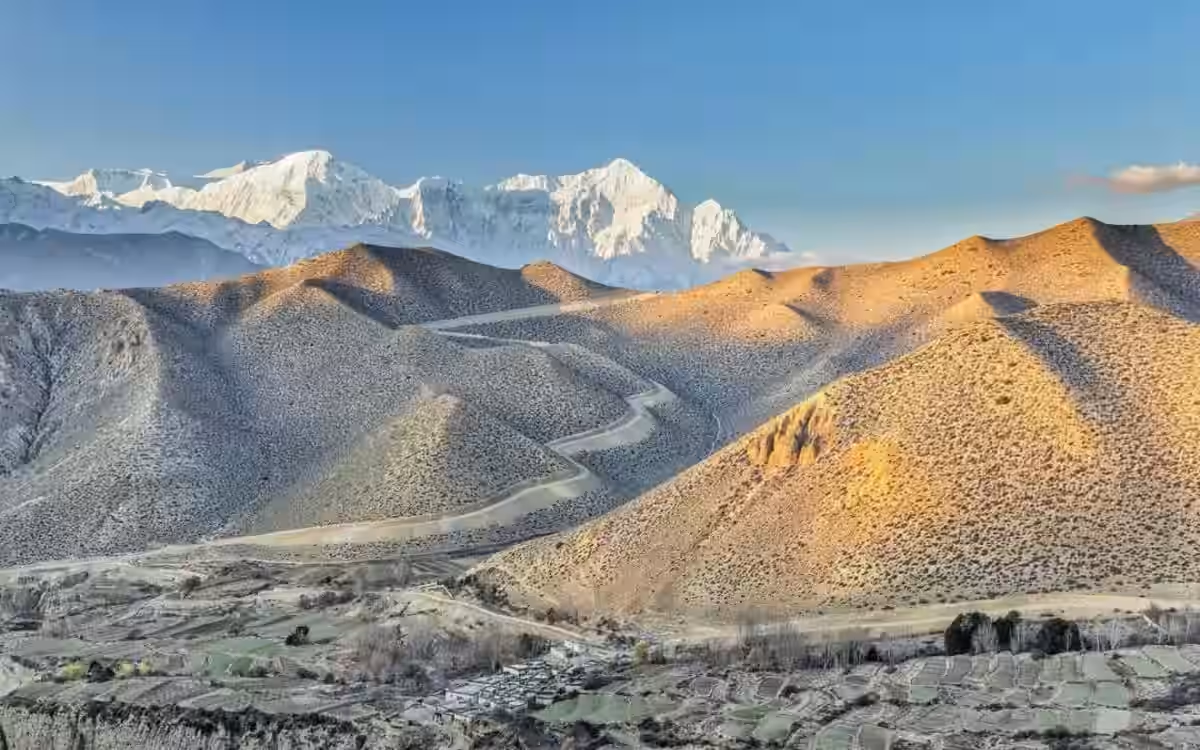
Upper Mustang stands out from all regions in Nepal because its landscapes resemble those of the Tibetan Plateau. The area displays cliffs that are red and orange in color and features eroded rock structures along with barren hill elevations extending toward the distant horizon.
Despite being dry and roug,h the landscape creates an enchanting panorama which differs considerably from the dense Himalayan forests. The special topography of Mustang functions as a perfect destination for people who love exploration and photography.
Sky Caves – Mysterious Cliffside Dwellings
The sky caves located in Upper Mustang attract worldwide attention because monks spent 2000 years making these cliffside dwellings.
The ancient sites were used by monks as meditation chambers and functioned as burial grounds for prehistoric human communities. The unexplored caves within Mustang protect historical secrets which scholars wish to explore.
Visiting these caves provides unique access to see both historical and architectural treasures from the area.
Traditional Tibetan Villages – Preserving Ancient Culture
Villages like Kagbeni, Tsarang, and Ghami showcase Mustang’s authentic Tibetan culture and lifestyle. The settlements of this region are characterized by stone structures with prayer wheels and chortens which accurately demonstrate their deep Buddhist roots.
The residents continue old traditions of herding and farming as they have for multiple generations. Visitors who stay in these villages can discover the genuine friendly nature of Mustang's inhabitants.
Altitude sickness during Upper Mustang Tour
The altitude in Upper Mustang exceeds 3,500 meters creating conditions which make people vulnerable to altitude sickness.
The combination of dry climate conditions and strong winds together with minimal oxygen levels poses severe threats throughout the entire area but especially at Lo Manthang (3,840m).
The condition affects individuals with symptoms including headache, dizziness, nausea and shortness in breathing. The best defense against altitude sickness includes slow elevation rises, fluid consumption and abstinence from alcohol.
Travelers should devote additional time spending at lower elevations because it facilitates the important process of acclimatization.
Eating light meals and resting properly also reduces risks. Under such circumstances, descending back to a lower altitude is the most effective remedy. Dehydration becomes more dangerous for altitude sickness because the Mustang region lacks enough moisture in its climate.
A slow trek speed and body awareness will result in a risk-free yet pleasurable hiking experience. Local tour guides as well as residents of the area have experience with altitude sickness and can offer help when you require it.
Effective preparation and caution enable visitors to explore Upper Mustang without facing major health problem.