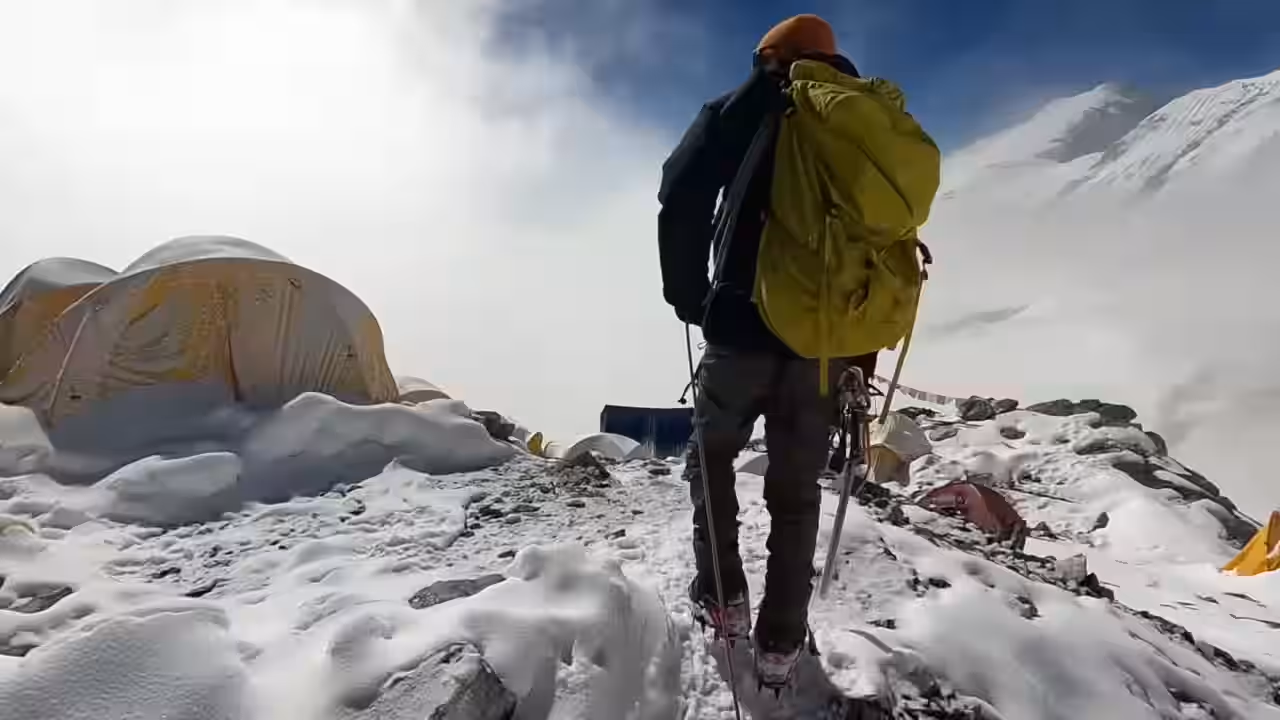
The best time to climb Island Peak is usually spring from March to May or autumn from September to November. These periods give you the main planning windows, but no month guarantees a good summit day. Weather can shift quickly in the Khumbu, and recent Nepal records show large year-to-year variation.
Your date choice should balance seasonal weather, monsoon timing, cold tolerance, permit cost, and your travel dates. Use the month as a planning filter. Use current forecasts and the guide decision for the actual climbing day.
Season choice: plan around spring or autumn, then judge the real departure from current weather and route conditions.
What Is the Best Time to Climb Island Peak?
Spring and autumn are the main Island Peak planning windows. Spring runs from March through May. Autumn runs from September through November. Both windows can work, but each month sits at a different point in Nepal’s weather cycle.
A useful choice starts with trade-offs, not a fixed ranking. March can feel like early spring. Late May moves closer to the monsoon. September can still sit inside the monsoon transition. November shifts toward colder late-autumn conditions.
Decision point | Spring | Autumn |
|---|---|---|
Main planning months | March-May | September-November |
Transition to watch | Pre-monsoon risk rises later in spring | Monsoon withdrawal can affect September and early October |
Recent weather reminder | March-April 2026 were wetter than normal nationally | Oct-Nov 2025 was far wetter than normal nationally |
NMA foreign-climber charge | USD 350 | USD 175 |
Actual summit-day decision | Current weather, route conditions, and guide judgment | Current weather, route conditions, and guide judgment |
Island Peak in Spring: March, April, and May
Spring moves from colder early-season conditions toward the pre-monsoon period. It is a common planning window for Island Peak, yet recent records show why a spring month should not be treated as weather-proof.
March: Early Spring and More Variable Weather
March sits at the start of the spring climbing window. You should plan for colder conditions and changing weather rather than assuming that spring has fully settled.
Nepal’s Department of Hydrology and Meteorology(DHM) reported 214.2% of normal precipitation nationwide in March 2026. Precipitation became frequent after March 20. That figure is a national signal, not an Island Peak summit forecast. It shows that a March label alone does not promise a dry departure.
March can suit travelers who have date flexibility and accept colder conditions. Keep buffer space around flights and the climbing stage where your trip allows it.
April: A Main Spring Window, Not a Weather Guarantee
April sits in the center of the spring planning window. Many climbers target it, but one recent month shows why you should still keep weather uncertainty in the decision.
DHM recorded 144.2% of normal precipitation across Nepal in April 2026. Eastern Nepal saw repeated cloud, rain, and thunderstorms after April 20. At Lukla Airport, recorded precipitation reached 69.6 mm against a 45.3 mm normal. Lukla is an approach station at 2,786 m, so those figures must not be transferred to Island Peak Base Camp or the summit.
April remains a practical planning month. View it as a seasonal window, not a promise of clear skies or a fixed route condition.
May: Later Spring and Rising Pre-Monsoon Risk
May moves closer to the monsoon. The exact transition can shift from year to year, so a late-May departure deserves more attention to current forecasts and the wider Nepal weather pattern.
In 2025, the monsoon entered eastern Nepal on May 29. DHM gives June 13 as the normal onset date for eastern Nepal. That early arrival does not make every May departure poor. It shows why late spring should be judged from the current year, not from a fixed calendar rule.
Island Peak in Autumn: September, October, and November
Autumn begins with the monsoon transition and moves toward colder late-season weather. September, October, and November present different planning questions even though they sit in the same broad climbing window.
September: Monsoon Transition Matters
September needs the most caution around monsoon timing. DHM gives October 2 as the normal monsoon withdrawal date for eastern Nepal. In 2025, withdrawal from eastern Nepal occurred on October 10.
That shift matters for Island Peak planning. A September date should not be treated as automatically post-monsoon. Early October can remain transition-sensitive in some years as well.
October: A Main Autumn Window, but Storms Still Happen
October is a main autumn planning month, but it is not a dry-weather guarantee. The 2025 post-monsoon season gives a clear example.
DHM recorded 297.3% of normal post-monsoon precipitation across Nepal in October and November 2025. A major October 5 event and later moisture linked with Cyclonic Storm Montha helped drive that wet period. Lukla recorded 15 rainy days during the season and 82.92 mm of precipitation against a 52.8 mm normal.
Those records do not make October a poor month. They show why a month's name should never replace a current weather check.
November: Colder Late-Autumn Trade-offs
November moves farther from the monsoon transition and deeper into colder late-autumn weather. This can appeal to travelers who prefer a later departure and accept lower temperatures.
The 2025 post-monsoon record became much drier from mid-November that year. Do not turn that one season into a permanent rule. A November trip still needs current forecasts, suitable cold-weather clothing, and realistic flexibility.
Spring vs Autumn for Island Peak: Which Fits You Better?
Neither season wins for every climber. Pick the window that matches your travel dates, cold tolerance, budget, and tolerance for transition weather.
Spring moves toward the monsoon, so late-May timing deserves care. Autumn moves away from the monsoon, so September and early October deserve care. Recent DHM records show that both broad windows can produce wet or unsettled periods.
There is one clear cost difference in the official climbing charge. The Nepal Mountaineering Association lists USD 350 for foreign climbers in spring and USD 175 in autumn, winter, and summer. That fee difference is only one part of the full trip cost.
How Weather Can Change an Island Peak Summit Attempt
Seasonal planning gets you into a useful date range. It does not decide whether the summit attempt should go ahead on a given morning.
Fresh snowfall, wind, cloud, visibility, temperature, and route conditions can change the day. Your guide may change timing, wait, turn back, or use the itinerary differently when conditions require it. This article does not rank glacier quality or avalanche risk by month because THO does not have the dated field evidence needed for those claims.
Keep a clear boundary between seasonal planning and a live climbing decision. The first happens before you book. The second happens from current conditions on the trip.
Does Lukla Flight Timing Affect Your Season Choice?
Lukla access can affect how much schedule flexibility you need. THO records show that some seasonal flight plans may use Manthali road transfers as part of the Lukla connection.
Exact routing periods can change. Do not choose a month from an old flight calendar. Ask THO for the current flight and road-transfer plan for your departure, then keep sensible buffer time around fixed international connections.
How Does the Island Peak Permit Fee Change by Season?
The NMA foreign-climber service charge changes by season. The current accepted authority record lists USD 350 in spring and USD 175 in autumn, winter, and summer.
Do not read that difference as the full price gap between a spring and autumn package. Transport, staffing, lodging, meals, gear, insurance, and personal spending sit outside that single official charge. Compare the current package quote with those wider trip costs.
Can You Climb Island Peak in Winter or Monsoon?
THO’s standard planning frame centers on spring and autumn. Winter and monsoon dates need a separate current operating check rather than a blanket yes-or-no answer.
A winter date can bring colder conditions. A monsoon-period date can bring more moisture and access disruption. The trip still depends on the route, current forecast, guide decision, and THO’s operating plan. This guide does not label an off-window month as safe or unsafe.
How to Pick Your Island Peak Departure Month
Start with your available date range, then test it against the seasonal trade-offs. A simple decision process works better than chasing one “best” month.
- Choose spring or autumn first when THO has not confirmed a different operating window for your trip.
- Check where your month sits relative to the monsoon transition.
- Check current DHM reports and the forecast closer to departure.
- Ask THO for the current Lukla or Manthali transport plan for your dates.
- Include the seasonal climbing charge when you compare trip costs.
- Keep enough schedule flexibility for mountain transport and weather changes.
For most travelers, March through May and September through November remain the useful Island Peak planning windows.
The stronger choice is the month that fits your schedule while leaving room for real weather, transport changes, and guide decisions.
Use THO’s current Island Peak package information for available dates and the final operating plan.
Weather source: Nepal DHM monthly reports and seasonal reports. Records cited in this article were checked on August 12, 2026.