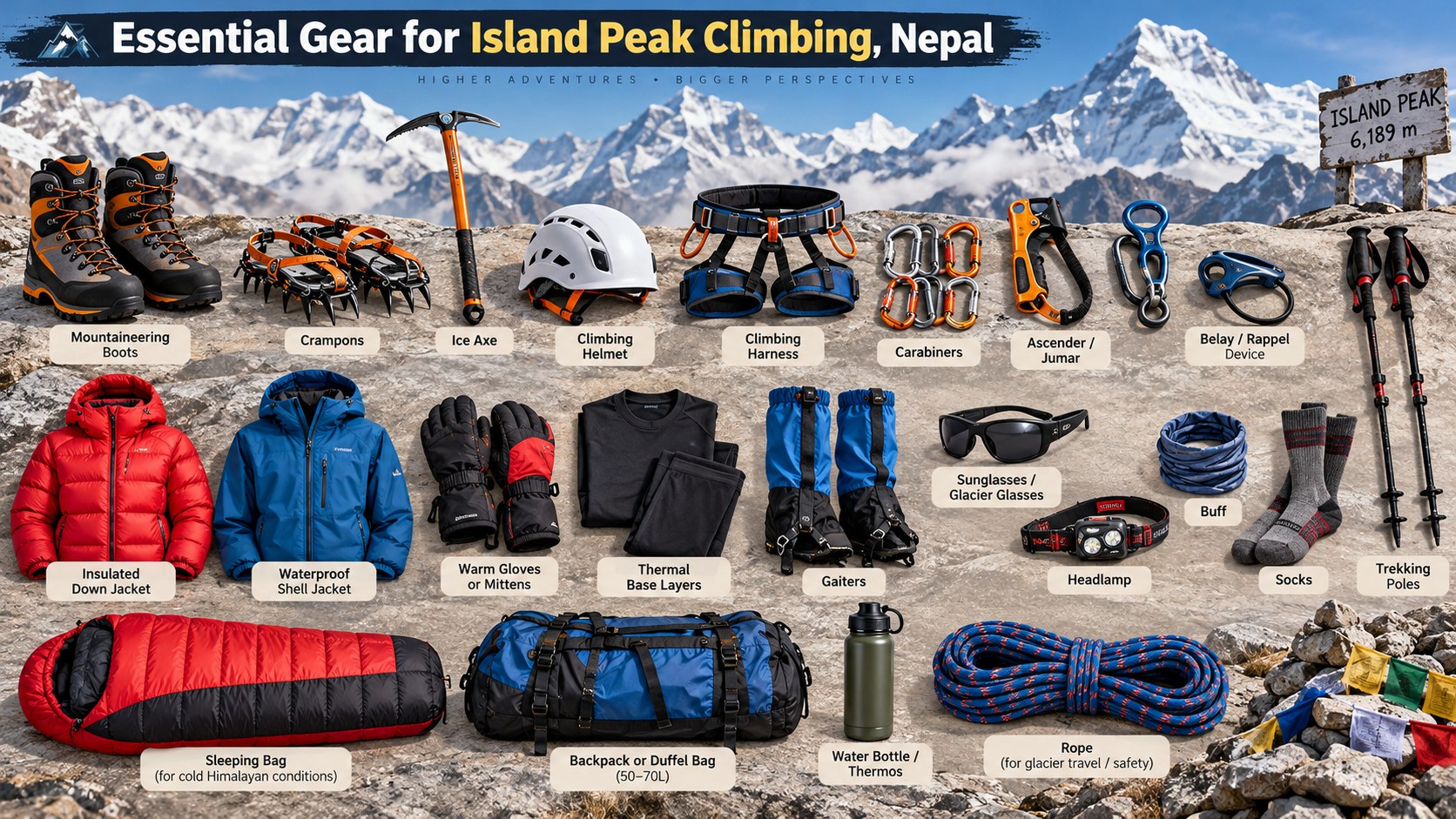
An Island Peak gear list only helps if the boots fit, the crampons match, and the climbing gear works as one kit. Clothing needs to cover trekking days, Base Camp, and an early summit start. The goal is not to collect more specialist equipment. It is to arrive with gear that fits, functions, and does not create a new problem on the mountain.
Some equipment needs to fit your body, while some group equipment may come from the operator. That split matters before you spend money. Confirm what is personal, what can be rented, and what is supplied before you start buying specialist items.
Island Peak equipment lists vary because camp plans, rental systems, and supplied gear vary. Use a general checklist to understand what each item does. Then use your departure sheet to confirm what applies to your climb.
Start With the Gear That Has to Fit You
Fit-sensitive gear deserves attention before everything else. Boots, crampons, a helmet, and a climbing belt all interact directly with your body or movement. A poor fit can become distracting after hours of walking or climbing.
Technical hardware needs the same care for a different reason. An ascender, descent device, locking carabiners, and ice axe are not useful simply because they appear on a list. The actual items need to be complete, in suitable condition, and checked for the climbing system you will use.
Do not wait until Base Camp to discover a major fit or compatibility problem. By then, replacement choices are much narrower than they are in Kathmandu. The earlier equipment check should solve the problems that need shops, rental stock, or a different size.
Island Peak Gear List at a Glance
Use this table before you buy or rent anything. It shows the main gear decisions. Your operator and departure sheet should settle the final split between personal and supplied items.
Gear area | What belongs here | What to confirm |
|---|---|---|
Footwear | Mountaineering boots and crampons. | Fit and compatibility checked together before leaving Kathmandu. |
Personal climbing hardware | Helmet, climbing belt, ascender, descent device, locking carabiners, and ice axe. | Completeness, visible condition, and the current guide or departure-sheet requirements. |
Clothing | Normal trekking layers and personal summit clothing. | Exact garments and quantities from the current departure equipment sheet. |
Summit-day carry | Headlamp, water, extra layers, personal items, and power for small electronics. | Easy access plus the current daypack and baggage rules. |
Rental gear | Any missing personal equipment resolved in Kathmandu. | Fit, matching parts, condition, current price, rental period, return terms, and any deposit. |
Group and camp gear | Responsibility varies by operator. | What is supplied before you buy or pack shared equipment. |
Sleeping gear | Responsibility and rating can vary. | Whether a sleeping bag is supplied and what current rating or system is required. |
Boots and Crampons Need to Work as One System
Boots and crampons are one of the most important equipment pairings on Island Peak. A boot can fit your foot well and still be the wrong match for the crampon you plan to use. The pair needs to be checked together before you leave for the mountain.
Start with the boot. It needs to fit your foot for a long climbing day without creating obvious pressure or movement problems. Then check the crampon against that exact boot. Buying or renting the two items separately and hoping they match later creates an avoidable risk.
No single boot grade or crampon attachment system is fixed here. Use your climbing guide or departure sheet for the exact specification. Another operator may use a different system.
If you rent either item in Kathmandu, complete the fit and compatibility check before leaving the city. A lower rental price has little value if the boot hurts or the crampon does not match.
Know Your Personal Climbing Hardware Before the Trip
Island Peak uses technical hardware that normal trekking does not. The personal list includes a helmet, climbing belt, ascender, and descent device. Locking carabiners and an ice axe are part of the same personal kit.
This article helps you choose and check that equipment. It does not teach climbing technique. You should still know what each item is for before the climb. Unfamiliar gear takes more attention when gloves, cold, and fatigue slow simple movements.
If you bring your own hardware, put the actual items through the pre-trip equipment check. If you rent them, do the same. A familiar brand name does not replace a fit, condition, and completeness check.
Device models, carabiner counts, ice-axe length, and other technical details are not fixed here. Use the climbing guide or departure equipment sheet for those specifications.
Personal item | Role on the climb | What to check |
|---|---|---|
Helmet | Personal protective equipment for the climbing stage. | Fit and condition. No fixed model or standard is published here. |
Climbing belt | Connects you to the rope system under guide direction. | Fit and condition. No fixed model or sizing rule is published here. |
Ascender | Part of the personal fixed-rope system. | Completeness and condition. Practice the technique separately under supervision. |
Descent device | Part of the personal rope system for guided descent. | Completeness and condition. No fixed device model is set here. |
Locking carabiners | Connection hardware within the climbing system. | Completeness and condition. Use the current equipment sheet for the required count. |
Ice axe | Personal climbing equipment for the climbing stage. | Condition and current guide requirements. Length and model still need guide confirmation. |
Clothing Has to Cover More Than One Part of the Trip
Island Peak is not a single-temperature climb. Clothing has to work while you trek through the Khumbu, spend time at Base Camp, prepare before dawn, and climb for hours before returning to camp.
A flexible clothing system matters more than copying a fixed number of layers from someone else's checklist. You need to add or remove protection as effort, wind, cold, and exposure change through the day.
You will need normal trekking layers and personal summit clothing. Exact garment counts and insulation ratings can vary. Use the final departure equipment sheet for those details.
Your departure sheet should settle the smaller cold-weather and eye-protection items too. Do not assume another operator's checklist matches your climb.
Keep Summit-Day Essentials Easy to Reach
A headlamp belongs in the summit setup because Island Peak summit attempts begin in darkness on many itineraries. Put it where you can reach it without unpacking the whole bag.
Water, extra layers, personal items, and any camera or phone you carry need to stay accessible. Daypack size and carried load vary by itinerary and operator. Use the current booking details instead of a generic pack-size rule.
Power needs planning too. Charging can be limited once you reach a tented Base Camp. Carry enough battery capacity for the climbing stage if you rely on a phone, camera, or other small electronics.
Keep the summit load simple. Items needed in the dark or during a clothing change should be easier to reach than things you will not use until you are back in camp.
Rent or Buy? Let Fit, Condition, and Future Use Decide
Kathmandu gives many climbers the option to rent or buy missing equipment. The better choice depends on the item. Fit-sensitive boots deserve more caution than equipment that does not depend on your foot shape.
Buying may make sense when you want more time to test the item or expect to use it on future climbs. Renting may make sense when specialist equipment would otherwise sit unused after one trip. Neither choice removes the need for an equipment check.
Do not build your budget around an old rental-price table. Stock, sizes, prices, deposits, and return terms can change. Ask for the current item, rental period, price, return process, and any deposit before you pay.
Check rental gear before you leave the shop. Look at fit, matching parts, visible condition, and compatibility with the rest of your kit. If something fails that check, solve it in Kathmandu rather than carrying the problem into the Khumbu.
Decision factor | Bring or buy | Rent in Kathmandu |
|---|---|---|
Fit-sensitive footwear | Gives you more time to test the boot before travel. | Needs a real fit check with the selected crampon before leaving Kathmandu. |
Future use | Makes more sense when you expect to use the item on later climbs. | Can avoid buying specialist gear for one trip. |
Travel baggage | Adds the item to your international baggage. | Can reduce the amount of specialist gear carried from home. |
Availability | You know the exact item you are bringing. | Size and stock must be checked for the current date. |
Condition and compatibility | Still needs the pre-trip equipment check. | Needs the same check before the mountain section. |
Price | Purchase price is known when you buy. | Use a current quote rather than an old published rental figure. |
What an Operator May Provide, and What You Still Need to Confirm
Group equipment is handled differently from personal climbing gear, and the exact split varies by operator. Before you buy shared equipment, ask for the latest equipment sheet. Mark each item as personal, rented, or supplied.
On Island Peak climbing trip, we supply group ropes, camp equipment, and shared safety hardware. A group first-aid kit and pulse oximeter are supplied too. Personal climbing equipment remains your responsibility. That includes boots, crampons, helmet, climbing belt, ascender, descent device, locking carabiners, and ice axe.
Camp equipment does not automatically answer every sleeping-gear question. The current public trip information confirms a tented Base Camp but does not settle the sleeping-bag arrangement or rating. Confirm that detail before you rent or buy a bag.
Use the departure equipment sheet for the final check. If something changes, follow the latest trip information.
Two Equipment Checks Catch Different Problems
One equipment check should happen while you still have access to shops and rental choices. The second should happen close to the climb, when the team can confirm that the summit kit is complete and ready.
In the current process, the main fit and missing-gear check happens in Kathmandu before the mountain section. Boots and crampons are checked together. Missing personal items can still be rented or bought there.
Gear is checked again at Island Peak Base Camp before the summit attempt. That second check is for readiness, fit, and completeness. It should confirm that the kit prepared in Kathmandu still works together and is ready for the climbing system set by the guide.
The Base Camp check is not the place to discover a preventable major problem. Its value is in catching final issues after the trek and before the climbing stage.
Final Gear Check Before You Leave for the Mountains
Before you leave Kathmandu, confirm the basics one more time. Your boots and crampons should match, personal climbing hardware should be complete, and clothing should follow the current departure sheet.
Confirm what the operator supplies so you do not carry duplicate group gear. Settle the sleeping-bag arrangement, daypack and baggage rules, and any rental return terms that still apply.
Have the headlamp and power plan ready for the early start. Keep the personal items you may need during the climb easy to reach.
If a technical detail is missing from the current equipment sheet, ask the climbing team. Do not fill the gap from another company's checklist. The most useful list is the one that matches the equipment system you will actually use.
Confirm before leaving Kathmandu | Why it matters |
|---|---|
Boot and crampon compatibility | The pair needs to work together before the mountain section begins. |
Personal climbing hardware is complete | Missing or mismatched items are easier to solve in Kathmandu than at Base Camp. |
Clothing follows the departure sheet | Exact garments and quantities can change with the current operating list. |
Operator-supplied vs personal gear is clear | This prevents duplicate group equipment and last-minute gaps. |
Sleeping-bag arrangement is settled | Tented Base Camp does not by itself settle whether the bag is supplied or what rating is required. |
Rental terms are recorded | Stock, price, rental period, return terms, and deposits can change. |
Headlamp, power, daypack, and baggage rules are checked | The early start and limited Base Camp services make access and power planning useful. |