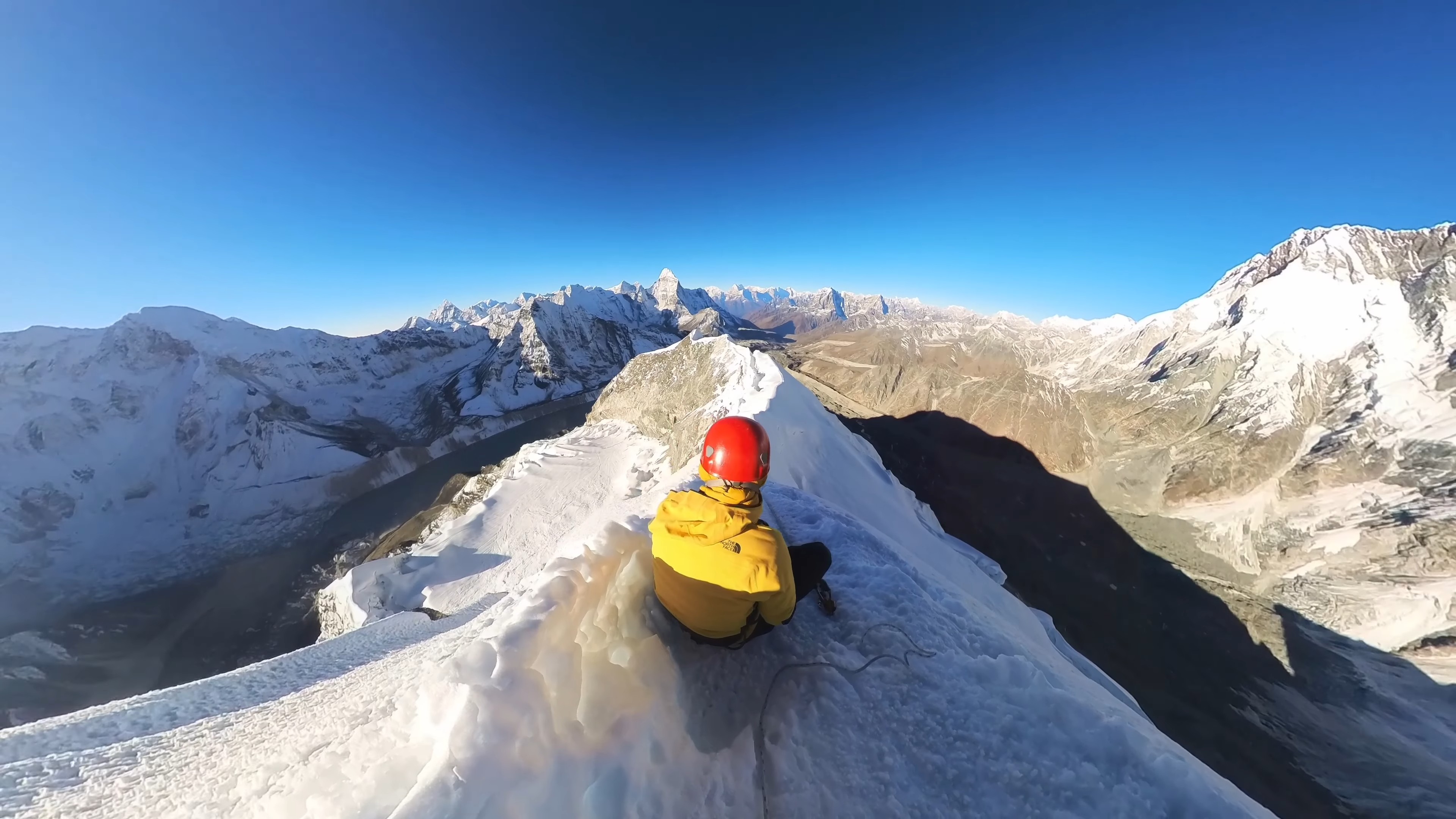
Island Peak summit day usually begins before sunrise and continues for many hours. The climb starts on steep rock, then moves onto snow and glacier terrain. If conditions allow, the team may reach the 6,165 m summit before turning back down. The total workload depends partly on the starting camp, because some itineraries leave from Base Camp while others begin higher.
That difference matters when you compare route descriptions from different operators. A higher start reduces some of the climbing before the upper mountain, while a Base Camp start creates a longer stage. Either way, summit day is more than the final push upward. You still need enough time and energy for rock, glacier travel, rope sections, the summit decision, and the return.
Snow, glacier movement, rope placement, traffic, and surface conditions can change the working route. The useful part to understand is the sequence of the day. The guide may change the pace, timing, or turnaround decision as conditions develop.
Summit Day Usually Begins Long Before Sunrise
An early start gives the team more time for both the ascent and the descent. It leaves room for delays higher on the mountain too. Rope traffic, slower movement, or changing conditions can all take more time than expected.
Before leaving camp, your headlamp, layers, water, food, and personal climbing equipment need to be ready. Summit morning is a poor time to discover that a boot fit is wrong or that a piece of equipment is missing. The technical practice and gear checks should already have happened before the team steps onto the route.
The first hour can feel deceptively manageable because adrenaline is high and the summit is still far away. Starting too fast can create a problem later. A steady pace protects the energy you will need once the terrain becomes more technical and again when you turn downhill.
Departure times are not universal. Weather, route condition, team pace, and the camp model all affect when a group leaves. A published clock time belongs to that itinerary and should not be read as a rule for every Island Peak climb.
The Lower Mountain Is Rocky Before the Snow and Ice
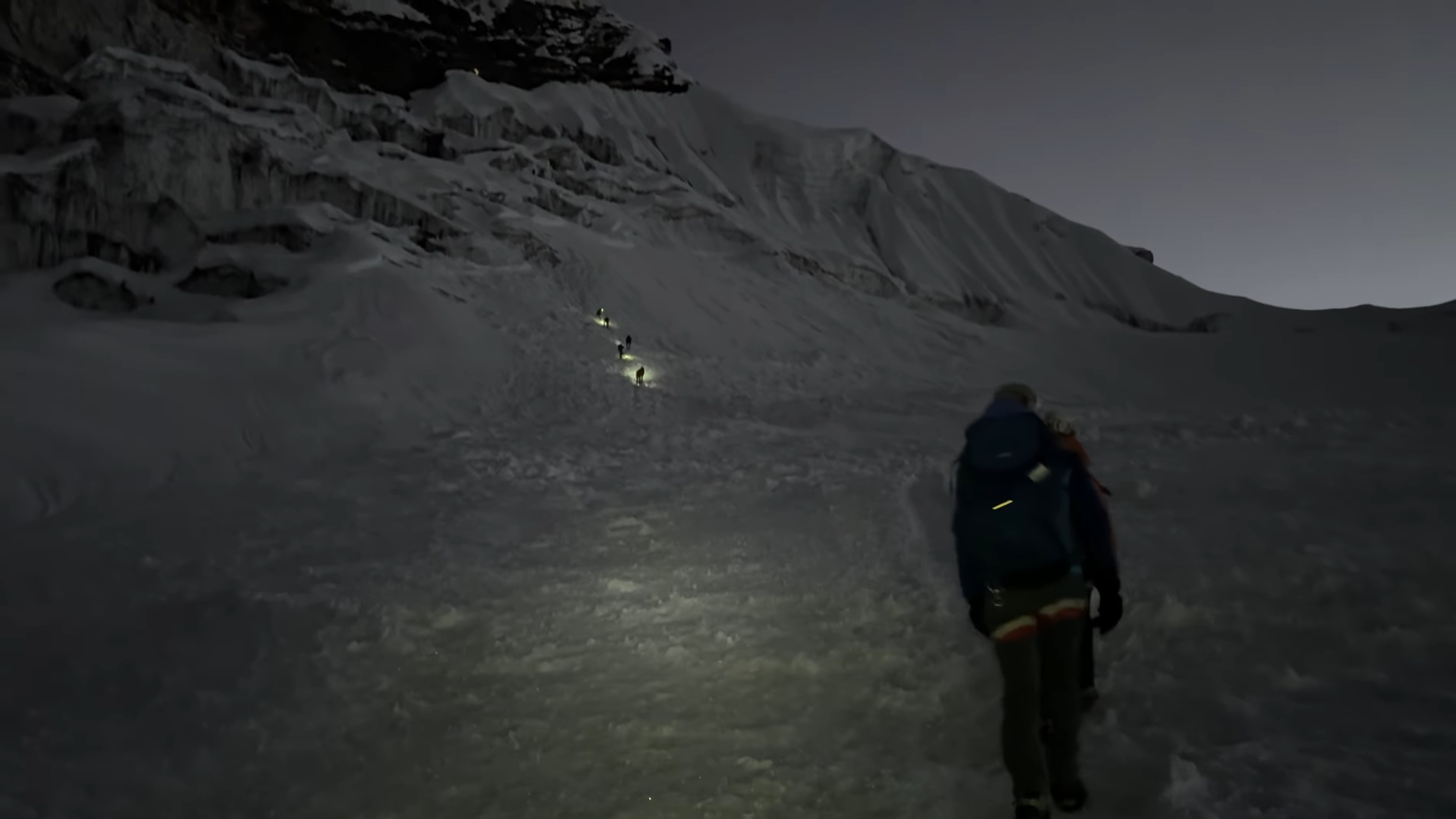
Island Peak does not begin with crampons and glacier travel. The lower climb rises over steep rocky ground, then passes through a narrow rocky section before reaching the higher ridge and glacier terrain.
This part of the day often happens in darkness or early light. Foot placement matters, but so does restraint. The aim is not to race through the rock. It is to reach the higher route with enough strength left for the snow, rope work, and descent.
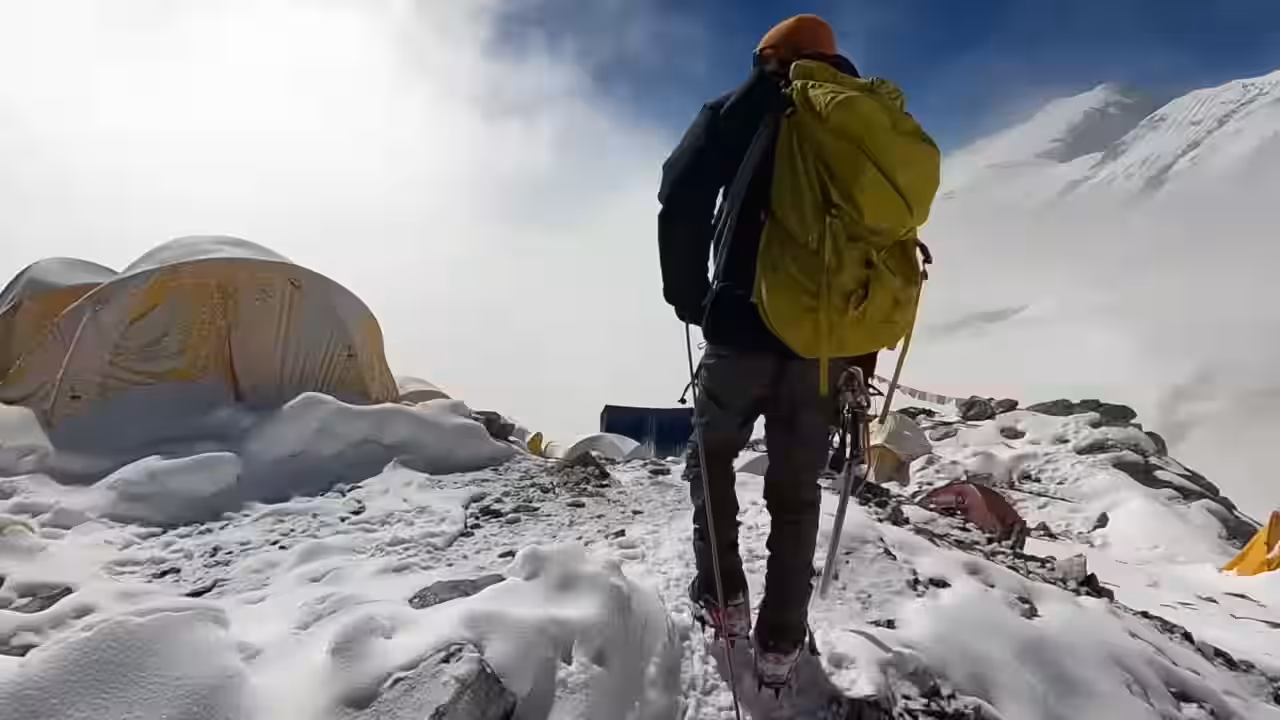
The change from rock to snow and ice is one of the biggest shifts in the day. Your movement becomes more deliberate, equipment starts to matter more, and the guide may stop the team to change the climbing setup before continuing higher.
The Glacier Changes How You Move
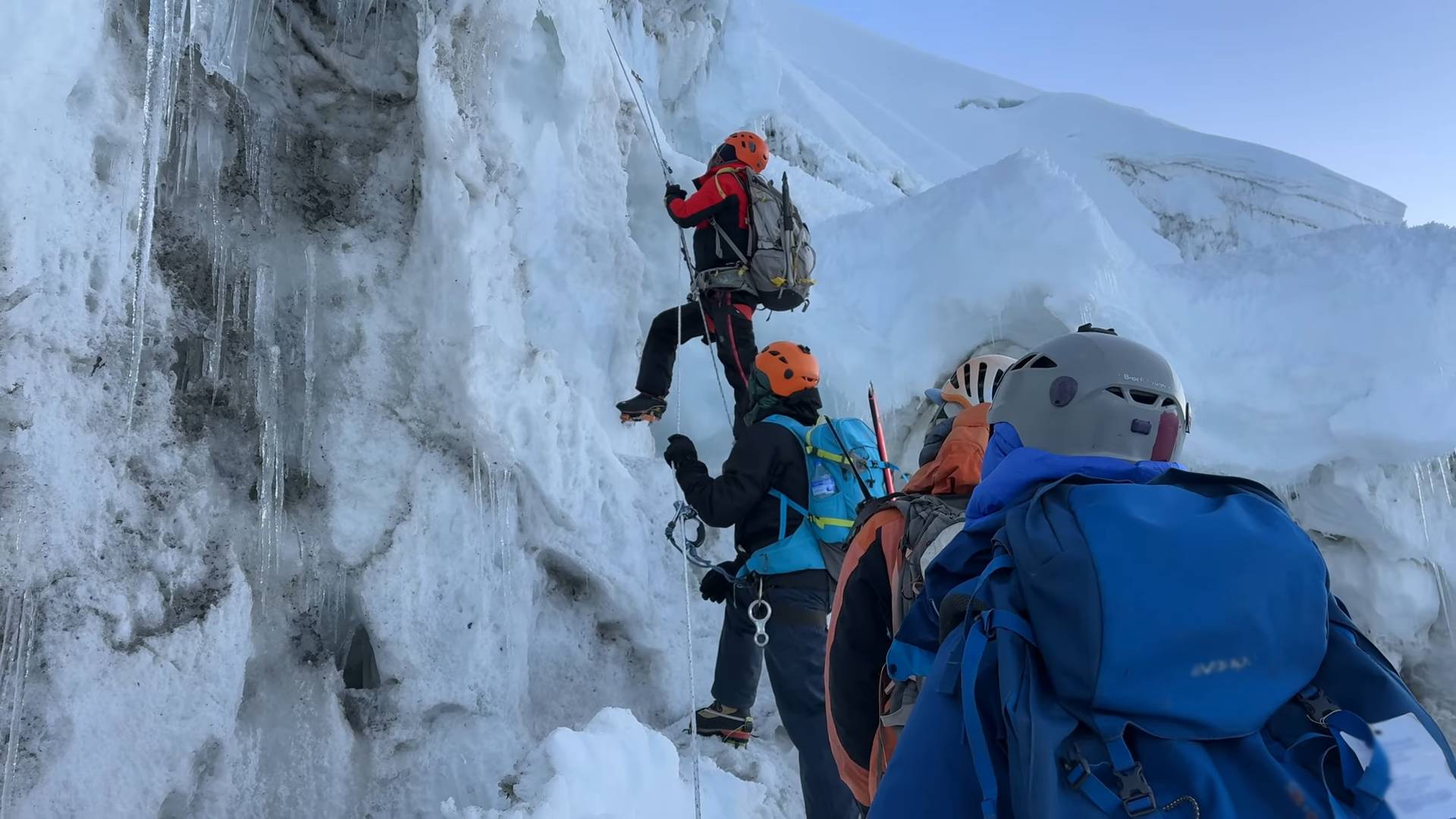
Once the route reaches the glacier, crampons and rope systems can become part of the climb. The guide chooses the working line for the conditions found that day rather than following a permanent path that stays identical from season to season.
Snow cover can move the point where crampons go on. Glacier change can alter where crevasses appear. Rope placement can move too. That is why fixed slope angles, exact rope lengths, and permanent obstacle counts often sound more certain than the mountain really is.
Fixed ropes may be used on climbing sections, with an ascender helping you move upward on the line. The descent uses a different movement system, managed by the guide for the section being crossed. Those techniques should already feel familiar before summit day, even though the exact setup is decided on the mountain.
Crevasse crossings can include ladders when the route set for the day needs them. Their number and position can change, so a photo or route report from another season should not be treated as a fixed map of what you will meet.
Traffic adds another variable. When several teams share a rope section, you may need to wait until the line is clear. That pause can feel frustrating, but the guide is protecting spacing and keeping enough time for what still lies above and below.
The Summit Decision Starts Before You Reach 6,165 m
The closer the summit gets, the more tempting it can be to think only about reaching the top. The guide has a wider job. Weather, surface condition, route traffic, team pace, health, equipment, and the time already used all affect whether continuing still leaves enough margin for the descent.
There is no single turnaround time that fits every Island Peak attempt. A team that left from a different camp, moved at a different pace, or faced a delay on the ropes is working with a different clock. The cutoff has to fit the actual day.
Turning around below the summit is not the same as failing to understand the objective. The summit is only useful if the team still has enough time and control to descend the glacier, rope sections, ridge, and rocky lower mountain.
If the team reaches 6,165 m, the stop on top still has to fit the descent plan. Photos and a short rest may be possible, but the climbing day is not finished. The route below still has to be reversed.
The Descent Is Still Part of Summit Day
The descent asks different things from tired legs and tired hands. Foot control can fade after hours of climbing, clips can feel slower in the cold, and a section that felt simple on the way up can demand more attention on the return.
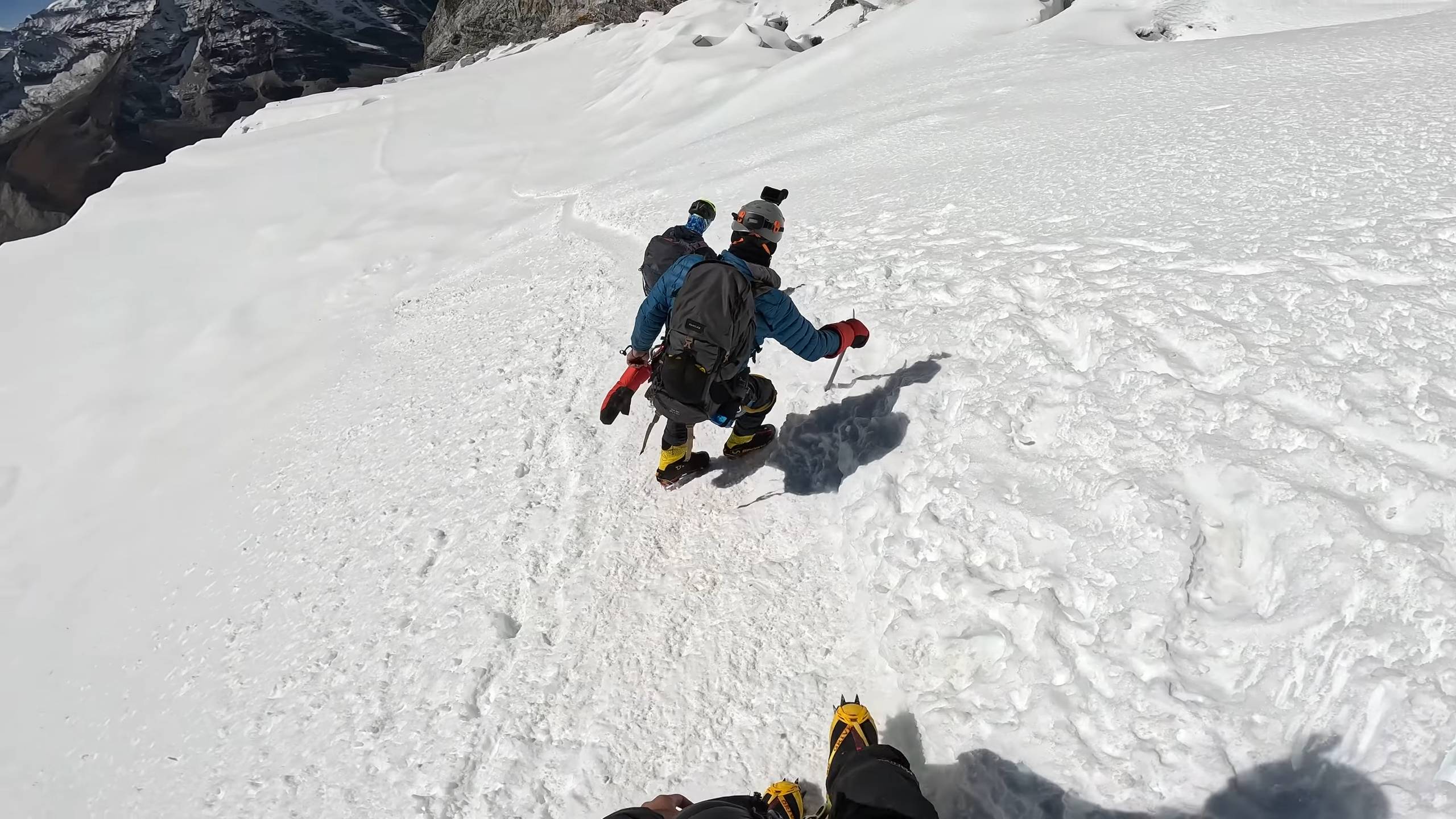
Shared rope sections can create another wait. Snow and surface conditions can change as the day warms. More teams may have moved across the route. The guide still has to manage spacing, equipment, and pace while the group is carrying the fatigue of the ascent.
This is why summit-day descriptions that stop at the top tell only half the story. Your real finish is the camp you are returning to, not the summit itself.
A strong summit-day plan protects the descent from the beginning. Pace, breaks, turnaround decisions, and time spent on top all need to leave something in reserve for the way down.
Base Camp and High Camp Starts Create Different Summit Days
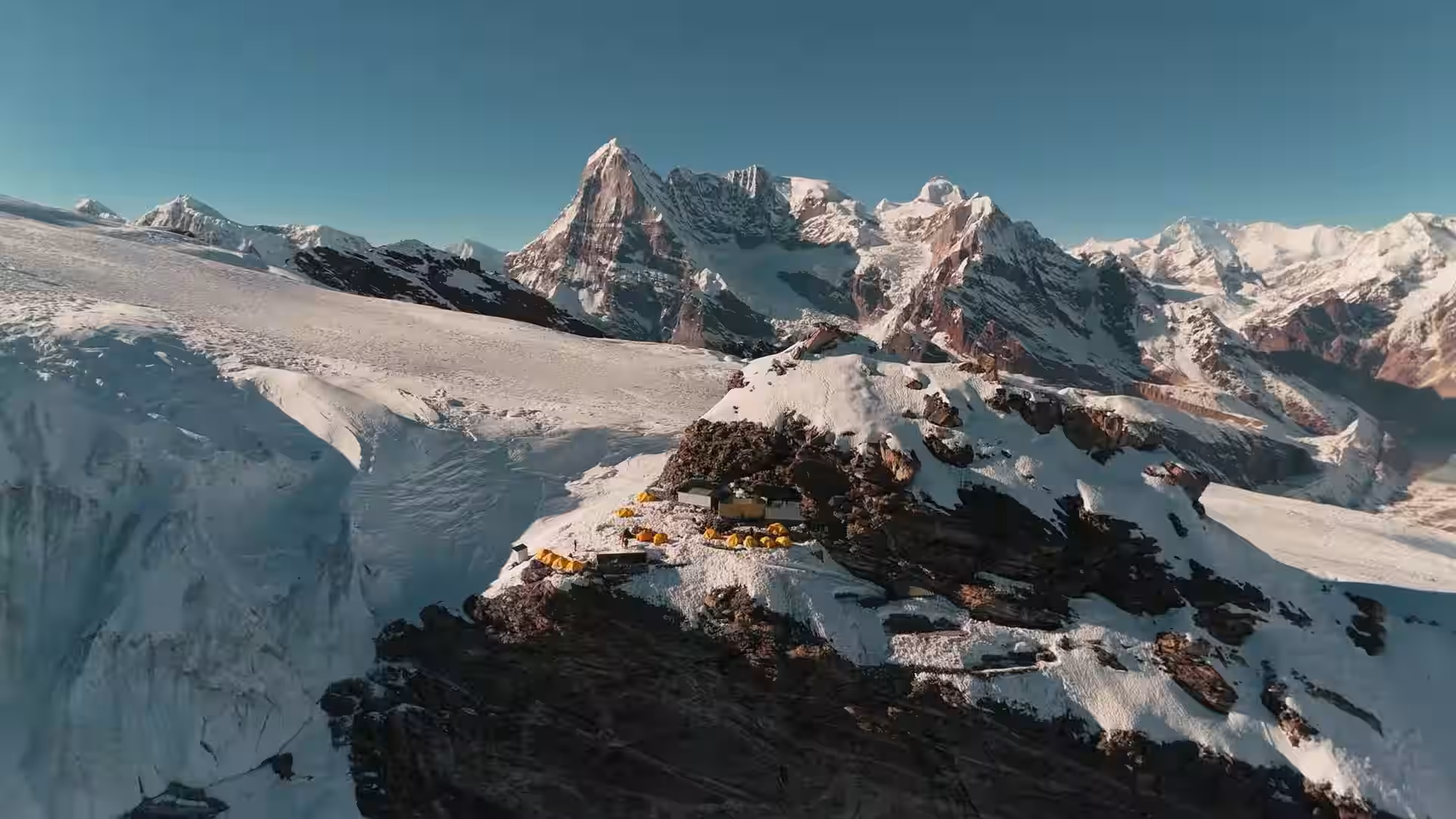
Island Peak itineraries do not all use the same camp model. Some summit attempts begin from Base Camp around 5,200 m, while others use a higher camp. That changes the amount of climbing before the upper mountain and makes direct timing comparisons unreliable.
If you compare two route descriptions, check the starting camp before comparing hours. A shorter summit-day estimate may simply begin higher. That does not mean the upper climbing is easier or that one trip is better planned.
On our current Island Peak trip, the summit attempt starts from Base Camp rather than a separate High Camp. The planned stage is about 10 to 14 hours from Base Camp back to Base Camp, with departure normally by about 2:00 a.m. Those figures describe this operating model, not every Island Peak itinerary.
Whatever camp model you choose, summit day is one continuous sequence. It starts early, climbs through rock, then moves onto snow and glacier terrain. Guided rope work may follow where the route needs it. The summit decision depends on the conditions and the time left for the full descent back to camp.