Mount Kailash Tour Group Size
Groups during the Mount Kailash tour consist of between 10 to 20 members. A perfect group size exists because it lets everyone participate fully and maintains proper organization.
Putting together a small group allows improved communication between the guide and tourists while offering increased adaptability on the journey. Such group size simplifies both trip arrangements and food booking and accommodation acquisition.
The reduced number of tourists allows the guide to focus his attention specifically on individual travelers and particularly on travelers who require additional assistance.
Safety levels increase when the group remains small. The presence of new people and experience sharing between travelers maintains an environment that is both supportive and friendly.
The trip to Mount Kailash becomes comfortable and pleasant because of the right mix of participants in this group setting.
Permits for Kailash Mansarovar Tour
The journey to Mount Kailash needs several official permits to maintain orderly travel throughout Tibet. The necessary permits for Mount Kailash tour include several components, which we will analyze in detail.
1. Tibet Travel Permit
The Tibet Travel Permit functions as an essential requirement for every person travelling to Tibet. The destination permits travelers to explore the complete area between Mount Kailash as well as other regions inside.
As part of its services, The Himalayan Odyssey helps travellers obtain this Tibet entry requirement, which all visitors must acquire.
2. Chinese Visa
To visit Tibet, both a Chinese visa and a Tibet Travel Permit remain necessary for non-Indian passport holders.
Foreign nationals should visit the Chinese embassy or consulate to acquire this visa. The Chinese electronic travel permit becomes mandatory when travelers cross into China before they arrive in Tibet.
3. Alien’s Travel Permit
Travelers must obtain this permit to explore restricted regions of Tibet, including the Mount Kailash vicinity. The Himalayan Odyssey gets permission to access limited regions by managing the required authorizing permit.
4. Military Area Entry Permit
Entrance to certain parts of Tibet which are near the border demands a Military Area Entry Permit. Tourists need the permit only when their travel route involves visiting restricted regions. The tour agency procures this permit for all tourists requiring authorization to access restricted areas in Tibet.
5. Foreign Affairs Permit
Some regions in Tibet require this specific permit for which the government maintains control. A travel agency handles this application, which is vital to getting permission to access limited zones.
Travellers can experience an easy and convenient journey because The Himalayan Odyssey addresses the requirements of every necessary permit for KailashYyatra.
Mount Kailash Tour Cost
Mount Kailash tour costs fluctuate according to the tour package selection and travel duration and supplementary support services twenty-four hours a day.
The Himalayan Odyssey provides a tour Kailash Mansarovar package that costs USD 2,555 to its customers. Travel expenses plus permits along with accommodation and guide supervision constitute the total cost of the journey.
Both transportation and meals and necessary tour services form part of the tour package. Extra costs, including personal purchases, tips and additional optional services, do not fall under the tour price.
Customers should check the complete coverage of the package's contents during their booking process. Travellers receive a complete and protected travelling experience that includes all necessary elements due to this specified price.
Best Season for Mount Kailash tour
Spring (April - June)
During spring, the climate remains moderate, with unobstructed skies above. Trekking becomes optimal because of the pleasant weather conditions in this period. Visitors can enjoy a serene experience because the trails remain mostly empty during this time.
Summer (July - September)
During summer months Kailash receives both warmer weather and massive rainfall patterns in the region. During the monsoon period, the mountain paths become hazardous because of their slippery surface. Same as with any outdoor activit,y this season has limited suitability for trekking.
Autumn (October - November)
Autumn provides the most favourable conditions. The ideal weather during this time brings nice temperatures and very little rainfall. The extraordinary mountain sights can be seen while following well-maintained trails.
Winter (December - March)
During winter the coldness becomes severe when standing at elevated locations. The combination of snow and cold weather creates dangerous conditions for trekking in this area. It’s not ideal for the tour.
The Mount Kailash tour reaches its optimal conditions during the autumn months between October and November because of attractive weather conditions and unobstructed sightings of scenery.
Mount Kailash Tour Accommodation
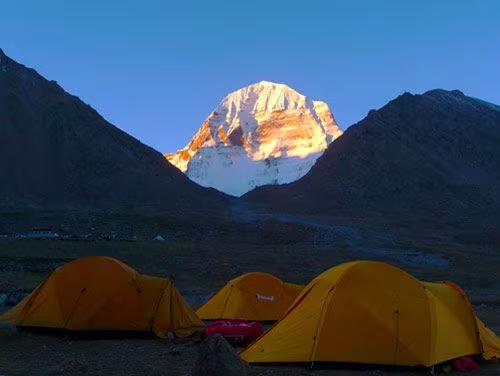
The accommodation services for the Mount Kailash tour depend on the desired comfort level and location choice. Simple accommodation facilities such as guesthouses, monasteries and tents exist throughout Tibet. Hotels in Lhasa feature both comfort and modern building conveniences.
Guesthouses, dormitory bedrooms, and camping tents provide the most basic accommodations at elevated locations. Basic features characterize the facilities, while the hot water supply may have sporadic interruptions.
The accommodation serves food prepared from basic Tibetan and Chinese dishes for its clients. Visitors should expect reduced comfort levels during altitude travel yet the provided accommodations remain safe for the trip.
Food During the Mount Kailash Tour
Simple Tibetan and Chinese dishes serve as the main foods during Mount Kailash tours because they supply the energy needed for challenging trekking conditions.
People visiting Lhasa will find a greater selection of food that includes rice with noodles, vegetables and various types of meat.
The Tibetan cuisine features roasted barley flour through tsampa along with dumplings known as momo and noodle soup named thukpa.
Many people in Tibetan culture prepare their food with yak meat according to traditional Tibetan culinary practices. Yak steak and yak stew are typical Tibetan dishes from yak meat.
The food found at elevated locations consists of simple yet healthy sustenance. Guests typically eat a combination of rice products and noodles together with bread and Tibetan soup varieties such as momo soup or Tibetan noodle soup.
The dining choices in remote areas around Mount Kailash are basic since people eat at guesthouses and tents where the available food options remain sufficient.
Traditional butter tea stands as a Tibetan beverage composed of tea with butter along with salt to support warmth and energy levels.
Biscuits, dried fruits and nuts can be obtained as snacks. The trek requires you to keep energy snacks like chocolate bars and energy bars as second sources of nourishment.
Simple food finds its way to travelers during trekking because it supports valuable nutrition and essential energy regardless of high-altitude difficulties.
Transportation for Mount Kailash tour
The Mount Kailash pilgrimage requires travellers to use different transportation types, starting from aeroplanes then buses and either jeeps or personal vehicles.
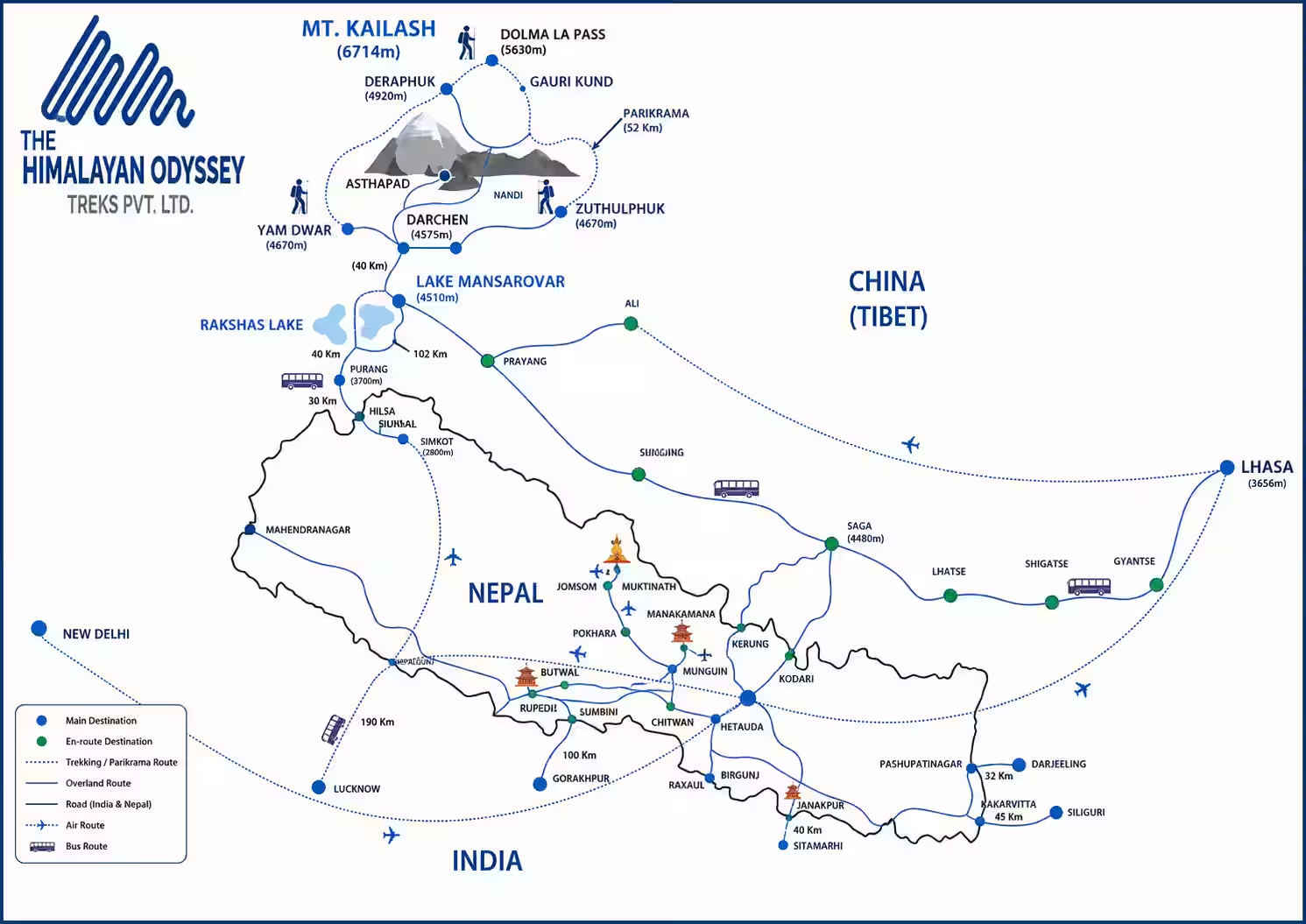
The majority of Mount Kailash travellers start from either Kathmandu or Lhasa. Tourists can reach Lhasa by air through Kathmandu, although a highway journey provides scenic views during the long transit through Tibet's picturesque landscapes. Brief and easy flight routes make Lhasa accessible.
When tourists arrive in Tibet, they must use the vehicles that the tour agency specifically provides for transportation.
The transportation consists of comfortable buses and jeeps connecting Lake Manasarovar with Darchen and Mount Kailash.
Tibet’s rough roads do not pose a risk to passengers because the vehicles possess the proper equipment to negotiate any terrain.
During the religious Parikrama trek around Mount Kailash people complete the 52-kilometer sacred walk. Travellers must be prepared for demanding walking conditions because the journey occurs at elevated heights among rocky paths.
The tour package determines whether agencies will provide backup vehicles for rest stops or assistance throughout the challenging sections of the route.
A Kailash tour management team ensures both safety and comfort and smooth movement of transport services for all travellers throughout the duration of the tour.
How fit should I be for Kailash Mansarovar Tour?
A visitor must be fit for their Mount Kailash tour because the trek demands both altitude adaptations and physical requirements.
Tourists need to prepare for the 52-kilometre Parikrama trek because it includes demanding ascents along rocky terrain and requires completing the challenging Dolma La Pass at 5,645 meters in height.
The necessary preparation requires increasing both cardiovascular fitness and strength in your legs and building sufficient stamina.
Exercises consisting of hiking along with walking and cardiovascular training develop your endurance capacity.
Visitors need to properly acclimatize themselves to high altitudes because it protects them from developing altitude sickness.
It is crucial to obtain medical advice from a doctor, specifically if any health problems exist. A person in good shape will have both a safer and more enjoyable trekking experience.
Mount Kailash Tour Staff Management
Professional staff members lead the Mount Kailash tour under the role of guide driver and support personnel.
Each group of the Himalayan Odyssey Tour brings guides who understand the terrain of the trek and possess expertise regarding its sacred spiritual dimension.
Their mission is to maintain safety, offer guidance and manage acclimatization processes. Drivers need to ensure journey safety by managing vehicles through challenging Tibetan roads.
The support staff maintains control over operational tasks which include arranging food and accommodation as well as managing the overall trip.
These personnel handle all paperwork requirements and obtain relevant documents. As a team, all staff collaborate to build a single smooth travel experience by ensuring constant safety and comfortable service while staying behind schedule.
The essential factor for achieving a fruitful pilgrimage is effective staff management.
Why is the Mount Kailash tour organized in Nepal?
Many reasons exist which drive people to begin their Mount Kailash journey from Nepal. All international travelers who wish to explore Tibet should start in Nepal because it represents the nearest entry point to Tibet.
The Nepalese capital, Kathmandu serves as a vital transit point because it gives easy travel connections to flights along with land infrastructure paths to Tibet.
Potential travelers have two reasons to choose Nepal as their departure point for Mount Kailash tours.
First, they will find that tour agencies like The Himalayan Odyssey which easily gain permits and visa services and organize all required tour logistics.
A significant number of Hindu pilgrims begin their travel from Nepal since the nation holds cultural and spiritual significance for them.
As the place where Buddha came into the world, Nepal offers visitors a special connection between Buddha's birth and Hindu faith traditions.
Tourists find stronger accessibility along the route connecting Nepal and Tibet because this path enables visitors to combine the cultural and natural attractions of both nations on their way to Mount Kailash.
Travel Insurance for Mount Kailash tour
A travel insurance policy must be purchased before starting a journey to Mount Kailash. The route to Mount Kailash demands navigating through dangerous terrain in places that remain isolated at high elevations.
Travellers benefit from insurance protection because it provides financial security against medical incidents and trip interruptions, as well as stolen items during travel.
Any well-chosen travel insurance coverage must include reimbursements for medical care, evacuation services, and body transport after illness or altitude sickness develops.
Every traveller must have insurance coverage that safeguards against trip delays as well as cancellations and protects their belongings from loss or damage.
All participants who plan to join the Himalayan Odyssey need to present proof of their travel insurance documentation when the tour begins.
Check all planned tour activities in the policy's terms before securing insurance to ensure full coverage.
An insurance policy provides safety and calmness during your travel experience because it protects you from unforeseen events.
Mount Kailash Tour Possible Health Issues
The elevated heights and demanding trails generate multiple medical problems for people who undertake the Mount Kailash journey.
Acute Mountain Sickness (AMS) stands as the main medical problem while traveling above 3,000 meters because decreasing oxygen levels cause this condition.
The signs of dizziness, headaches, nausea and shortness of breath are additional symptoms. People who want to prevent AMS should adapt properly to high altitude conditions.
Dry and elevated conditions at high altitudes cause dehydration to become a common health issue among travellers.
The recommended practice for travelling at high altitudes includes drinking plenty of fluid. Insufficient water consumption results in fatigue and other health complications.
Frostbite and hypothermia develop as cold-related illnesses when visiting places with low temperatures or high elevations in the winter season.
People must wear proper warm clothing and suitable equipment to prevent these conditions. People experience frequent exhaustion and fatigue because of extensive trekking and demanding mountainous paths.
Traversing at a steady speed with consistent breaks serves to prevent exhaustion. Prior to participating in the tour, those who experience heart issues, respiratory problems or joint pain should receive medical approval.
The condition of health matters throughout the tour and requires proper travel insurance and essential medications that travellers should carry.
What currency should I carry for Kailash Tour?
You will need Nepali Rupees (NPR) and Chinese Yuan (CNY) when visiting Mount Kailash. The local expenses like transportation, meals and shopping in Nepal require Nepali Rupees as the currency.
Foreign currency exchanged at currency exchange offices enables visitors to obtain Nepali Rupees in Kathmandu.
After reaching Tibet, visitors need to use only Chinese Yuan because it covers the entire range of food expenses, travel costs and hotel stays.
Before entering Tibet, you should change your money to Yuan because you will find limited currency exchange possibilities in distant regions.
ATMs are available in Kathmandu and Lhasa but not in remote areas. Therefore, it's essential to carry enough cash in both currencies for the duration of the trip.
All tour expenses paid by the agency through prepayments require only personal expenses to be handled with cash.
Before travelling, it is necessary to let your bank know about your destinations to prevent credit card or debit card problems during your time abroad.
Kailash Yatra Safety and Privacy Tips
The journey to Mount Kailash requires both personal safety as well as private space to be maintained throughout. Following these safety recommendations will protect your journey from beginning to end.
Follow Tour Guidelines
Always listen to your guide and follow the set itinerary. They are trained to handle emergencies and ensure your safety during the trek.
Altitude Sickness Prevention
Altitude acclimatization requires proper rest days at elevated altitudes. Staying hydrated by drinking water is important while also limiting strenuous physical activities. Report all symptoms of altitude sickness to your guide promptly for immediate attention.
Personal Health
Carry necessary medications and a first aid kit. The first step requires seeing a doctor before travelling because people with medical issues need special attention.
Weather and Clothing
The unpredictable weather requires you to pack warm clothing. People should defend themselves from sun exposure by using sunscreen while also wearing hats and sunglasses at elevated heights.
Stay in Groups
As a safety precaution, stay with your group members, especially when trekking in remote places or during unfamiliar wilderness visits. Safe travel during emergencies is ensured through this practice and you will also stay on course.
Security of Personal Items
You should safeguard your personal things no matter what the situation is. It is unwise to carry large amounts of cash because it makes you a target for thieves. A money belt combined with locked bags will keep your valuable possessions protected.
Maintain physical protection of your passport and your sensitive documents. You should never disclose your travel schedule or routes to unknown people.
Partnering with the trusted tour operator, The Himalayan Odyssey provides both safety assurance and professional services.
professionalism. Professional support staff from the tour operator will take care of all logistics responsibilities and offer continual assistance from beginning to end.
Maintaining such set of safety and privacy measures will lead to a secure and trouble-free Mount Kailash pilgrimage experience.
Mount Kailash Tour Emergency Preparedness
The need for emergency preparedness becomes fundamental while travelling to Mount Kailash because of its distant and difficult terrain.
Every trip should carry an essential first aid kit that includes pain relievers, bandages, antiseptics and personal medications.
Trip insurance must provide medical emergency coverage along with evacuation assistance. Advise your guide right away when you experience altitude sickness or face any medical emergency.
The tour guides have training for these situations and they will support you to reach medical facilities if required. The group members must stay connected and strictly follow the instructions provided by their guide.
Be informed about the nearest medical facilities as well as evacuation points that exist along your travel path.
A list of emergency contacts consisting of tour operators and local authority numbers needs to be kept easily accessible. Security personnel will arrange helicopter evacuation when dealing with serious emergencies.
Take all required weather precautions and maintain your equipment at its best operational level. A state of calmness and awareness brings the best defence during unexpected situations.
Kailash Mansaorvar 2025 Booking
Our Kailash Mansarovar Yatra booking system ensures both a straightforward and open process when customers want to reserve spots. The booking terms and payment rules for this trip are given below.
Booking Process
The tour booking procedure includes either visiting our website booking form or connecting with us via direct communication. The permit processing will need original copies of the passport and all necessary documents.
Deposit
The confirmation of your Mount Kailash tour requires a non-refundable payment equal to 20-30% of the total tour expense. We use these payments to secure our position and initiate necessary permit procedures alongside transportation arrangements.
Full Payment
A payment of all remaining tour costs must reach the company exactly 30 days prior to your scheduled departure. Guests may use any of the accepted payment channels, including bank transfer and credit card, to settle their payments.
Cancellations
Your payment of total tour cost between 10-15% will be charged as a cancellation fee when you cancel 30 days prior to departure. If you cancel your booking anytime after 30 days before departure, there will be no refunds provided.
Refunds
The return of funds for cancelled bookings happens according to our policy, yet it depends on the terms specified in your original booking.
Changes to Booking
Your booking requires modifications at least 15 days before the tour date. There may be supplementary fees when modifications are needed.
Choose The Himalayan Odyssey for booking your Mount Kailash tour where you can start your sacred adventure confidently.
Mount Kailash Tour Weather
People visiting Mount Kailash must prepare for sudden weather changes since the climate proves volatile, especially when ascending in elevation.
Temperature extremes become very intense throughout each daily cycle in this region. The daytime climate throughout Mount Kailash has temperatures ranging from 10°C to 20°C (50°F to 68°F), yet freezing night temperatures become particularly common at elevated heights.
Mountain Kailash experiences comfortable summer temperatures between May and September when daytime skies remain visible, yet nighttime produces cold conditions.
The area receives periodic rainfall, mainly during June and July months. During this period trekking proves most popular because the weather conditions show stability.
Some regions in autumn show clear skies and extremely cold weather during the October and November months. The nighttime temperature reaches between -5°C and -10°C (23°F to 14°F). Visitors praise this season as the top time to experience Mount Kailash since the weather becomes particularly steady.
The coldest season in Tibet Mountains occurs during the Winter months from December through February when cold nights typically remain below -10°C (14°F) with powerful wind conditions. Elevated areas experience abundant snow fall thus making trekking at these elevations particularly challenging.
Between March and April, the weather has mild hot conditions, although nighttime temperatures stay cold while altitude areas receive light snow accumulation.
You need to have adequate preparation when dealing with weather conditions that show frequent changes. Mount Kailash experiences primarily cold, windy conditions and clear skies during most periods but temperature shifts occur swiftly.
Packing List for Mount Kailash Tour
Right equipment selection remains vital during the Mount Kailash tour because it guarantees protection and convenience for the entire visit.
The required clothing element should consist of a down or insulated jacket because lower temperatures frequently occur during the day.
You will require trekking clothes composed of moisture-wicking long sleeves, pants and base layers for maintaining comfort.
Keep rain clothing accessible through waterproof jackets and pants because rain showers can happen anytime during your trip.
Both a warm hat, a sun hat and wool or moisture-wicking socks and warm hat work to keep your feet safe from blisters.
The best footwear choice is trekking boots that both support your ankles while staying waterproof. The rest period during camping requires a comfortable pair of footwear that also assists with relaxation.
You should pack your passport, Tibet Travel Permits, sunscreen lotion that has strong SPF protection, UV-protective eyewear, and essential toiletries, including toothpaste and soap, among other hygiene necessities.
For safety and health needs bring a first aid kit that contains medicines for pain and antiseptic wipes while also including bandages and altitude sickness medication.
The fundamental items needed for staying hydrated are a durable water bottle, energy bars and dried fruit as nourishing snacks. Every traveller needs a headlamp as it provides nighttime visibility.
The last category requires you to include a camera for documenting your experiences as well as power bank charging capabilities day pack storage, and trekking poles for joint support.