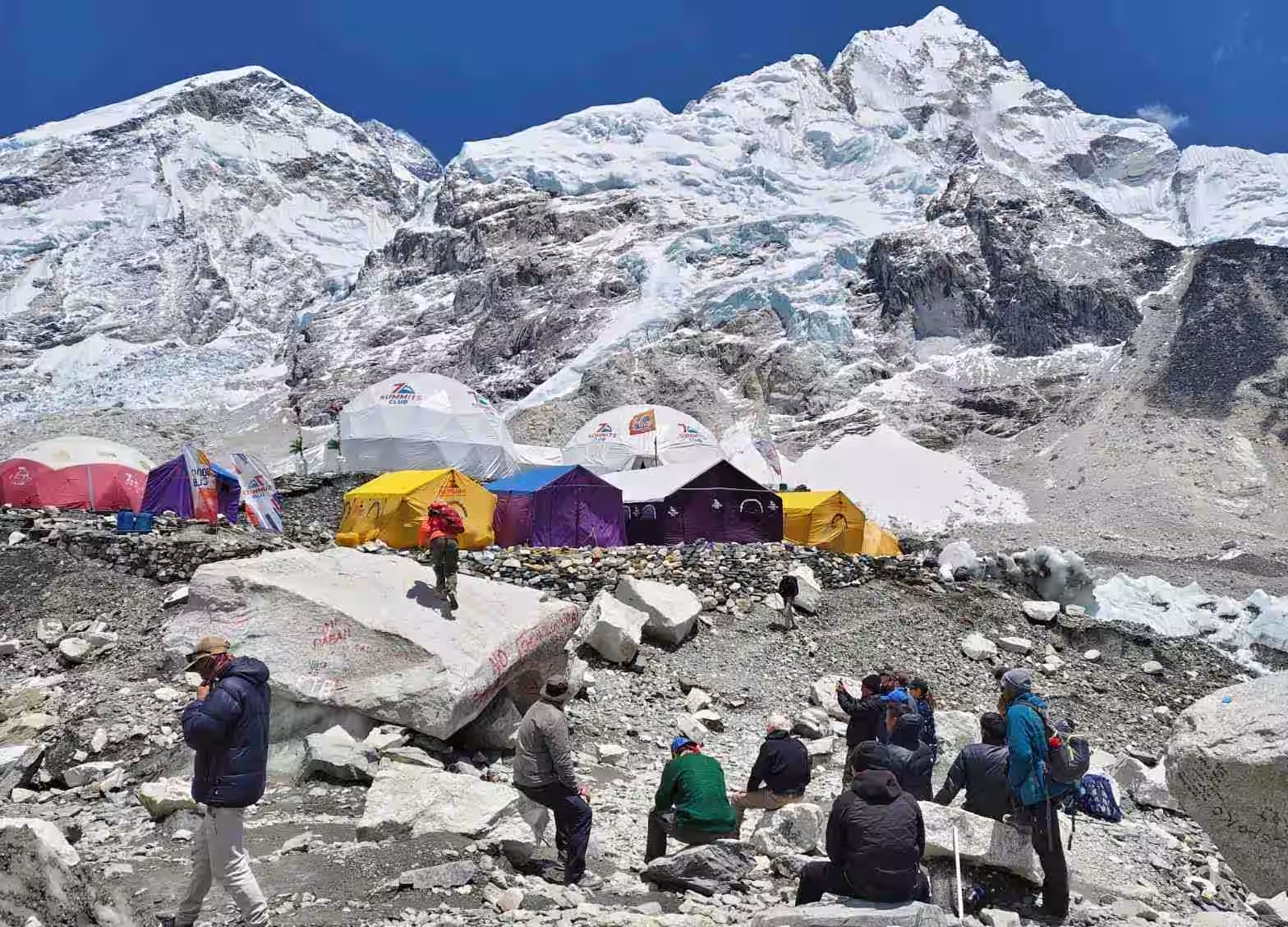
Altitude sickness on the Everest Base Camp trek is the single biggest reason trekkers turn back before reaching their goal.
It beats with the beauty regardless of fitness level, age, or experience. Every year, hundreds of trekkers abandon the trail not because the terrain is difficult, but because they were not prepared for what altitude does to the body.
This guide covers everything you need to know before you set foot on the trail. It explains the symptoms of altitude sickness from mild to severe.
You will know about the proven acclimatization schedule. It gives you an honest look at what Diamox is. It tells you when to stop, rest, and descend.
Altitude sickness on the EBC trek is real and common. The good part is that it is also preventable. Trekkers who understand the warning signs and follow a well-paced itinerary reach Base Camp safely every day.
The ones who struggle are usually those who move too fast, ignore early symptoms, or underestimate how quickly conditions can change above 4,000 metres.
What is altitude sickness?
At high altitude, air pressure drops. This means each breath you take delivers less oxygen than it would at sea level. Your body responds by producing more red blood cells. It adjusts your breathing rate, redirecting blood flow.
But this process takes time. When you ascend faster than your body can complete that process, the result will lead to Acute Mountain Sickness AMS.
Why does the EBC trek demand respect?
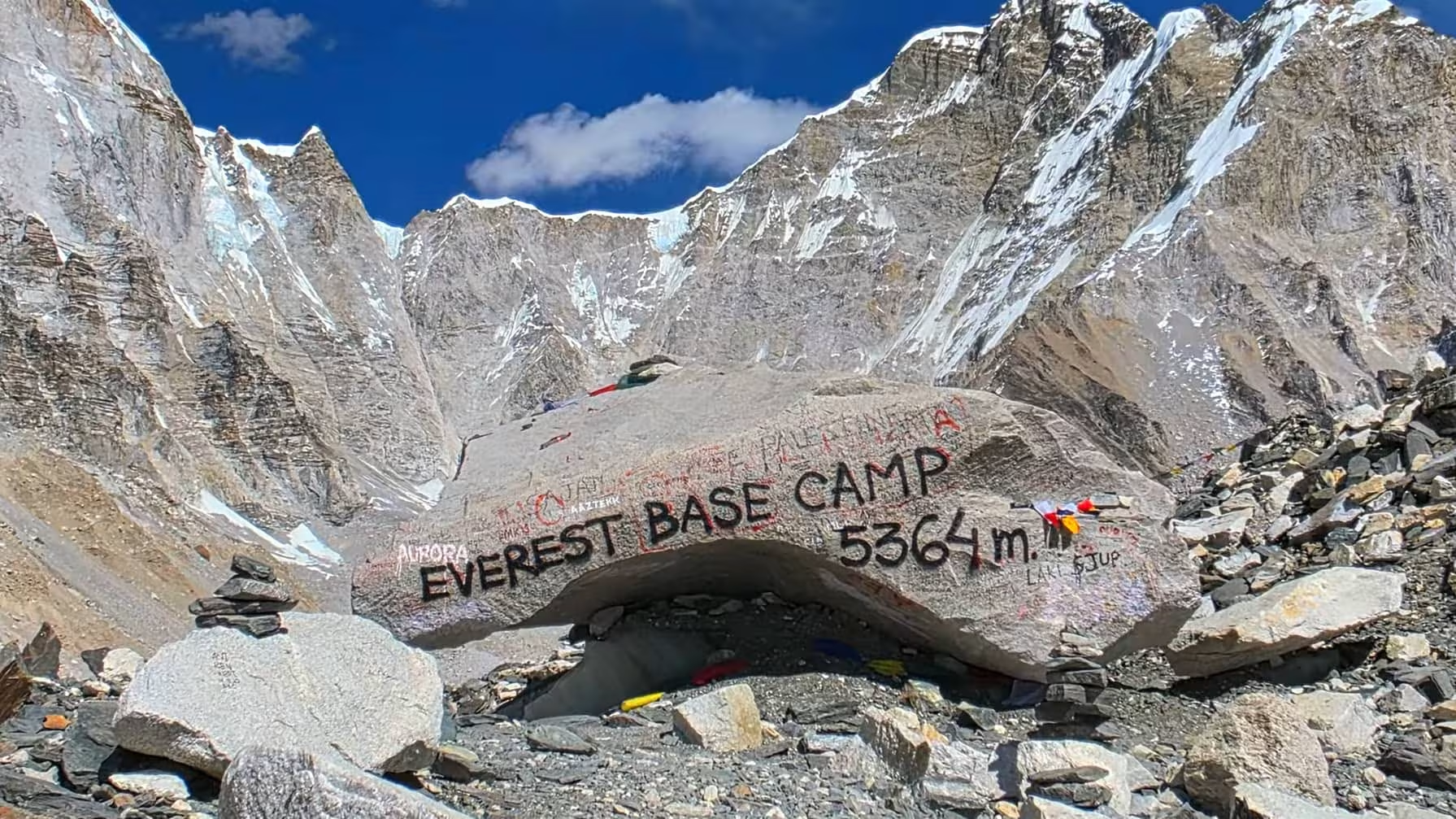
The EBC route makes this a real concern for every trekker. Base Camp sits at 5,364 m. Lukla. This is where the trek begins, and it is already at 2,860 m.
Over 8 to 10 days, most standard itineraries gain more than 2,500 m of altitude. That rate of gain is exactly why you need acclimatization days. Trust us, they are not just rest days added for comfort. They are what keep you safe and on track.
Three facts about altitude sickness are worth fixing in your mind before you go.
- First, it affects 50 to 75 percent of trekkers above 4,000 m to some degree.
- Second, fitness level, age, and past trekking experience are poor predictors . Anyone can develop AMS.
- Third, the only guaranteed way to resolve altitude sickness is to descend.
Types of altitude sickness and why the difference matters?
Altitude sickness is not one condition with diverse severity. It comes in three distinct forms. AMS is the most common and the most manageable.
HACE and HAPE are medical emergencies. You need to know the difference between them and act on that difference . This can save your life on the trail.
Acute Mountain Sickness (AMS), which is the most common form
AMS affects a large number of EBC trekkers above Namche Bazaar. The good news is that it responds well if you take care early. You need to not ignore the signs.
No wonder, this is the key. They get worse if not prevented. You need to stop your ascent the moment they appear. Better safe than sorry.
Symptom | What to know |
|---|---|
Headache | The primary warning sign-persistent, often worse when lying down |
Nausea or loss of appetite | Common above 3,500 m |
Fatigue beyond normal tiredness | Feels different from regular end-of-day tiredness |
Dizziness or lightheadedness | Especially noticeable when standing up quickly |
Difficulty sleeping | Interrupted breathing patterns disturb sleep at sleeping |
Shortness of breath at rest | Mild , and distinct from breathlessness during exertion |
Note :The Lake Louise Score is a self-check tool you can use anywhere on the trail. A score of 3 or above alongside a headache, indicates AMS.
A score of 5 or above signals severe AMS. Our guide can help you run through the scoring on rest days or whenever you feel off.
High Altitude Cerebral Edema (HACE), which is a brain emergency
HACE develops when AMS is left untreated . The fluid begins to accumulate in the brain. It is a medical emergency.
If you or anyone in your group shows these signs, the only correct response is immediate descent . Don’t bother to rest or take medication alone and wait until morning. It is a risk.
Symptoms | What to know |
|---|---|
Severe, unrelenting headache | Does not respond to ibuprofen |
Ataxia (loss of coordination) | Ask the person to walk heel-to-toe in a straight line. Inability to do so is a red flag. |
Confusion or disorientation | Watch for personality changes and slurred speech |
Extreme fatigue | Unable to stand or stay awake |
Loss of consciousness | Late-stage-do not wait for this before acting |
High Altitude Pulmonary Edema (HAPE) is a lung emergency.
HAPE is the leading cause of altitude-related death among trekkers. Fluid fills up in your lungs.
What makes it especially dangerous is that it can develop with no prior AMS symptoms. It means that you can feel fine one day and be in serious trouble the next. Speed of recognition and descent is everything.
Symptom | What to Know |
|---|---|
Persistent dry cough | Can progress to pink or frothy sputum |
Extreme breathlessness at rest | Cannot finish a sentence without gasping |
Crackling sound in the chest | Audible without a stethoscope in severe cases |
Rapid heart rate | Resting pulse above 110 BPM at altitude |
Bluish lips or fingertips | Cyanosis ( a sign of oxygen deprivation) |
Low-grade fever | Helps distinguish HAPE from AMS |
With both HACE and HAPE, delay is the defining factor between a full recovery and a tragedy.
You have to know these symptoms and know when to act . Acting immediately is always the right call.
How do you know you are acclimatizing well?
Most guides and articles focus entirely on warning signs. Equally useful is knowing what good acclimatization looks like.
These positive points will tell you that your body is adjusting, and it is safe to continue upward.
• Your resting heart rate returns to near-normal after a rest day.
• Your appetite comes back the morning after arriving at a new altitude.
• You sleep through the night without waking up gasping.
• A headache eases within a few hours after drinking water, resting, and taking ibuprofen.
• Your energy levels improve noticeably on the second day at a given altitude.
The rule that ties all of this together: if you feel meaningfully better after a rest day, your body is adapting well.
If you feel the same or worse, stay put or go down. There is no ignorance to this.
An acclimatization schedule that works for EBC trek
Of all the things you can do to prevent altitude sickness on the Everest Base Camp trek, pacing your ascent is the most important.
The golden rule of altitude trekking is simple: climb high, sleep low. Go up during the day.
Sleep at a lower elevation whenever possible. Above 3,000 metres, never gain more than 300 to 500 metres of sleeping altitude in a single day.
The itinerary below builds this principle into every stage of the trek. It includes two dedicated acclimatization days at Namche Bazaar and Dingboche. It is because these are the points on the trail where your body faces the sharpest altitude gains.
Skipping or shortening these days gradually raises your risk of AMS.
Standard EBC Acclimatization Itinerary - 14 days
Day | Route | Sleeping Altitude | Notes |
|---|---|---|---|
1 | Fly Kathmandu -Lukla; trek to Phakding | 2,610 m | Easy first day Walk slowly, hydrate well, do not rush |
2 | Phakding-Namche Bazaar | 3,440 m | Steep final climb |
3 | Namche - Rest Day | 3,440 m | Day hike to Everest View Hotel (3,880m) Return to sleep low |
4 | Namche-Tengboche | 3,860 m | Gradual ascent; visit the Tengboche monastery en route |
5 | Tengboche–Dingboche | 4,410 m | Significantly altitude gain-monitor for symptoms closely |
6 | Dingboche -Rest Day | 4,410m | Day hike to Nagarjun Hill (5,100 m) |
7 | Dingboche-Lobuche | 4,940m | A critical altitude day (pace yourself and monitor carefully ) |
8 | Lobuche-Gorak Shep-EBC | 5,160 m | Early start for EBC; return to Gorak Shep to sleep |
9 | Gorak Shep-Kala Patthar -Descent begins | 5,545m | Summit at dawn;begin descent immediately after |
10-14 | Descent to Lukla | Descending | Symptoms ease rapidly on the way down |
Note : Some trekkers add an extra night at Dingboche or Pheriche. If you feel any symptoms at this point in the trek, that extra night is always the correct decision.
The itinerary exists to serve your safety, not the other way around.
Daily habits that support acclimatization
These daily habits will help you thrive at Everest Base Camp. They give your body the best chance of adapting to each new altitude.
• Drink 3 to 4 litres of water per day. But do not drink alcohol or heavy sedatives . It works against acclimatization. This should be avoided above 3,000 m.
• Walk slowly and steadily on steep sections. The pressure breathing technique is a strong exhale with pursed lips . This helps maintain oxygen intake on hard climbs.
• Eat your meals even when your appetite drops. Altitude suppresses hunger, but your body still needs each to adapt.
• Avoid sleeping pills. They suppress breathing at night, which directly slows acclimatization.
• Carry a pulse oximeter. A healthy blood oxygen reading (SpO2) above 4,000 m is 80 to 90 percent or higher. A reading below 70 percent is a red flag that needs immediate attention.
Diamox Explained: What Acetazolamide does (and what it doesn’t)?
If you have noticed it, Diamox comes up in almost every conversation about altitude sickness prevention on the EBC trek.
Diamox is a carbonic anhydrase inhibitor. It helps you by stimulating faster and deeper breathing. Later, it accelerates your body's natural acclimatization response.
It does not prevent altitude sickness outright. But in fact, it reduces the risk when used correctly alongside a well-made itinerary.
The Case For Diamox
• Clinical evidence shows that Diamox reduces AMS incidents. But it should be taken at the correct dose and timing.
• It is a particularly good option for trekkers on tight schedules who cannot add extra acclimatization days.
• A full trek supply costs around USD 10 to 20 . It is widely available in Kathmandu pharmacies.
• The standard preventive dose is 125mg twice daily, starting 1 to 2 days before altitude gain.
The case against or reasons for caution
• Common side effects include increased urination, tingling in the fingers and toes, and a change in the taste of carbonated drinks.
• If you have a sulfa drug allergy, you must not take Diamox. This risky condition is firm and non-negotiable.
• Diamox can reduce the clarity of early AMS symptoms, which can create false confidence at altitude.
• It does not compensate for a poorly paced schedule. Diamox on a rushed itinerary still carries a serious risk.
• Diamox must be discussed with a doctor before departure . You cannot self-prescribe on arrival in Kathmandu. It is not a safe practice. Consultation is needed.
Our guides' pov: Diamox is a useful tool when used correctly. It should be with the right itinerary, and after a proper medical consultation. It is not a shortcut.
We recommend speaking with your GP at least four weeks before your departure date.
A clear plan for when symptoms appear (Treatment)
If altitude sickness symptoms get you on the trek, the right response depends entirely on how severe those symptoms are.
The decision below gives you a clear action plan for each level. Follow it in order, without skipping steps.
Mild AMS (Stop, treat, and monitor)
1. Stop your ascent immediately. Do not try to push through the symptoms.
2. Rest at your current altitude for a full 24 hours.
3. Drink 3 to 4 litres of water throughout the day. Avoid alcohol completely. Drink even if you are not thirsty.
4. Take 400mg of ibuprofen for the headache. Do not use sleeping pills.
5. Reassess after 24 hours. If you feel noticeably better, a cautious ascent may be possible. If you feel the same or worse, descend.
Moderate AMS ( Descend)
When mild AMS does not improve after 24 hours of rest, the next step is descent, not more rest. Go down 300 to 500 metres immediately. If symptoms worsen overnight, do not wait for morning. A guide or experienced trekker should accompany the person going down.
HACE or HAPE ( Emergency Descent Now)
There is no monitoring phase for HACE or HAPE. These problems require immediate descent no matter what time of day it is or what weather conditions it has. Every minute of delay increases the risk for you.
Here’s what it should do:
• Descend immediately. Do not wait for daylight, better weather, or a second opinion. Just move downwards.
• Manage supplemental oxygen if available. Most teahouses above Namche Bazaar carry it.
• Use a Gamow bag if one is available. The Pheriche aid post and some lodges carry this portable hyperbaric chamber.
• Call for helicopter evacuation if descent on foot is not possible.
• For HACE: manage Dexamethasone 8mg immediately, then 4mg every 6 hours during the descent.
• For HAPE: manage Nifedipine 30mg extended release if available. Oxygen remains the top priority.
Note: The rule no experienced guide ever breaks: when in doubt, go down. You can return to the trail again. A preventable death cannot be undone.
Helicopter Evacuation (Plan for it before you need it )
Helicopter evacuation is a reality of high-altitude trekking. The trekkers who handle it best are those who planned for it before leaving home, not those who don't even want to understand the problems at 5,000 m.
An evacuation from the upper EBC region costs between USD 3,000 and 6,000 without insurance. So, we all feel it’s expensive , right?
Most rescues depart from Gorak Shep or Lobuche. The weather is very changeable.
Make sure you have your travel insurance . Your insurance should cover your evacuation.
This is not a luxury, but in fact it is a requirement for this trek.
Read your policy carefully before you buy it. Many standard travel policies cap coverage at 4,000 m or exclude trekking altogether.
Note : The Himalayan Rescue Association (HRA) runs a staffed aid post at Pheriche at 4,371 metres. Stop in on your way up. The doctors there provide altitude consultations and can assess whether you are fit to continue.
It is one of the most valuable stops on the trail and takes less than an hour.
Special considerations who need to be extra careful
Everest Base Camp is not everyone’s cup of tea. But we all know, nobody can stop a passionate person, especially for adventurers.
So,if you are really among these people below, you have to be extra careful:
Children
Children can develop AMS faster than adults. But this is not just for EBC. They also have a harder time describing how they feel, which means a parent or guide needs to watch them closely.
The common symptoms are irritability, loss of appetite, and unusual tiredness in young trekkers.
If any of these appear, treat them with the same seriousness you would for a headache or dizziness in an adult.
Seniors (60 and Above)
If you already have a heart or lung condition, it will raise the risk at altitude. Before booking an EBC trek, anyone 60 or above should complete a medical check-up that includes an ECG.
A slower itinerary with extra acclimatization days is the perfect choice. Remember, this is not a compromise, but good planning.
Trekkers with a Prior AMS Episode
If you have experienced AMS before, you definitely know better.
Discuss Diamox as a preventive measure with your doctor. Plan a reliable itinerary with extra rest days built in from the start. This is the best option.
Asthma Sufferers
Cold, dry air at altitude can trigger asthma attacks independently of AMS. This means asthma sufferers face two separate respiratory concerns on the EBC trail.
So, make sure you always carry your reliever inhaler. Inform your guide of your condition before the trek begins. They will monitor you appropriately.
Frequently Asked Questions
Can fit, young trekkers get altitude sickness?
The answer is “Yes”. Fitness is not a protective factor against AMS. Some of the fittest trekkers on the EBC trail develop it while older, slower walkers do just fine. Genetics and pace determine your risk far more than cardiovascular fitness does.
How do I tell the difference between a headache from altitude sickness and one from dehydration?
Drink 500ml of water and rest for 30 minutes. If the headache gets easier, dehydration is the true cause. If it stays the same or gets worse, treat it as AMS . No matter where you are, rest at your current altitude, take ibuprofen, and do not go higher.
Should I take Diamox even if I feel completely fine?
Preventive use of Diamox is a valid option for some trekkers, particularly those on tight schedules. It is not universally recommended. That decision belongs in a conversation with your doctor before you leave home, not on the trail . So, consult first , take later.
What is the fastest anyone has trekked to EBC?
Records exist, but they are not relevant to your safety planning. Trekkers who push fast itineraries have a significantly higher evacuation rate. A slower pace is not a weakness but it is the strategy that gets most people to the top. So, our suggestion is definitely , don't rush.
Is there a doctor on the EBC trail?
The Himalayan Rescue Association staffs an aid post at Pheriche with volunteer doctors during peak trekking seasons. Above and below this point, your safety depends on our guide's training, your own preparation, and the support of fellow trekkers on the trail.
Is altitude sickness the same as dehydration?
No, they are not the same condition. Dehydration can cause headaches, but it is not AMS. The two can occur together. To prevent this, you have to stay well hydrated. You should not skip your acclimatization too.
If you are unsure which one you are dealing with, treat for both and hold your altitude until you feel better. The main thing is consult with your guide to reduce such problems.
Can I do the EBC trek with no previous altitude experience?
Yes. Many first-time high-altitude trekkers complete EBC without incident. But make sure you do not miss your itinerary quality.
A guided trek with mandatory acclimatization days, experienced local guides trained in altitude response will help you complete the trek safely, if you are trekking for the first time.
Conclusion
Altitude sickness on the Everest Base Camp trek is real and common. For trekkers who understand it, respect it, and prepare for it, they can manage it. But if you are new to this, the risk is very high.
The mountain does not reward speed. It rewards patience, good judgment, and a willingness to listen to your body. You need to be careful about so many things.
One side of this guide gives you the side that prepares you. The other half is about a guided package where acclimatization is built into the schedule from day one and is very mandatory.
At Himalayan Odyssey, every EBC itinerary includes mandatory acclimatization days. You will have local guides trained in altitude.
We plan your route the way it needs to be planned . We care for your safety as the starting point, not an afterthought or an excuse.
Talk to our team about your 2026 EBC bookings. Let us build you an itinerary that gets you there and brings you home safely.