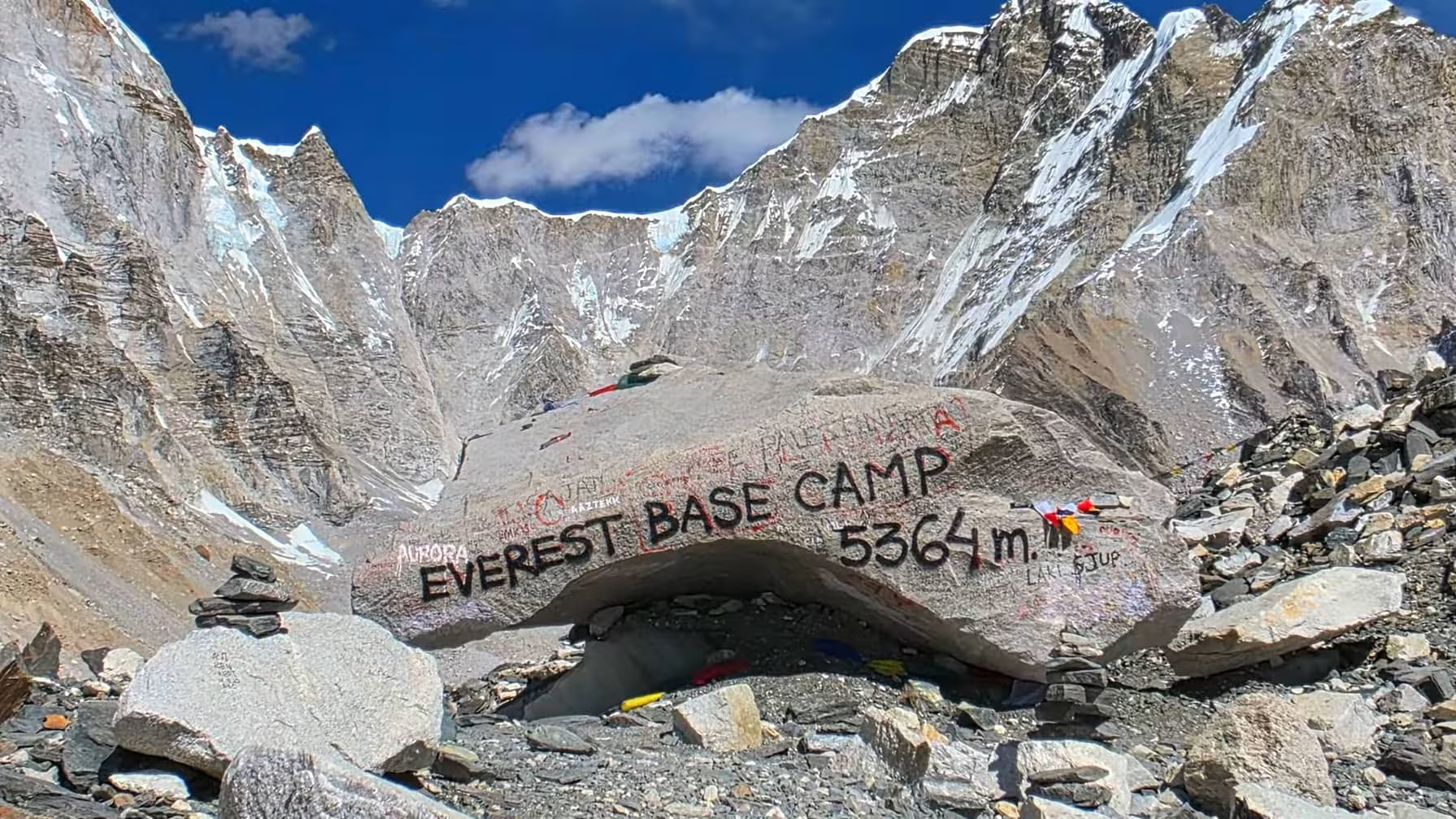
The Everest Base Camp (EBC) trek stays open all throughout the year. Each season, however, brings very different conditions on the route.
Some months give you clear skies and dry paths whereas some months bring heavy rain, deep snow, or cold . It sometimes even tests the experienced trekkers.
As the conditions vary so much, picking the right month for the Everest Base Camp trek matters equally as much as your trekking essentials. But most people do not even realize it.
A poor timing for the EBC trek can make you face delayed flights in Lukla, closed teahouses above Namche, or whiteout conditions near the top.
Deciding on the best time for the Everest Base Camp Trek means smooth trails, open lodges, and mountain views that stay with you for life.
This guide walks you through every month of the year. You will find a full conditions table, honest weather data by elevation zone, clear, and much more. You will also find advice on whether the off-season is worth your time or not.
Timing your Everest Base Camp trek is half the battle. If you go too early, you fight deep snow. If you go too late, the monsoon turns the trail into a river. Here is exactly when to go and why.
The two best seasons are Spring and Autumn for EBC trek
Most trekkers plan their EBC trip around one of two windows: Spring (March–May) or Autumn (September–November).
It is because these seasons give you stable weather, clear skies, and open teahouses all the way up the trail. The view is worth it in this timeframe.
Both are excellent choices for beginners and experienced trekkers. The weather is predictable. The trails are well-maintained, and the mountain views are at their finest.
You will find peak photography at this time. The main difference between the two seasons is not safety, but it is the feel and energy of the trek itself.
Spring (March–May) is the classic choice for EBC trekkers
Spring is the most popular time to trek to EBC. Snow starts to melt from the upper trail in March.
By April, the paths are clear, and conditions reach their peak. Most trekkers target April for this reason.
Daytime temperatures at lower elevations sit between 5°C and 15°C. Nights are cool, but they can be somehow managed with proper layers.
As you climb below Namche Bazaar, the rhododendron forests burst into red, pink, and white. This is one of the most vivid sights on the entire route.
April is also the season when the Everest climbing season reaches its peak. Expedition teams move through the trail with fully loaded yaks and high-altitude gear.
Their presence fills the teahouses with stories and adds real energy to every day on the trail. You will just love it.
Best for:
This season is best for photographers, first-timers, and anyone who wants the full mountain panorama.
Practical tip:
If you are really interested, book tea houses at least 4–6 weeks ahead for April departures. Rooms at popular stops and popular seasons like Namche and Dingboche fill up fast at this time frame.
Autumn (September–November) has the sharpest views
Autumn gives you the clearest mountain views of any season. The monsoon washes all dust and haze from the air as it ends.
When the skies clear in late September, the Himalayan scene looks like a photograph. It looks sharp, vivid, and impossibly wide. The scene you witness is really beautiful.
September still carries some rain in its first weeks, so the trail might feel damp early in the month. By October, the weather changes. The trail comes alive with trekkers from all over the world.
Basically, learn that October and early November are the sweet spot for this season. But remember, they are peak seasons. Make your early bookings.
By late November, temperatures drop quickly. Snowfall can appear above Gorak Shep. Some teahouses at higher elevations begin to close.
If you plan a November trip, aim to finish the upper sections before the last week of the month.
Best for:
This time is best for trekkers who wants to see beautiful mountain views and a slightly quieter trail than April.
Practical tip:
October is peak season for quieter trails with good weather. If you are really interested go during early September or the first two weeks of November.
Month-by-Month Breakdown
Conditions on the EBC trail shifts week to week. The table below gives you a clear picture of what to expect in each month.
Let’s check them below:
A Quick Breakdown:
Month | Season | Trail Conditions | Views | Crowds | Go For? |
|---|---|---|---|---|---|
January | Winter | Snow above 4000m; very cold nights | Clear but hazy | Very low | ⚠ Exp. only |
February | Winter | Improving slowly; cold mornings linger | Good | Low | ⚠ Caution |
March | Spring | Snow is retreating pleasantly on the lower trail | Good–Excellent | Moderate | ✓ Yes |
April | Spring | Near-perfect conditions; trails open | Excellent | High | ✓ Best |
May | Spring | Warm, pre-monsoon cloud builds late in the day | Good | Moderate | ✓ Yes |
June | Monsoon | Rain and leeches below the tree line | Poor | Very low | ✗ Not ideal |
July | Monsoon | Heavy rain; trail damage risk grows | Very poor | Minimal | ✗ Avoid |
August | Monsoon | Rain easing in the final week of month | Poor–Fair | Low | ✗ Avoid |
September | Autumn | Rain tail-end; skies clearing fast | Good–Excellent | Moderate | ✓ Early–mid |
October | Autumn | Perfect conditions across all elevations | Excellent | Very high | ✓ Peak |
November | Autumn | Cold nights; snow arriving by month's end | Excellent | Moderate | ✓ Yes |
December | Winter | Snow and cold; fewer open teahouses | Clear | Very low | ⚠ Exp. only |
EBC Trek Seasons at a Glance (Quick Comparison)
The table below gives you a quick summary of all four seasons. Let’s have a quick comparison;
Comparison Table for Everest Base Camp Trek
Season | Months | Temp at EBC | Trail Vibe | Best for |
|---|---|---|---|---|
Spring | Mar-May | -10°C to 5°C | Lively, colourful | First-timers, photographers |
Monsoon | Jun-Aug | 0°C to 8°C | Quiet, wet, green | Rain-shadow trips only |
Autumn | Sep-Nov | -15°C to 5°C | Busy, crystal clear | Views, festivals, all levels |
Winter | Dec-Feb | -20°C to 5°C | Empty, cold, raw | Budget trekkers, experienced |
There is no single best season for every trekker. A budget-conscious solo traveller and a family of four have very different needs on the trail.
The key is to match the season to your pace, your budget, and how much cold you are willing to handle.
Is Monsoon Trek Worth It for Everest Base Camp?
Many guides will tell you to avoid the monsoon season entirely. That advice is too simple. The trail does not close in June, July, or August, and most teahouses stay open throughout.
But the real risks you will experience are Lukla flight delays and slippery paths below Namche Bazaar. The risk is not the trek itself.
Here is an honest answer of what you actually face during the monsoon season at EBC:
- Rain is heaviest below Namche Bazaar. Above 3,500m, the skies are often just cloudy.
- Leeches below Phakding cause discomfort in wet weather. They might be disgusting.
- Lukla flights face frequent delays and cancellations. This is the biggest practical risk of the season.
- Teahouse prices drop by 20–30%. Trails are empty. The valleys turn a deep, lush green.
Those who do best in monsoon season are experienced trekkers with flexible schedules. If you are under that we will not stop you. But if you are not experienced, you shall pass the trek.
Photographers who love moody cloud scenes and dramatic light also find this season very rewarding. But this does not change the fact that monsoon trek at EBC is not quite flexible.
Rain-Shadow Alternatives During Monsoon
If your dates fall in June, July, or August, consider Nar-Phu Valley or Upper Mustang instead. These areas sit in the rain shadow of the Himalayas . They stay dry even during the heaviest monsoon weeks.
Both are outstanding treks in their own right. They offer remote trails, ancient culture, and high-altitude scenery that rivals anything on the EBC route.
They are worth considering even outside monsoon season.
How is the weather and temperature at Everest?
Temperature on the EBC trail changes a great deal as you go higher and higher. The three zones below show what to expect at each stage.
You can use these numbers to build your packing list before you leave home. But best is to contact us for more transparency.
Lukla to Namche Bazaar (2,800m–3,440m)
- Spring: 8°C–18°C during the day. Light layers work well at night.
- Autumn: 5°C–15°C. Mornings are crisp but very manageable.
- Winter: Temperatures drop below zero at night. You can expect frost on the trail each morning.
- Monsoon: Warm, but it is wet. Rain gear is the most important item in your pack for the monsoon.
Namche to Dingboche (3,440m–4,410m)
- Temperatures drop noticeably as you climb higher through this zone.
- Wind picks up on exposed ridges above Tengboche, especially in the afternoon.
- Spring afternoons can feel warm in direct sun. Nights are always cold here.
- A down jacket is essential in every season. You will need it every single night above Namche.
Lobuche to Everest Base Camp (4,910m–5,364m)
Let’s have a quick look on the temperatures below :
- Daytime temperatures in peak seasons: -5°C to 2°C.
- Night temperatures in winter: -10°C to -20°C or colder with wind chill.
- Wind at EBC can make any temperature feel brutal. Layering is not optional here.
- A sleeping bag rated to -20°C is essential, no matter what season you trek in.
Note: A sleeping bag rated to -20°C is essential, no matter which season you trek in. Make sure you do not cut corners on this one.
Do you know how the season affects flights to Lukla?
Lukla Airport sits at 2,860m. It is one of the most weather-sensitive airports in the world. You have to be mentally prepared that flight delays are a real part of the Everest Base Camp experience.
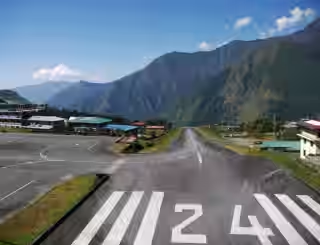
But knowing what to expect by season helps you build a smarter itinerary before you travel for this journey:.
Spring and Autumn:
In this season, most flights operate, but weather windows are tight. Delays happen even in peak season. This is what it means when we say be mentally prepared.
Monsoon:
Fog and rain might cause frequent multi-day delays during the monsoon season. Build 2–3 buffer days into your itinerary during Monsoon. We do not recommend monsoon for Everest.
Winter:
Fewer flights operate overall during winter season. Clear morning skies mean delays are less common than in monsoon.
If flights are delayed for more than two days, many trekkers take a charter helicopter from Kathmandu or Manthali directly to Lukla.
Charter costs range from USD 400–700 per person. It depends on group size and season. Budget for this option as a backup before you depart.
You can contact Himalayan Odyssey for more accuracy in pricings.
Our team at Himalayan Odyssey helps you manage flight risk . we plan your perfect itinerary. Delve more into us.
Best Time by Trekker Type For Everest Trek
The best season depends on the kind of trekker you are. This is the most important thing that most trekkers skip.
Some simply pack their bags without any preparation and move along. Don’t take such stupid risks. You have to know the criteria.
Your experience level, budget, and goals all point to a different window. Use the table below to match your profile to the right time.
A Quick Breakdown :
Trekking Type | Best Window | Why |
|---|---|---|
First-timer / Beginner | April or October | Perfect conditions, well-stocked teahouses |
Photographer | March or late October | Rhododendron blooms or crystal-clear skies |
Budget Trekker | November or March | Lower teahouse rates, fewer people on trail |
Crowd-avoider | Early Sept. or late Nov. | Quieter trails with still-decent weather |
Experienced / Adventurous | December - February | Solitude, challenge, raw Himalayan beauty |
Family with Children | October | Reliable weather, busy trail feels safer |
There is no single perfect time to trek to Everest Base Camp. There is only the right time for you.
April is the best if you are really fond of trekking. Likewise, October is the best for mountain views and clear blue skies.
Similarly, November offers quiet mornings and very less trekkers on the path.
To be honest, each season has something real to offer. The mountain delivers in every one of them. But you will definitely find what you are looking for.
The key is to match your chosen season to your walking pace, your budget, and how much cold you can handle.
Once you have made that match, commit fully and start preparing for your Everest journey.
Frequently Asked Questions
What is the best month for the Everest Base Camp trek?
October is the most popular choice. You get post-monsoon clarity, stable weather, and fully stocked teahouses from Lukla to base camp. April is a close second for those who want spring colours, and is the perfect climbing season on the trail.
Can you trek to EBC in the monsoon season?
Yes, but you have to set realistic expectations before you go. Lukla flight delays are the biggest risk here. Above Namche, rain is manageable, and the trail stays open. This season suits if you are an experienced trekker.
How cold does it get at Everest Base Camp?
In peak seasons, nights at EBC drop to around -10°C to -15°C. In winter, you can expect -20°C or colder once wind chill is factored in. A quality sleeping bag rated to -20°C is non-negotiable year-round at this altitude. Altitude and cold nights mostly come in pair.
Is EBC open in winter?
Yes, teahouses stay open through December and January. But the trail is quiet, cold, and deeply rewarding for those who are ready for it. Well, it is not recommended for first-time trekkers because of the extreme cold and limited support on the upper trail.
Does the season affect the permit cost?
No. The Sagarmatha National Park permit and TIMS fees are fixed year-round. The season you choose does not change what you pay for permits. Budget differences between seasons come mainly from teahouse rates and flight availability, but not because of seasons.