
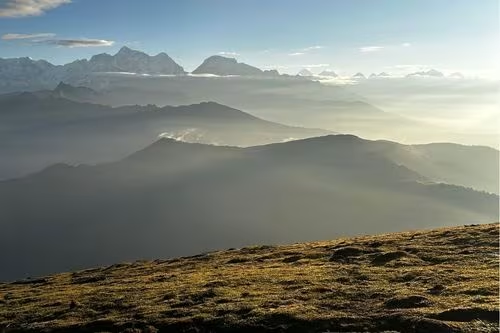

You cannot trek in the Annapurna Region without a guide anymore. Trekking is a long way where you need to walk and walk for long hours.
The way you walk is not easy. The routes are dangerous. Until and unless you are an experienced trekker, it is difficult for you to trek alone. That is why Nepal banned solo trekking in March 2023. All foreign trekkers must now hire a licensed guide for major trekking regions like Annapurna.
You will learn about Nepal's current guide policy here. If you don't know the insurance requirements for 2026, scroll below. Also, get help to discover the guide costs and how to verify your necessary documents. You will see practical ways to stay legal while planning your trek.
The guide rule changed how trekkers explore Annapurna these days.The policy aims to reduce rescue incidents and protect the environment in this region. It also creates steady employment for mountain communities. Your trek remains an adventure with the right preparation in the Annapurna region.
Enroll with Himalayan Odyssey for guide concerns.
The Current Rule - Guides Are Mandatory for Foreign Trekkers
Nepal Tourism Board introduced a new policy in March 2023. The policy affects all foreign trekkers who want to explore Nepal's mountains.
Solo foreign trekkers cannot trek alone in major regions anymore. These regions include Annapurna, Everest, Langtang, and Manaslu. Every trekker must hire a licensed guide. The guide must be registered with a government-approved agency. Imagine yourself all alone on the long routes getting caught in problems and nobody to rescue you by your side, scary, isn't it? The government has thought about the safety concerns of trekkers. They came up with the rule that trekkers can only trek if they have a registered guide with them.
You might be wondering how the officials execute this law.
Officials execute this rule through the TIMS card issuance. ACAP checkpoints also verify compliance at multiple points along the trail. You cannot get your permits without proof of a guide. The system tracks this at every checkpoint. This means the rule has teeth. You need to follow the rules if you are really thinking of going to Annapurna.
Why Nepal Banned Solo Trekking?
Trekking towards the high mountains all by yourself is a risk in itself. The routes are steep, and the routes are confusing. Previously, the laws for Annapurna were different. You could simply just pack your bags and go. But currently, things have changed in the trekking regions.
The government had three main reasons for this change of not trekking alone. Each reason addresses a real problem that grew worse over the years. Let's see what they are:
Safety Concerns
The safety concern at Annapurna and other regions became an issue for the trekkers. It couldn't be ignored. Rescue incidents increased between 2015 and 2022. Many trekkers went missing in remote valleys during this period.
Communication was very difficult in high-altitude areas. Even now, there are areas completely remote where there is no signal. Cell phone coverage stops after certain villages. This leaves solo trekkers with no way to call for help.
Solo trekkers faced more problemsthan guided groups. The rescue cost also increased for the government. Search and rescue teams spent weeks looking for lost trekkers.
Some cases ended in tragedy. These incidents pushed officials to rethink the solo trekking policy. So, they came up with a rule that no trekking can be done in the Annapurna region without a guide. You need a permit, you need a professional guide, and then only you can trek Annapurna region.
Environmental Protection
The second reason is with the motive of protecting the mountain environment. Guides help reduce trail waste. The trekkers sometimes leave litter all over the place. They do not realize how they are polluting the environment that people pay to visit. So, the guides teach trekkers about Leave No Trace principles at each campsite.
Solo trekkers sometimes missed proper waste disposal spots. This harmed the mountain environment over time. It made the trails polluted. But Guides know where to camp and where to avoid. They protect sensitive areas from damage. This keeps the trails clean for future generations in the Annapurna region.
Local Employment
The third reason benefits mountain communities directly. The regulation creates jobs for local families that are at the Annapurna Region. Guides and porters earn a good income throughout the trekking season. Especially during the peak seasons like April and March, trekking offers the best income.
Tourism becomes more sustainable this way. Mountain villages benefit directly from every trek. Families depend on guiding work for their livelihood. The rule protects their employment. This creates a win-win situation for trekkers and locals alike.
The most recent data from the Annapurna Conservation Area Project (ACAP) and Nepal tourism reports show:
- 246,575 foreign visitors from January to October 2025.
- 273,646 foreign visitors over the first 11 months (up to November 2025).
- Projections indicated the total would exceed 300,000 by year-end, if trekking tourism goes the same way.
Note: Domestic trekkers are not always traced the same way, but as for international trekkers, 2025 was the record breaker.
Does This Mean You Can't Trek Alone at All at Annapurna?
The rule sounds strict at first. However, it has some flexibility that works for independent travelers.
You can still plan your own adventure. You just need to hire one guide for yourself. This creates a private guided trek. You set the pace. You choose the stops. The guide simply walks with you for safety. They will guide you to the routes. You will definitely feel protected and worth it.
Nepalese citizens may trek independently. The rule only applies to foreign nationals. It is because you are new here. You do not know what routes end where. You do not know which place is risky and which is fun. Foreign residents with work visas still need guides. This applies even in restricted areas.
Below you can see how it is managed:
- Solo Trekking=Not Allowed
- Private Guided Solo=Allowed
- You + 1 Guide=Legal
This setup gives you freedom while meeting the legal requirements.
Recent Trekking Accidents at Annapurna
Annapurna Region is a fun trek, but surely there are incidents that you will have to rethink about your safety twice. It is always good you be with someone. It gives you the sense of comfort, someone to rely on, and a safe space to trek. We never know where we'll get into trouble at all.
Here are 5 recent incidents in the Annapurna Region that caused death or major problems (2023–2025):
Yi Cheng Yuan (Chinese, 28 years old)
Died in March 2025 after being caught in an avalanche near Deurali on the Annapurna Base Camp trek. His body was found 12 days later.
Indian trekker (54 years old)
Died in November 2025 from high-altitude sickness near Thorong La Pass on the Annapurna Circuit.
US citizen (69 years old)
Died in 2023/24 after falling off a cliff at Khotro in Manang district.
Indian national (35 years old)
Died in 2023/24 from high-altitude sickness at Todanda in Manang.
British national
Found dead in a hotel room at Meta in Manang in 2023/24 (but the cause was not publicly confirmed).
Guide and Porter Costs 2026
You might think hiring another person is expensive. But no, it is not.Here are the current rates.
Role | Average Rate (USD/day) | What's Included |
Licensed Guide | $25 - $35 | Meals, lodging, insurance |
Porter | $20 - $25 | Carries up to 25 kg |
Guide-cum-Porter | $28 - $32 | Combined role for solo trekkers |
These costs are approx. You can contact Himalayan Odyssey to know about specific rates.
Guides receive their meals at teahouses where you eat. You have to pay for their accommodation at the same lodges too. Most trekkers add a 10-15% tip at the trek's end. This is standard practice across Nepal.
Porter wages seem low compared to guides but match local living costs. They work quite less hours than guides do. A guide-cum-porter works well for solo budget travelers. One person handles both jobs. This saves money while meeting the guide requirement.
Choosing a Licensed Guide or Agency
You need to find the right guide while trekking. It matters for your safety and experience.
How to Verify Credentials?
You can always ask for the Nepal Tourism Board license number first. Check that it's current for the year. You have to request a copy of their insurance document next. This protects you if accidents happen during the trek.
Real guides carry laminated ID cards. The card shows their photo and license details clearly. Fake guides cannot produce these documents.
This simple check prevents problems before they start.
Benefits of Going Through Registered Agencies
Registered agencies give you several advantages over independent guides. You don't have to worry about permits with agencies. They know the exact requirements for each route. They will work on your behalf.
Staff members have verified insurance coverage. This matters during emergencies when every minute counts. Agencies provide reliable emergency coordination, too. They have contacts at rescue centers all over Nepal.
Licensed agencies belong to TAAN. This is the Trekking Agencies Association of Nepal. TAAN membership means the agency follows ethical standards. They pay fair wages to staff. This membership signals quality and your safety.
Insurance Requirements for Trekkers in 2026
You must show proof of insurance to get permits. This is not optional anymore. The government made this mandatory in 2023. Rescue at high altitude is very expensive. It is expensive because it is difficult. You have to make sure your insurance policy covers the following things before you move towards other process of trekking:
Coverage Type | Minimum Amount (USD) | Purpose |
Emergency Evacuation | $10,000+ | Helicopter rescue |
Medical Treatment | $20,000+ | Hospital care |
Trekking Altitude Limit | 5,500m minimum | Thorong La compliance |
Your insurance must cover helicopter evacuation completely. Ground rescue is not possible in many areas above 4,000 m. Medical treatment coverage should also include altitude sickness. Standard travel insurance often excludes this condition.
Check your altitude limit carefully before buying. Thorong La sits at 5,416 m. Your policy must cover this height. Most trekkers need specialized adventure travel insurance. Regular policies don't cover high-altitude trekking.
Buy insurance before you leave home. Purchasing it in Nepal costs more and offers less coverage. This is one area where advance planning saves money and stress.
Solo Trekking Exceptions and Edge Cases
Some situations have different rules. You need to understand the following terms. It helps you with trip planning.
Short trails near Pokhara require guides technically. However, officers rarely check these routes. Trails under three days get less enforcement. But you still need permits for these areas.
Restricted Area Routes have stricter rules than standard treks. Nar-Phu and Upper Mustang require two trekkers minimum. You cannot enter these areas with just one guide. You need at least one other trekker with you.
Cycling tours follow different permit laws entirely. The trekking guide rule doesn't apply to cyclists. Helicopter tours also skip this requirement. But you still need proper insurance for both activities.
Remember that unofficial exceptions carry risk. Checkpoints can impose rules anytime they choose. You have a long way ahead of you. Do not risk it. Do not neglect the small safety hazards. It might cause you to be in a dying situation, too.
Risks of Trekking Without a Guide
Hiring a guide is directly concerned with trekkers' safety. There are various risks if you go trekking without experts.Breaking the rule has real consequences. You not only have to pay simple fines, but in fact you may also be in serious problems.
Here's what can happen if you trek alone.
- Checkpoints will fine you if you are seen without a guide.
- They can also cancel your permits on the spot.
- You must return to Pokhara immediately after that. Your trek ends right there.
- Emergency rescue becomes much harder without a Nepali contact. Helicopter companies prefer working through registered contacts.
- Language barriers create more problems beyond Manang. Locals do not understand English in the higher villages.
- Navigation gets tricky after Deurali, too. Trail markers fade at higher elevations.
- Multiple paths appear at confusing junctions. Your safety net disappears without a guide beside you. Maps show routes but not current conditions.
Pro-tip: Maps can guide you. A local guide can save you.
How do Guides boost the Experience at Annapurna?
You might be thinking guides just work as a map, as they know every route. No, not really. Guides do more than this. They prevent your problems and boost your experience at Annapurna. They actively improve your trek in three important ways.
Cultural Bridge
Guides translate village stories and local customs naturally. You learn the real culture this way instead of just passing through. They explain Buddhist rituals at monasteries. You understand what you're seeing instead of just taking photos.
Remember, trekking is not just about walking a long way. It gets bound with different cultures, traditions, and festivals.
Teahouse owners open up more with guides present. You get better interaction and real conversations. This transforms your trek from sightseeing to cultural exchange. Overall, you will love the real experience of Annapurna.
Safety Anchor
Guides know about altitude sickness. They can detect the symptoms easily. They know when to get down before problems get serious. They adjust routes based on weather forecasts. Local knowledge beats weather apps every time in the mountains.
Guides carry emergency satellite phones, too. They can call rescue teams directly. This connection saves hours during emergencies. Time matters at high altitude. You can always rely on guides as a safety anchor.
Local Economy Support
The guide fee goes directly to mountain families. This is ethical travel in action. You support the community that maintains the trails. They protect the environment you enjoy.
Guides spend their earnings in local villages. Your money circulates and flows in the region for months. It promotes the local economy of the mountains directly.
What is the practical checklist before hiring a guide?
You can use this list when selecting your guide as a reference. Each step protects you in different ways.
- Verify their license number with Nepal Tourism Board
- Check their insurance certificate validity
- Discuss daily wage clearly (include tips at 10-15%)
- Agree on the exact itinerary and sleep locations
- Collect receipts for all permit costs
- Confirm their English communication level
- Ask about their first aid training
- Check reviews from previous trekkers
Get everything in writing before you start. This prevents misunderstandings later in remote areas. You have to discuss meal arrangements clearly, too. Some guides prefer eating separately from clients. Make sure you stay in clear communication with everything.
Does Himalayan Odyssey recommend trekking the Annapurna Circuit Trek without a guide?
No, Himalayan Odyssey does not recommend solo trekking in the Annapurna Region.
First things first, you do not know the routes clearly. Secondly, you are not familiar with the locals here. The language barrier, if you get into problems, might be a threat. Thirdly, Annapurna is a remote region. You need to walk every day for long hours. You are not familiar with the initial stage of altitude sickness.
Most important is that there is a higher risk of getting lost.
The best option is to be with someone. It is best to trek in groups. Even if you want to go for a solo trek, hiring a guide is compulsory.
Why trek with Himalayan Odyssey?
Himalayan Odyssey is a trekking agency working for many years. It has experience on routes, locals, problems, and the solutions. We help you with guides and porters from the start to the end of the Annapurna region. It is one of the best trekking agencies as it offers:
- Quality Service and Higher Trip Success Rate
- Freedom, Fun & Innovative Itineraries
- Native Sherpa-owned and Operated
- 100% Customizable Trips for All Ages
- Sustainable Travel
- Small Groups and Solo Travelers
- Best Price Guarantee
Recommended Guide to Trekker Ratio 2026
The right team size matters for safety and experience. Hiring a guide doesn't mean the more people you are, the more guides you need. Trekking does not work lie that. Below, you can see these ratios work best for different group sizes.
Group Size | Guides Needed | Porters Needed |
Solo Trekker | 1 Guide | Optional 1 Porter |
2-4 Trekkers | 1 Guide | 1-2 Porters |
5-10 Trekkers | 2 Guides | 3-4 Porters |
Solo trekkers work best with one guide. You can add a porter if you want to carry less weight. Small groups of 2-4 people need just one guide. The guide manages everyone safely at this size.
Larger groups require two guides for better safety. One leads while one stays at the back. They make sure that no one gets left behind. Porters carry about 25 kg each. Calculate based on your group's total gear weight.
Don't overload your support team. They work hard at high altitude, too. Fair loads keep everyone healthy and happy. This is why the pack which is a more important essential for you.
Ethical and Responsible Guiding
Choose agencies that treat their staff well. This matters more than low prices in the long run.
Check that guides and porters receive fair wages. You can ask about their payment terms directly. You might have seen at places about child labour. Make sure that no children work as porters. Well, to be honest, reputable agencies never hire minors. This is both legal and ethical.
You can also make sure that all staff have proper insurance coverage for Annapurna. This protects them during emergencies on the trail. Ask about the agency's environmental practices, too. Good agencies teach Leave No Trace principles.
Look for agencies that help you find quality gear to staff. Not just you, but even your guides need proper boots and jackets. Support businesses that invest in staff training. Regular first aid courses show they care about safety.
Your choice of agency affects real families in Nepal. Pick one that treats people right. This makes your adventure ethical from start to finish.
Himalayan Odyssey has been treating the international trekkers as guests for years and years. It has guided trekkers from guides, costs, permits, accommodations, and everything. It has good reviews. You can go for it if you really want to have a safe and fun Annapurna Adventure.
Conclusion
A licensed guide doesn't limit your freedom. They extend it by turning worry into wonder. You still choose your pace and stops. The guide will be your protector.
Your adventure becomes safer and richer with a guide. Guides know everything regarding the trek. Local knowledge adds charm to every view you see. The mountain reveals its secrets through your guide's stories. You see more than just scenery this way. You will see the beautiful forests, blooming rhododendrons, but what fascinates you more is the cultural diversity.
Rules exist to protect trekkers. It creates jobs simultaneously. Both goals help the mountain communities do well or say prosper. Your guided trek supports families who call these valleys home. Your journey helps them thrive year after year.
The Annapurna region welcomes you with open arms. Come prepared. Come guided. Come safely. Your perfect mountain adventure awaits you.
FAQs
Can I hire a guide in Pokhara on arrival?
Yes. Most licensed guides are available within 24 hours. Many agencies operate in the lakeside area. If you want comfort, you can contact Himalayan Odyssey; they will book a guide for you.
Can Indian citizens trek without a guide?
No. The rule applies to all foreign nationals equally. Indian trekkers need guides too. Nationality doesn't create exceptions. Every international traveller needs a guide.
Do I need insurance if I have a guide?
Yes. Insurance covers your rescue costs. Guides cannot pay for a helicopter rescue. Their insurance covers only them.
What if I get caught trekking alone?
Checkpoints will impose fines on you. They will send you back to Pokhara. Your permits get cancelled. The trek ends immediately. It's a risk. Take rules very seriously.
How do I find a good guide?
Book through TAAN-registered agencies. You can contact Himalayan Odyssey; they are happy to help you.
Can my friend from Nepal be my guide?
No. Your guide needs a valid tourism board license. Friendship doesn't qualify them legally. They must have a proper qualification to be a guide.
What languages do guides speak?
Most guides speak English easily. Many also know other languages like Japanese, Korean, or Spanish. You can ask agencies about language options.
Do I tip the guide separately from their daily wage?
Yes. Daily wage covers their work. Tips reward means they have given you exceptional service at the trek's end.
SuperAdmin
No comments yet. Be the first to share your thoughts!