Island Peak climbing preparation is about reaching Nepal with enough endurance, leg strength, and climbing familiarity that the mountain does not feel completely new. Long uphill days should feel familiar. Your legs should stay reliable on the descent. Crampons and rope systems should make sense before cold and altitude slow simple tasks.
You do not need to train like an elite climber. You do need to prepare for several days of trekking followed by a long summit attempt at very high altitude. That changes what useful training looks like. A fast run or a hard gym session may show fitness, but neither tells you how well you will move after hours on your feet with tired legs.
Island Peak itineraries vary. Some use different acclimatization days or camp plans. Still, every climber needs hours on their feet, steady recovery, controlled descents, a familiar daypack, and basic climbing practice.
Train for the Tired Version of Yourself
The easiest mistake is to prepare for summit day as if it begins with fresh legs. It does not. By the time you start the climb, you have already spent days walking higher into the Khumbu. Sleep can feel different at altitude, appetite may change, and recovery can be slower than it is at home.
Your training should teach you to keep moving when you are no longer completely fresh. Long hill days help, but the more useful test is what happens afterward. Can you walk well the next day? Do your legs still feel controlled? Does one hard session remove several days from the rest of your week?
Once your normal training feels steady, occasional back-to-back hill days can show how your body handles that accumulated fatigue. The second day does not need to be a race. It should teach you how to settle into a sensible pace when you start with some tiredness.
That is much closer to the problem Island Peak presents. The goal is not one impressive workout. It is dependable movement after repeated days.
Make Long Hills the Backbone of Your Fitness
Hiking gives you something a gym machine does not: long periods on your feet, changing ground, balance work, and patience. You learn to keep moving without turning every climb into a test.
If you have access to hills, spend time on long steady climbs. If you live somewhere flat, stairs and incline walking can carry much of the same aerobic work. Cycling or running can add fitness, but they should not replace all of the time you spend moving on your feet.
Do not make every session hard. Some of the best preparation comes from work you can repeat week after week. Finish many sessions feeling that you could have done a little more rather than needing several days to recover.
As the trip gets closer, let some sessions become longer and more mountain-like. Add time or vertical gain gradually. Sudden jumps often create sore joints, tired tendons, or lost training days, which is the opposite of what you need.
The Descent Deserves as Much Respect as the Climb
People naturally picture the uphill effort when they think about Island Peak. The descent is easier to overlook, even though it comes when your legs are already tired.
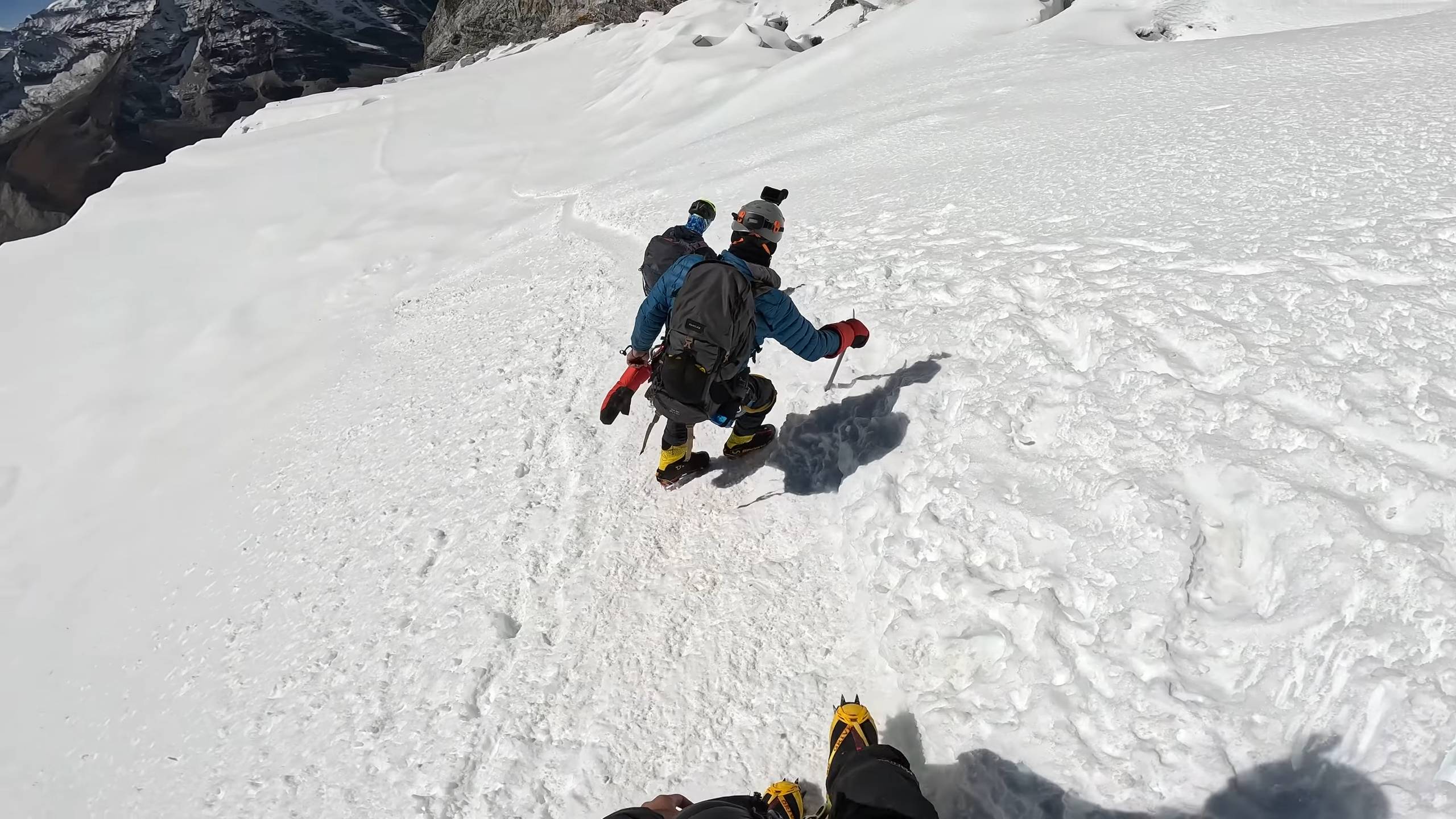
Long descents ask the thighs and hips to control each step while the body is moving downhill. If all of your training happens on flat ground or uphill machines, that part of the climb can feel unfamiliar.
Use real downhill walking when you can. Controlled step-downs, split-stance work, and steady descents on local trails can help when mountains are not easy to reach. There is no benefit in racing downhill. The aim is to keep your steps stable as fatigue builds.
A good hill session should not end at the top. The way back down is part of the training day, just as it is part of the mountain.
Strength Work Should Make Your Mountain Days Steadier
Strong legs matter most when they still work after hours of walking. For Island Peak climb trip, strength is not about proving how much you can lift. It helps you step uphill repeatedly, stay balanced with a pack, and keep control when the route turns downhill.
Simple squat, step-up, split-stance, calf, hip-hinge, pulling, and trunk movements can support that work. You do not need a huge gym program. A small group of movements done consistently can sit beside your hill training without leaving you too sore to walk.
Single-leg work has a clear place because hiking often loads one leg at a time. Stable step-ups and split-stance movements can help with uneven ground, while two-leg strength still gives you a useful base.
Add resistance only when the movement stays controlled. If pain changes the way you walk or move, reduce the load and deal with the problem rather than forcing another hard session.
Make Your Daypack, Boots, and Basic Climbing Gear Feel Familiar
A daypack can feel harmless during a short walk and become annoying after five or six hours. Train with the pack you expect to use so your shoulders, back, and walking posture have time to get used to it.
Keep the load realistic. You are preparing for what you will actually carry, not for a heavy-pack challenge. The same idea applies to boots. Long sessions can expose pressure points, heel movement, hot spots, and fit problems that a short walk may hide.
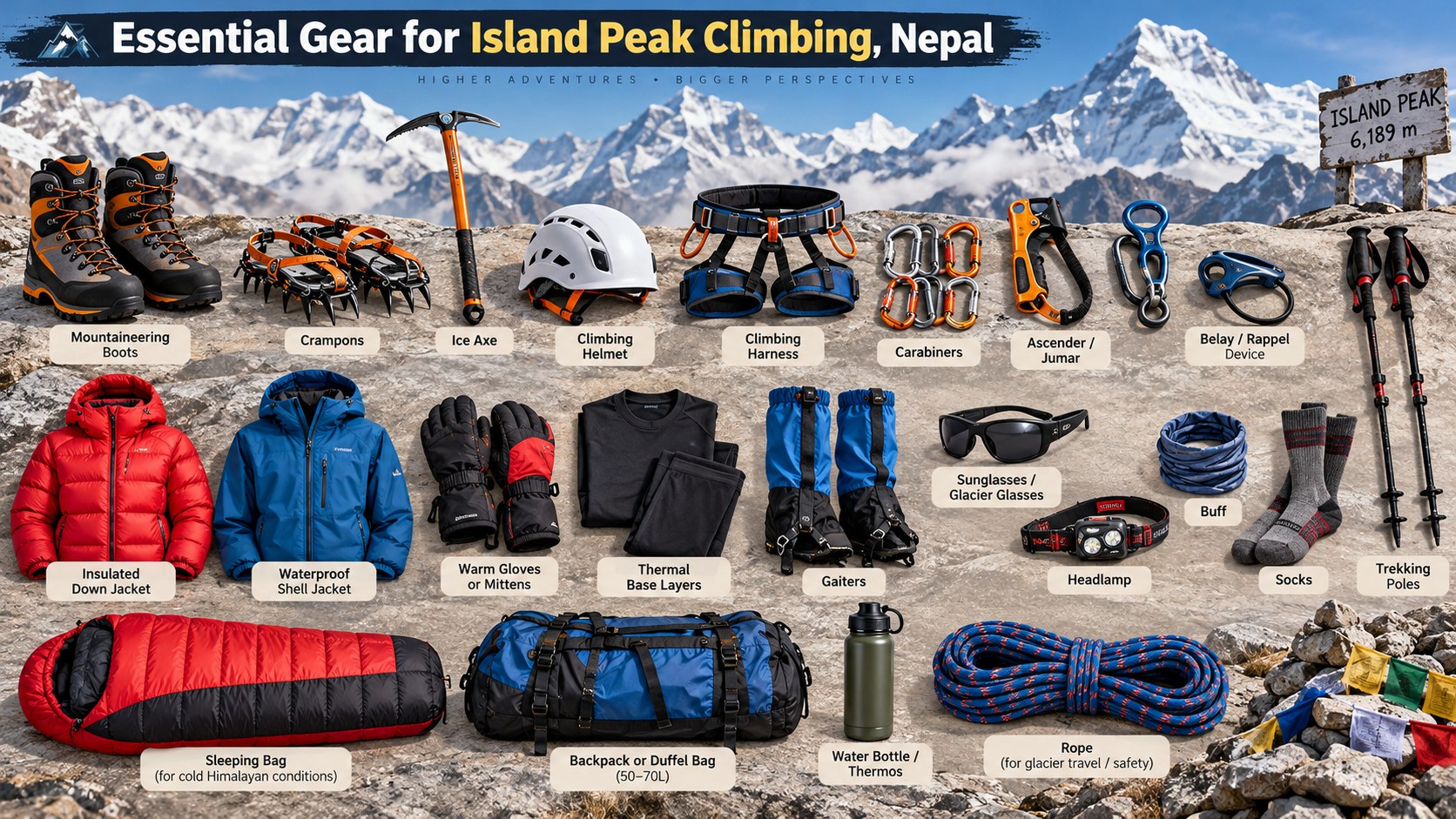
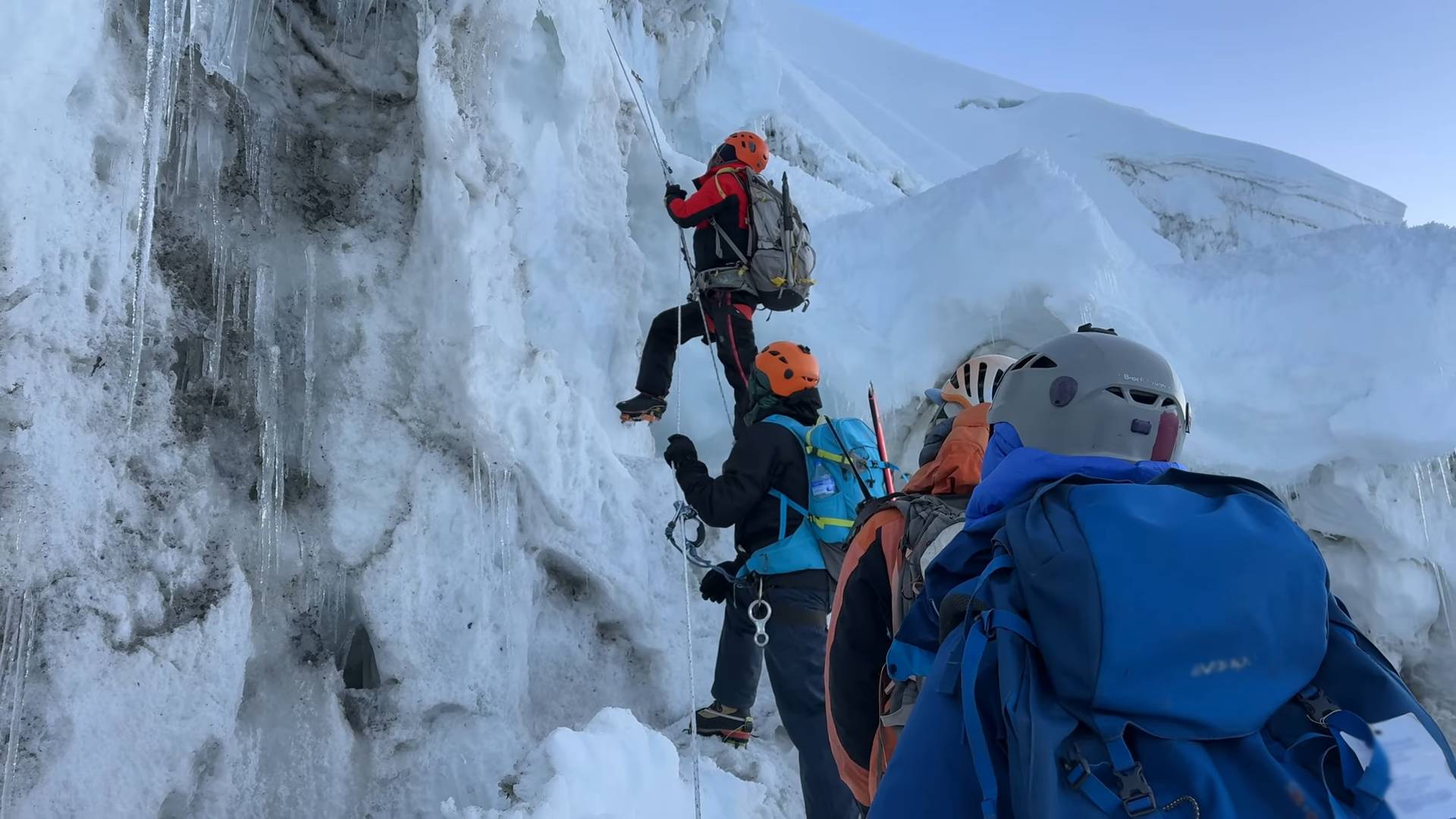
Climbing gear needs familiarity for a different reason. Crampons change how you place your feet. An ascender changes how you move on a fixed rope. A decent device gives you another task later in the day, when concentration may already be lower.
Meeting all of that for the first time at altitude adds avoidable pressure. Practice under supervision before Nepal so you already know what each item is for and how it feels to handle it.
Learn Enough Technical Movement to Listen, Not Improvise
A guided Island Peak climb does not require you to arrive as an independent mountaineer. You do need enough practice to understand the guide and use your equipment without confusion.
Practice crampon movement on suitable terrain with supervision. Learn how the boot and crampon fit together. Practice clipping into a fixed-rope system, using an ascender, and handling a descent device in a controlled setting.
Gloves are worth including in some practice sessions because they change grip and make buckles, clips, and devices feel slower. That small difference is easy to ignore at home and much harder to ignore when your hands are cold.
Ice axe handling and team commands belong in supervised practice too. Do not teach yourself technical drills alone. The aim is not to arrive in Nepal believing you can manage the mountain without a guide. The aim is to arrive calm enough with the equipment that you can listen and move with care.
Fitness Cannot Shortcut Acclimatization
Strong fitness can make hard work feel more manageable, but it does not protect you from altitude illness. CDC guidance as well as expert mountain guides say physical fitness does not change that risk.
That distinction matters because fit people can be tempted to move faster than the itinerary allows. At altitude, speed is not proof of readiness. Your body still needs time to respond to lower oxygen levels.
Before Nepal, work on your legs, aerobic fitness, recovery, and climbing familiarity. In the mountains, respect the planned ascent. Keep a steady pace, report new symptoms early, and follow the guide's altitude decisions.
Training and acclimatization solve different problems. Good preparation gives you more physical margin for the work. It does not give you permission to rush the mountain.
Let Base Camp Be the Rehearsal, Not the Classroom
By the time you reach Island Peak Base Camp, the main climbing systems should feel familiar. The final practice session can then focus on the route setup. It can help you rehearse team commands before summit day.
On our current Island Peak trip, the guide uses Base Camp practice to review crampons, fixed ropes, and the ascender. The session covers descent technique, ice axe handling, and team commands too. This connects your earlier practice with the system used on that departure.
Earlier practice does not make that session less useful. It makes it more useful. You arrive with a basic mental picture, then the guide adapts it to the equipment, route conditions, and team system being used on that departure.
Think of Base Camp as the final rehearsal. The learning should have started well before you reached it.
Arrive Rested Instead of Chasing Fitness in the Final Week
The final week before travel often creates the urge to squeeze in one last hard session. By then, a single workout will not create a new endurance base. It can leave you sore or tired when you would rather be recovering.
Reduce the hardest training and keep some light movement. Give sleep and normal recovery more attention. Check your boots, daypack, clothing, and personal climbing gear while there is still time to fix a problem.
Readiness is not a perfect test score. It looks more ordinary than that. You can finish a long hilly day at a controlled pace. Your legs still behave on the way down. Your daypack feels normal. You recover without losing the rest of the week. Basic climbing equipment feels familiar rather than intimidating.
If those things still feel far away, give yourself more preparation time. Arriving with extra margin is more useful than arriving having barely met a minimum.